


You train every day, follow the plan, sleep enough, and yet your muscles still feel heavy the next day. The problem is rarely the training itself. It’s in the recovery. Contrast therapy, which consists of alternating cold and heat in a structured way, is one of the most effective tools for breaking this cycle of accumulated fatigue. It is not an Instagram fad. It is a centuries-old practice, used by top-tier athletes, and one you can implement today at home or at the gym with the right equipment.
Table of Contents
- Quick Summary
- What is contrast therapy
- How it works physiologically
- Proven benefits
- Step-by-step protocol
- Comparison of approaches
- Most common mistakes
- Who it is not recommended for
- How to integrate at home or the gym
- Frequently Asked Questions
- References
Quick Summary
| Key Point | Explanation |
|---|---|
| What it is | Controlled alternation between heat and cold exposure to stimulate physiological recovery responses. |
| Cold temperature | Between 8°C and 15°C is the most commonly used range. Below 8°C increases risk without proportional benefit for beginners. |
| Heat temperature | Between 40°C and 90°C depending on the method: dry sauna reaches 70-90°C, hot water stays between 38°C and 42°C. |
| Duration per cycle | 10-15 minutes of heat followed by 1-5 minutes of cold. Repeat 2 to 4 times per session. |
| Ending in cold or heat | Ending in cold favors alertness and post-workout recovery. Ending in heat favors relaxation and sleep. |
| Main mechanism | Alternating vasodilation and vasoconstriction creates a "vascular pump" effect that accelerates metabolic clearance of tissues. |
| When to avoid | Uncontrolled hypertension, Raynaud's disease, pregnancy, active cardiovascular diseases. Consult a doctor before starting. |
What is contrast therapy
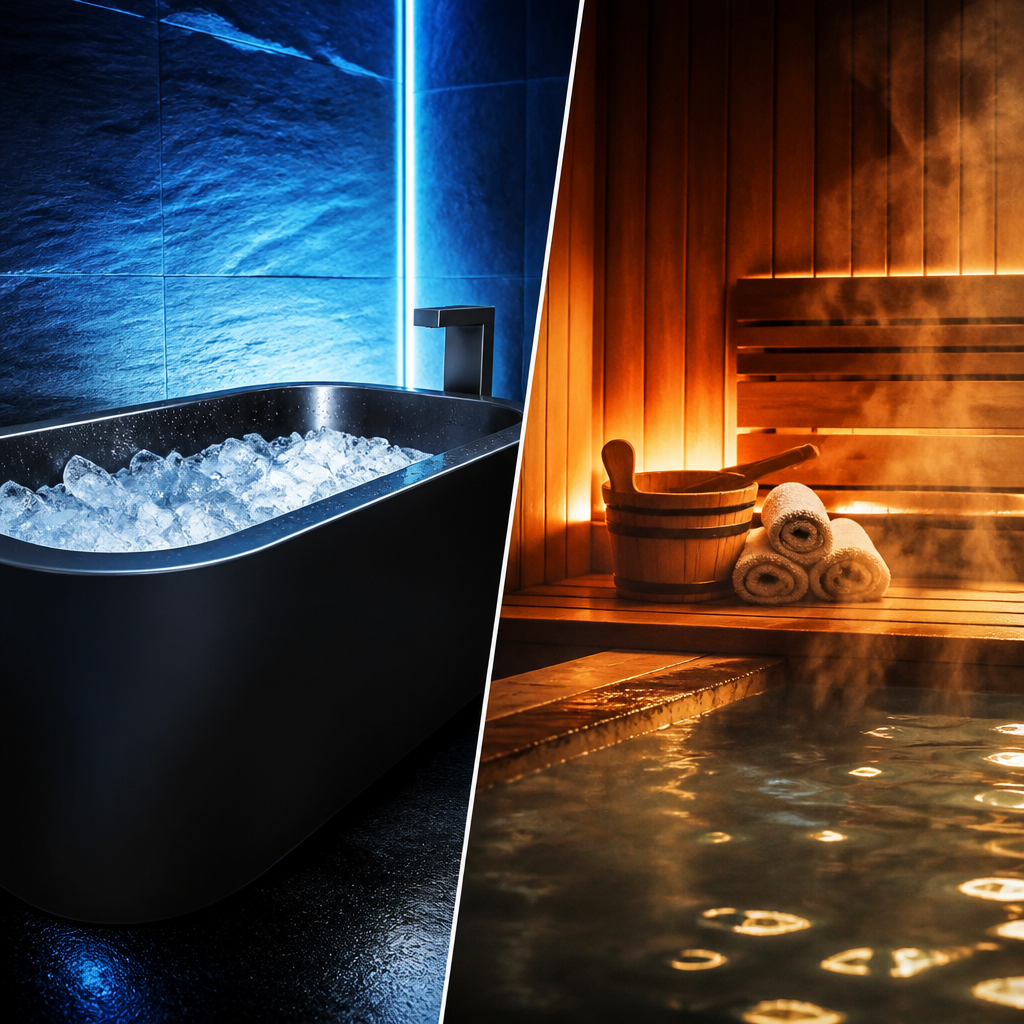
Contrast therapy is the practice of repeatedly and structurally alternating heat and cold exposure within a single session. The most common method combines a sauna with an ice bath, but it can also be applied with hot and cold water in localized or full-body immersion.
The history of this practice is longer than most people imagine. Greeks and Romans already alternated hot and cold baths as treatment for various conditions. Scandinavians built entire social rituals around saunas followed by dipping into icy water or snow. What centuries of empirical experience confirm, modern scientific research has been studying in greater detail, especially in a sports context.
Today, contrast therapy is present in high-performance recovery centers, physiotherapy clinics, and increasingly in domestic and commercial spaces that take the recovery quality of their users seriously.
How it works physiologically
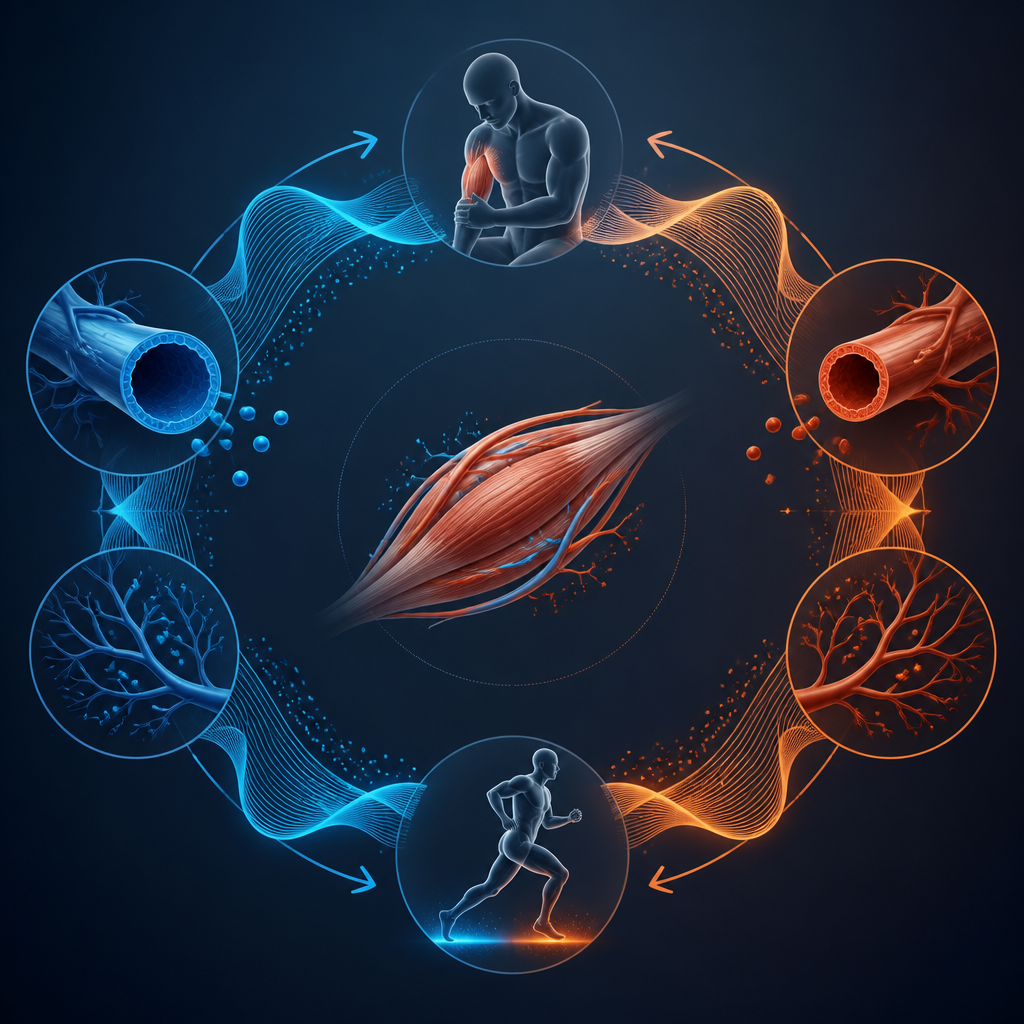
The physiological logic of contrast therapy rests on a simple yet powerful mechanism: the alternation between vasodilation and vasoconstriction. When the body is exposed to heat, blood vessels dilate, blood flow increases to the skin's surface, and the heart rate rises. When the body transitions to cold, vessels contract rapidly, blood is directed toward vital organs, and peripheral circulation decreases.
The vascular pump effect
Repeating this cycle of vascular opening and closing works, in practical terms, as a workout for the circulatory system. This alternation creates a "pumping" effect that helps drain metabolic waste, such as lactate, from muscle tissues and reduce edema. It is not a metaphor: it is a documented mechanism of accelerated tissue clearance.
Nervous system regulation
Beyond the vascular effect, contrast therapy trains the autonomic nervous system to transition more efficiently between states of activation and recovery. Most athletes suffering from chronic fatigue are trapped in a state of continuous sympathetic activation. Controlled exposure to alternating cold and heat is one of the few methods that forces the body to actively practice that transition.
Heat exposure also activates heat shock proteins, which participate in cellular repair and muscle resilience. Cold, on the other hand, reduces inflammatory markers after high-intensity training, contributing to faster recovery between sessions.
The power of contrast therapy does not lie in the heat or cold in isolation. It lies in the transition between the two. It is that alternation that trains the vascular and nervous systems to respond with greater efficiency to physical stress.
Proven benefits
Before listing the benefits, it is important to be honest: scientific research on contrast therapy is advancing, but there is still variability in studies regarding protocols and populations. That said, the effects with the most consistent evidence are as follows.
Reduction of Delayed Onset Muscle Soreness (DOMS)
The so-called "next-day pain," technically known as DOMS (Delayed Onset Muscle Soreness), is one of the main targets of contrast therapy. The combination of alternating cold and heat helps reduce the perception of muscle pain and stiffness, especially in the 24 to 48 hours after intense training.
Improved circulation and metabolic clearance
The vascular pump effect described above has direct practical consequences: less accumulation of waste in tissues, less localized swelling, and increased nutrient supply to recovering muscles. Athletes who train on consecutive days particularly benefit from this effect.
Improved flexibility and mobility
The heat phase, especially in a dry sauna, promotes muscle relaxation and increases the elasticity of connective tissues. When combined with cold, this improvement in flexibility tends to be more durable than that obtained with heat alone.
Positive effect on mood and mental resilience
Cold exposure triggers a release of norepinephrine and endorphins that produces a state of alertness and well-being. Alternating with heat creates a contrast of sensations that, with practice, becomes a stress management tool in itself. Many athletes describe the contrast session as a mental reset, regardless of the physical effects.
Tip: If your main goal is post-workout recovery, perform the contrast session within the two hours following exercise. If the goal is relaxation and sleep quality, do the session at night and end with heat.
Step-by-step protocol
There is no single, universally validated protocol for contrast therapy. What exists is a set of practical principles that work for the vast majority of users, which you can adjust according to your tolerance and goals.
Protocol for beginners
If you are trying it for the first time, start conservatively. Begin with 5 minutes of heat (sauna or hot shower) at about 40-55°C, followed by 1 minute of cold (ice bath or cold water) at about 12-15°C. Repeat the cycle 2 times. The total session is less than 15 minutes and allows the body to gradually adapt to thermal alternation.
Intermediate protocol
With some adaptation, you can advance to 10-15 minutes of sauna at 60-80°C, followed by 2-3 minutes of ice bath at 8-12°C. Repeat the cycle 2 to 3 times. This is the setup that most amateur athletes use in their routine.
Advanced protocol
For those who already have established tolerance: 15-20 minutes of sauna at 70-90°C, followed by 3-5 minutes of immersion in an ice bath at 8-10°C, repeated 3 to 4 times. The total session is between 60 and 90 minutes. This protocol is common in professional recovery centers and requires proper equipment to keep temperatures stable throughout the session.
Tip: Always start with heat. Entering the cold with your body already warmed up is safer, more effective, and physiologically more correct. Starting with cold reduces the vascular impact of the subsequent heat phase.
Comparison of approaches
There are different ways to implement contrast therapy, with distinct advantages and limitations. The table below compares the three most common approaches.
| Approach | Advantages | Limitations |
|---|---|---|
| Sauna + Ice Bath | Precise temperature control, greater thermal impact, most effective protocol for athletes | Requires dedicated equipment, higher initial cost |
| Hot + Cold Shower (alternating) | Accessible, no additional equipment, easy to integrate into daily life | Lower thermal impact, less temperature control, more limited benefits |
| Localized Immersion (hot and cold tubs) | Useful for injuries or recovery of specific limbs, easy to implement | Does not produce a systemic effect, suitable only for localized recovery |
For home use with a real recovery goal, the combination of sauna with an ice bath is clearly the most effective. Alaska Recover offers exactly this combination, with portable and professional ice baths, systems integrated with chillers, and saunas designed for individual and commercial use, allowing you to maintain correct temperatures without the labor of manually preparing ice.
Most common mistakes
Those who start practicing contrast therapy usually make the same mistakes. Knowing them in advance saves time and prevents results below expectations.
Starting with cold
This is the most frequent mistake among beginners. Entering directly into ice water without prior warming causes a more abrupt vascular shock, which can be uncomfortable or even dangerous for people with cardiovascular sensitivity. Starting with heat is always the right path.
Sessions that are too long in the cold
More time in the cold does not mean more benefit. Immersions longer than 10-15 minutes in water below 15°C, especially for beginners, increase the risk of hypothermia without adding additional benefit. The benefit occurs in the first minutes of exposure, not in the extended time.
Ignoring the rewarming phase
Getting out of the ice bath and standing still in the cold is a common mistake. The body needs time to stabilize its core temperature. After finishing the session, especially if you end in cold, get dressed quickly, hydrate, and allow for a natural rewarming of 20 to 30 minutes.
Practicing immediately after strength training with a hypertrophic goal
This point is controversial and deserves attention: there is evidence that ice water immersion immediately after strength training can partially attenuate hypertrophic adaptations. If the goal is muscle mass gain, consider doing the contrast session more than 4 hours after strength training, or reserve it for recovery days.
Who it is not recommended for
Contrast therapy is safe for the vast majority of healthy adults, but there are specific conditions where it should be avoided or practiced only with medical authorization.
People with uncontrolled hypertension should avoid extreme temperature alternation, as the sudden vasoconstriction caused by cold can trigger dangerous pressure spikes. Raynaud's disease, which causes vascular spasms in the extremities in response to cold, is another clear contraindication. During pregnancy, prolonged exposure to high temperatures in a sauna is not recommended. Anyone with a history of active cardiovascular disease should consult a doctor before starting any thermal therapy protocol.
People with asthma or COPD should also be careful, especially during the cold immersion phase, as inhaling freezing air can trigger bronchospasm. The general rule is simple: if you have any chronic condition, do not start without speaking to a healthcare professional.
How to integrate at home or the gym
The main barrier to the regular practice of contrast therapy is not motivation. It is logistics. Preparing ice manually for every session is incompatible with a consistent routine. For the practice to be sustainable, the equipment must eliminate that friction.
Domestic solution
For home use, the ideal combination is an ice bath with an integrated chiller, which maintains a stable temperature without the need for manual ice, and a portable or cabin sauna for the heat phase. Alaska Recover has specific solutions for this context, from portable bathtubs to complete systems with chillers and saunas, designed for those who want professional recovery without leaving home.
Solution for gyms, clinics, and wellness spaces
In a commercial context, temperature consistency and equipment durability are critical. A gym or studio that offers contrast therapy needs bathtubs capable of intensive use, efficient water filtration systems, and chillers with enough power to maintain the temperature even with multiple users per day. Alaska Recover has a professional range designed exactly for this usage profile, with a 12-month warranty and next-day delivery for Portugal and Spain.
Tip: If you are evaluating introducing contrast therapy in a gym or studio, start by quantifying the expected number of daily sessions before choosing the equipment. A chiller undersized for the volume of use is one of the most expensive mistakes an operator can make.
Frequently Asked Questions
What is the difference between contrast therapy and just taking a cold shower?
An isolated cold shower is simple cryotherapy. Contrast therapy implies repeated alternation between heat and cold, which creates the vascular pump effect that an isolated cold shower cannot produce. The benefits are qualitatively different: the contrast activates physiological mechanisms that exposure to cold alone cannot replicate with the same intensity.
How often per week should I do contrast therapy?
For most athletes and fitness practitioners, 2 to 4 sessions per week is an adequate frequency. Doing contrast therapy every day is not necessarily harmful, but it may reduce the adaptive impact if the body does not have time to integrate the stimulus. On days of more intense training, a post-workout session is especially effective.
Is it better to end the session in cold or heat?
It depends on your goal. Finishing with cold promotes alertness, energy, and physical recovery, making it the most suitable choice after training. Finishing with heat promotes muscle relaxation and sleep quality, being more appropriate for evening sessions or active recovery days.
Does contrast therapy hinder muscle gain?
There is evidence that cold water immersion immediately after hypertrophy training may interfere with some anabolic signaling pathways. To minimize this risk, leave at least 4 hours between strength training and the contrast session. For athletes whose primary goal is sports performance rather than aesthetic hypertrophy, this point is less relevant.
What temperature should the ice bath be in contrast therapy?
The range most commonly used and considered effective is between 8°C and 15°C. Beginners should start at 12-15°C and gradually lower the temperature as their tolerance increases. Temperatures below 8°C do not provide proportional benefits and increase discomfort and risk, especially for those just starting out.
Can I do contrast therapy without a sauna, using only hot and cold showers?
Yes, you can. An alternating hot and cold shower is an accessible way to start experimenting with contrast therapy. The thermal impact is significantly lower than that obtained with a sauna and ice bath, but it is a valid introduction to the principle. For those wanting concrete results in muscle recovery, a sauna with an ice bath is clearly superior.
Does Alaska Recover have suitable equipment for home contrast therapy?
Yes. Alaska Recover offers portable and professional ice baths, chillers for automatic temperature control, and saunas, specifically to allow for full contrast therapy sessions in a domestic or commercial setting. It is possible to set up a complete system without the need for manual ice and with temperature control via a mobile app.
Do you already practice contrast therapy in your recovery routine? Share your experience in the comments, including the protocol you use and the results you have noticed.
References
- Complete guide to contrast therapy: protocol, benefits, and practical application
- Contrast therapy explained: how to combine ice baths and heat for recovery
- How to do contrast therapy with sauna and ice bath: detailed protocol
- Contrast therapies: alternating between heat and cold for maximum benefits
- Sauna and ice bath: how contrast therapy accelerates recovery