


Many athletes and wellness enthusiasts get stuck on the same dilemma: is today a sauna day or an ice bath day? The wrong answer isn't just a waste of time; it can actively hinder your goals. If you take an ice bath immediately after a strength training session focused on hypertrophy, you are suppressing part of the anabolic signal you just generated. If you use the sauna during an acute injury phase, you could worsen the inflammation. The question of sauna vs. ice bath is not a personal preference; it is a physiological decision. This article explains when to use each modality, how to combine them correctly, and in which situations contrast therapy is truly the best option.
Table of Contents
- Quick Summary
- What heat does to the body: the physiology of the sauna
- What cold does to the body: the physiology of the ice bath
- When to use the sauna: goals, timing, and specific situations
- When to use the ice bath: goals, timing, and specific situations
- Contrast therapy: how to combine sauna and ice bath
- Comparison table: sauna, ice bath, and contrast therapy
- The most common mistakes when combining cold and heat
- Frequently Asked Questions
- References
Quick Summary
| Key Point | Explanation |
|---|---|
| Heat dilates, cold constricts | The sauna causes vasodilation and increases blood flow; the ice bath causes vasoconstriction and redirects blood to vital organs. Each stimulus has a different purpose. |
| Ice bath after strength training: caution | Cold immersion immediately after hypertrophy training can suppress anabolic signaling. If your goal is muscle gain, wait at least 4 to 6 hours or use cold on active recovery days. |
| Sauna for acute injury: avoid | In the first 48 to 72 hours after an injury with acute inflammation, heat can increase edema. Save the sauna for the subacute or chronic phase. |
| The order in contrast therapy matters | Always start with heat. Ending on cold maximizes metabolic and mental alertness benefits; ending on heat favors relaxation and sleep. |
| The ice bath is not just for muscles | Cold exposure releases norepinephrine and dopamine, improving mood, focus, and sleep quality. The neurological benefit is just as relevant as the physical one. |
| Recommended frequency for contrast therapy | For athletes with intense training, 3 to 4 times per week. For general wellness and moderate recovery, 2 times per week is sufficient. |
| Contraindications exist and are serious | Uncontrolled hypertension, Raynaud's disease, and severe cardiovascular conditions are reasons to consult a doctor before starting any extreme temperature protocol. |
What heat does to the body: the physiology of the sauna
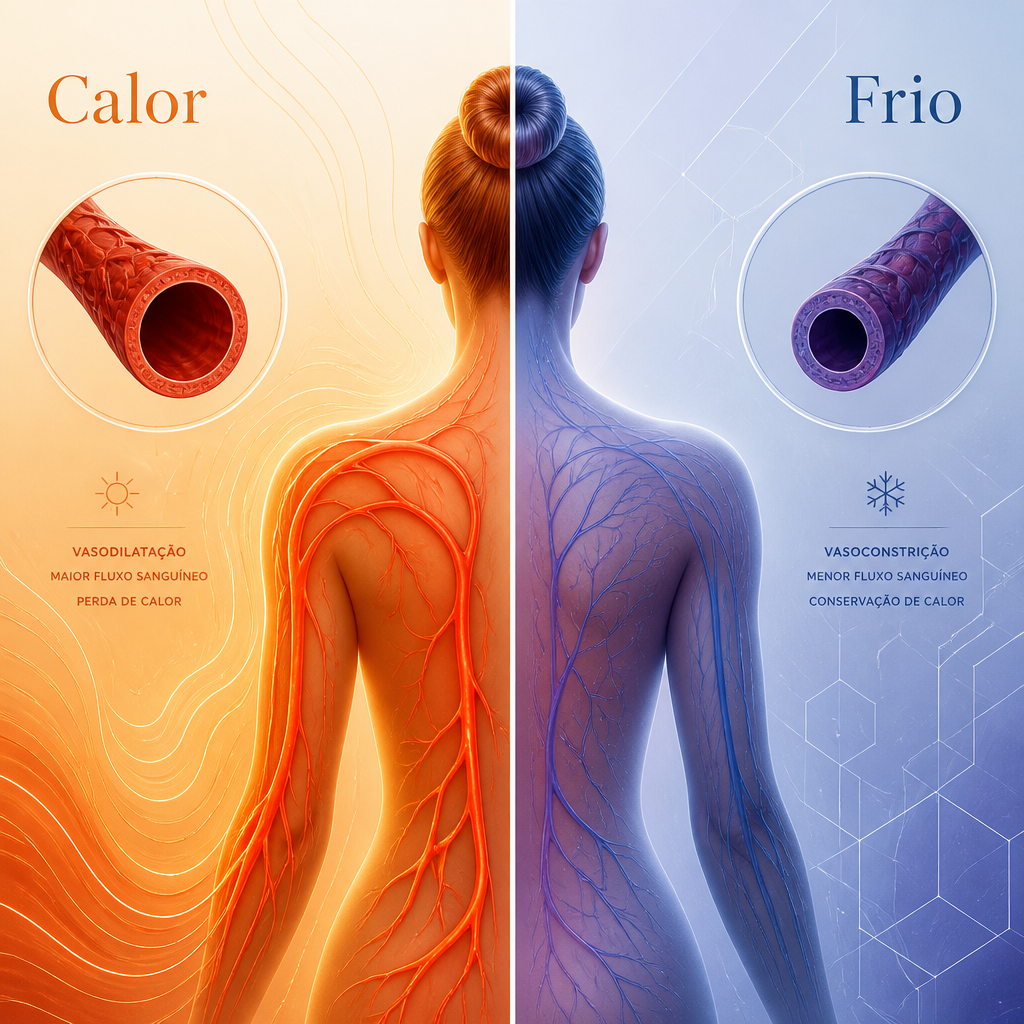
When you enter a sauna, your body responds to the increased temperature with a series of physiological chain adaptations. The most immediate response is vasodilation: blood vessels dilate, blood flow increases, and the heart begins to work harder. This process improves the transport of oxygen and nutrients to muscle tissues and accelerates the removal of metabolic waste such as lactic acid.
Heat also stimulates the release of endorphins, which explains the feeling of deep relaxation that follows a session. Furthermore, prolonged exposure to heat can reduce cortisol levels, which is especially useful after days of intense training or accumulated high stress.
An often overlooked aspect is the sauna's effect on flexibility and muscle tension. Heat relaxes the musculature passively, making the post-sauna period ideal for working on mobility or simply letting the nervous system switch off.
What science says about the long-term sauna
Regular sauna use is associated with improvements in cardiovascular health, better sleep quality, and a strengthened immune system. The rise in body temperature during the session and the subsequent drop upon exiting send a signal to the brain that encourages falling asleep, which makes it an especially powerful recovery tool for athletes with evening training.
It is no coincidence that Scandinavian cultures have integrated the sauna for centuries as a ritual of recovery and socialization. Modern science confirms what tradition already knew: regular exposure to heat has systemic effects that go far beyond immediate relaxation.
What cold does to the body: the physiology of the ice bath
The ice bath triggers a radically different physiological response. When the body is exposed to cold water, blood vessels contract immediately, which redirects blood flow from the limbs to vital organs. This vasoconstriction reduces local inflammation and the flow of inflammatory cytokines, resulting in less delayed onset muscle soreness.
In the first few seconds of immersion, the sympathetic nervous system is acutely activated: there is a spike in adrenaline, norepinephrine, and dopamine. This is why you leave an ice bath with more energy, focus, and a sense of well-being—not despite the discomfort, but because of it. Controlled acute stress stimulation trains the nervous system to respond more efficiently.
When the body returns to normal temperature after immersion, reactive vasodilation occurs: blood returns to the muscles loaded with oxygen and nutrients, amplifying recovery. This "vascular pump" effect is one of the central mechanisms of the benefit of cold in sports recovery.
The most documented effect of cold water immersion occurs in the nervous system, not the muscles. The benefit starts in the brain and radiates to the body.
Cold and mental health: what the data shows
The release of norepinephrine and dopamine that results from cold exposure is clinically relevant for mood, attention, and motivation. Many regular ice bath users report improvements in sleep quality, reduction in mental rumination, and greater resilience to daily stress.
This neurological dimension of cold is often underestimated. The ice bath is not just a muscle recovery tool. For many athletes and professionals who practice it regularly, it is an autonomic nervous system regulation protocol with a direct impact on cognitive and emotional performance.
When to use the sauna: goals, timing, and specific situations
The sauna is the right choice when the main goal is deep muscle relaxation, removal of metabolic waste, or preparation for restful sleep. It works best after long-duration workouts with accumulated fatigue, weeks of high volume, or days of intense stress outside of sports.
Best moments to use the sauna
After an endurance workout, such as a long run, cycling training, or a swimming session, the sauna helps accelerate the elimination of lactic acid and relaxes musculature that has been contracted for hours. Prolonged vasodilation improves nutrient transport to tissues that need to be rebuilt.
The sauna is also ideal in the afternoon or evening hours, before bed. The temporary increase in body temperature followed by the natural drop upon exiting favors falling asleep and the quality of deep sleep phases, which is where real recovery happens.
When to avoid the sauna
Avoid the sauna in the first 48 to 72 hours after an acute injury with visible inflammation, such as sprains, bruises, or acute joint pain. Heat at this stage can increase edema and worsen the injury. It is also not recommended in a state of significant dehydration, immediately after very high-intensity training without prior hydration, or for people with uncontrolled hypertension.
Tip: If you use the sauna regularly as part of your recovery routine, consider an integrated model with precise temperature control. Alaska Recover saunas are designed for domestic and professional use, with a focus on durability and ease of integration into any space.
When to use the ice bath: goals, timing, and specific situations
The ice bath shines in post-intense training recovery when the goal is to reduce delayed onset muscle soreness, lower systemic inflammation, and return to training the next day with less residual fatigue. It is also the tool of choice when you need acute mental focus right after the session, whether for work, competition, or to face the rest of a demanding day.
Best moments to use the ice bath
After endurance training, competitions, or high-intensity sessions where rapid recovery is a priority, the ice bath effectively reduces inflammation and the sensation of pain. For athletes who train twice a day, such as triathletes or swimmers, cold immersion between sessions can make the difference in the quality of the second workout.
In the morning, while fasting or before work, the ice bath functions as a potent neurological activator. The release of dopamine and norepinephrine provides a state of alertness and energy that lasts for hours. Many users replace their morning coffee with this ritual with consistent results in productivity.
Ice bath and hypertrophy: the important exception
If your main goal is muscle mass gain, there is a critical exception. Cold immersion immediately after strength training can attenuate the inflammatory signal that triggers muscle adaptation. Post-strength training inflammation is not just an inconvenience; it is part of the muscle-building process. Suppressing it systematically and immediately can compromise long-term results.
The practical solution is simple: wait at least 4 to 6 hours after strength training before taking an ice bath, or save immersion for active recovery days where there was no hypertrophy stimulus.
Tip: With a temperature-controlled chiller, you can set the exact water temperature for each protocol. Alaska Recover ice baths and chillers allow you to keep the temperature stable between sessions, without the work of preparing ice manually.
Contrast therapy: how to combine sauna and ice bath
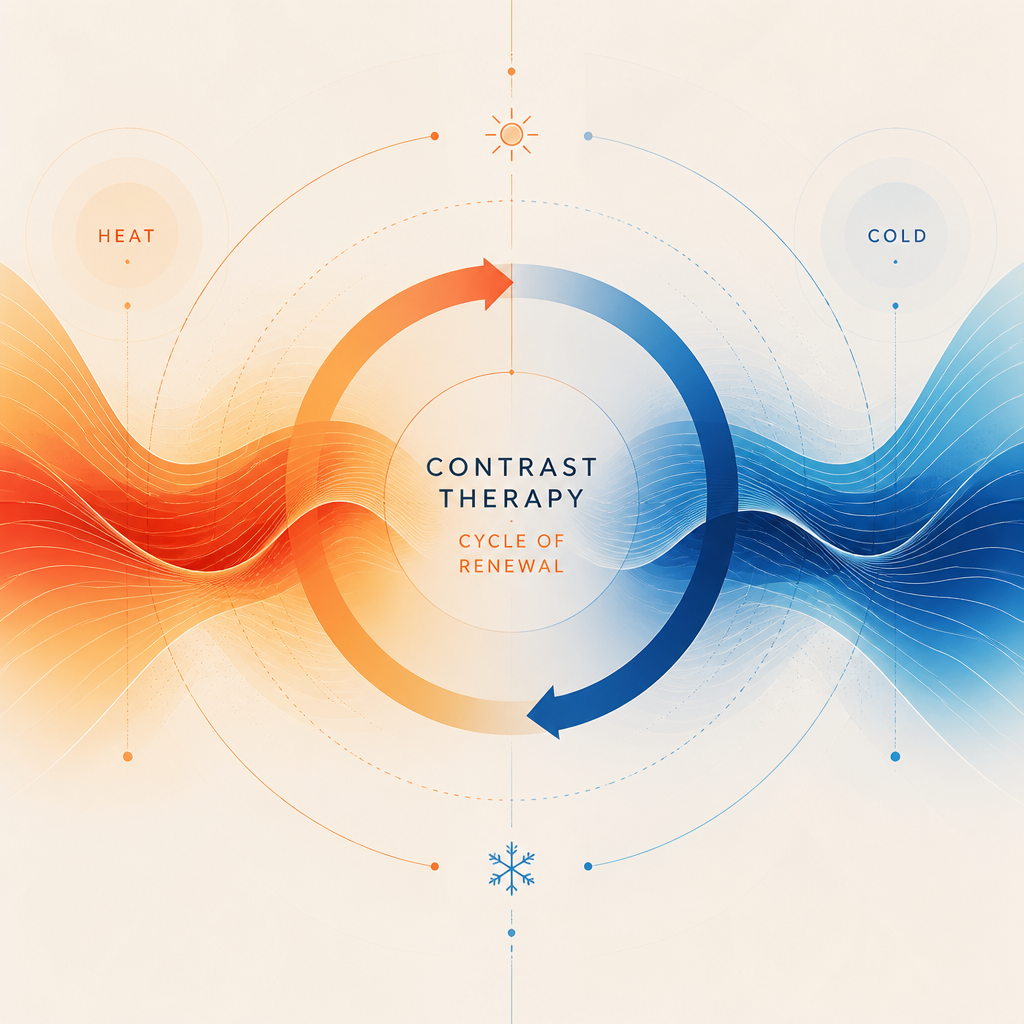
Contrast therapy is the structured combination of heat and cold in alternation, and it is probably the most complete protocol available for recovery and nervous system regulation. It is not just about putting two good things together; the real benefit comes from the transition between extreme temperatures, which creates a "vascular pump" effect much more powerful than each modality separately.
How to structure a contrast therapy session
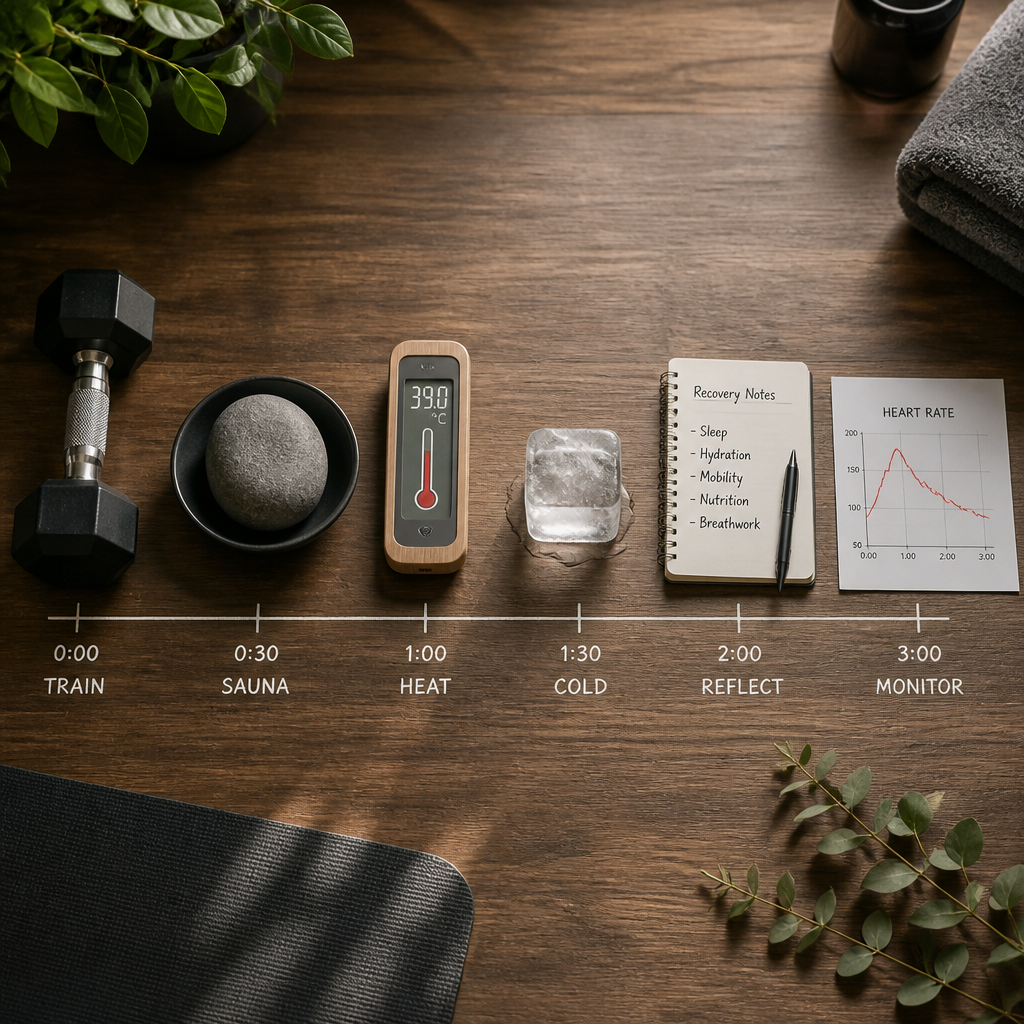
The protocol always begins in the heat. Start with 10 to 15 minutes in the sauna at a temperature between 70°C and 90°C, until you are sweating comfortably. Then, pass immediately to the ice bath at a temperature between 10°C and 15°C, for 1 to 3 minutes. This cycle can be repeated 2 to 4 times, depending on tolerance and the goal.
The question of whether to end on cold or heat depends on the session's goal. If you want to maximize metabolic benefits, nervous system activation, and energy for the rest of the day, end on cold. If the goal is deep relaxation, cortisol reduction, and preparation for sleep, end on heat.
Frequency and progression
For those starting, consistency always outweighs intensity. Two cycles per session, twice a week, produce real adaptations over the course of weeks. Athletes with high training loads can progress to 3 to 4 sessions per week with 3 to 4 cycles each. Gradually increase the cold exposure time and reduce the water temperature as the nervous system adapts.
A common practice is the use of integrated contrast spaces in premium gyms, recovery clinics, and wellness hotels. Alaska Recover provides exactly these complete solutions for professional spaces that aim to offer high-level recovery experiences, with equipment that allows precise temperature control and a design suitable for high-quality spaces.
Comparison table: sauna, ice bath, and contrast therapy
| Criterion | Sauna | Ice Bath | Contrast Therapy |
|---|---|---|---|
| Main vascular effect | Vasodilation, increased blood flow | Vasoconstriction, reduced local inflammation | Alternation of vasodilation and vasoconstriction, vascular pump effect |
| Best use after strength training | Yes, especially on high-volume days | With caution, wait 4 to 6 hours if the goal is hypertrophy | Ideal for general recovery; avoid immediately after hypertrophy training |
| Best use after endurance training | Yes, muscle relaxation and lactic acid removal | Yes, reduction of delayed muscle soreness and inflammation | Excellent, maximizes recovery and reduces time between sessions |
| Effect on nervous system | Parasympathetic, relaxation, cortisol reduction | Sympathetic, alertness, dopamine and norepinephrine release | Trains regulation between the two systems, increases resilience |
| Ideal for sleep | Yes, especially ending on heat | Not recommended immediately before sleep | Yes, if the last phase is heat |
| Acute injury phase | Avoid in the first 48 to 72 hours | Can help control acute inflammation | Avoid in the acute phase; use only in the subacute or chronic phase |
| Recommended frequency | 3 to 5 times per week | Daily possible; 3 to 5 times per week for sports recovery | 2 to 4 times per week |
The most common mistakes when combining cold and heat
The most frequent error is starting with cold instead of heat. The body is not prepared for the physiological transition in that direction with the same efficacy, and the session becomes more difficult without producing more benefit. Always start with the sauna to prepare the cardiovascular system for the subsequent thermal shock.
The second most common mistake is treating contrast therapy like a contest of discomfort endurance. More cold is not always better, and more time in the ice is not always more effective. Water temperature between 10°C and 15°C is sufficient to trigger the desired physiological responses. Dropping below 5°C without proper adaptation increases risk without proportionally increasing benefit.
Ignoring hydration
The sauna causes intense sweating. Entering a contrast therapy session dehydrated is a mistake that compromises both performance during the session and subsequent recovery. Drinking enough water before, during (between cycles), and after is just as important as the temperature protocol itself.
Using contrast therapy in the wrong stages of an injury
Contrast therapy has its proper time. In the acute phase of an injury, during the first 48 to 72 hours, the correct protocol is isolated cold or rest. Heat in this phase can increase edema and internal hemorrhage. Contrast therapy is a subacute and chronic phase tool, used to move stagnant fluids and accelerate tissue repair, not to stop active inflammation.
For those looking to integrate these practices at home with dedicated equipment, Alaska Recover offers portable and professional ice baths, temperature-controlled chillers, and saunas designed for home and commercial use. The difference compared to improvised solutions lies in temperature consistency, equipment durability, and the user's experience from session to session.
Frequently Asked Questions
Can I use the sauna and an ice bath on the same day without doing formal contrast therapy?
Yes. You can use the sauna in the morning and the ice bath in the afternoon, or vice versa, without needing to combine them in alternation in a single session. What matters is respecting the timing in relation to training and the goal of each modality. Formal contrast therapy in alternating cycles is more effective, but the individual benefits of each modality remain when used separately.
What is the ideal ice bath temperature for sports recovery?
The range between 10°C and 15°C is the most documented for sports recovery and offers an effective physiological response without high risk. Temperatures below 10°C can be used by experienced and adapted users, but there is no clear evidence that they are necessary to obtain the main benefits. The goal is not to endure more discomfort; it is to trigger the right physiological response.
Does the sauna help with recovery from strength training or only endurance training?
It helps with both, but in different ways. After endurance training, the sauna accelerates the removal of metabolic waste and relaxes the muscles. After strength training, the main benefit is muscle relaxation and preparation for restorative sleep. Unlike the ice bath, the sauna does not interfere with post-workout anabolic signaling, so it can be used more freely after hypertrophy training.
How many cycles should I do in a contrast therapy session?
For beginners, 2 cycles are enough to feel the benefits without overloading the nervous system. With progressive adaptation over weeks, you can increase to 3 or 4 cycles per session. Each cycle consists of 10 to 15 minutes of heat followed by 1 to 3 minutes of cold. The quality and consistency of each cycle are worth more than the total number.
Are there any contraindications for contrast therapy?
Yes. People with uncontrolled hypertension, Raynaud's disease, heart failure, or other serious cardiovascular conditions should consult a doctor before starting any extreme temperature protocol. The sudden vasoconstriction caused by the cold can trigger blood pressure spikes or vascular spasms in people with these conditions. Pregnant women should also avoid prolonged exposure to extreme temperatures.
Should I end the contrast session in the cold or the heat?
It depends on the goal. If you want energy, focus, and activation for the rest of the day, finish in the cold. The release of dopamine and norepinephrine provides a state of alertness that lasts for hours. If the goal is deep relaxation and preparation for sleep, finish in the heat. The final sauna activates the parasympathetic system, lowers cortisol, and creates the ideal conditions for falling asleep.
How often should I take an ice bath to see results?
For active sports recovery, 3 to 5 sessions per week produce visible results in two to three weeks. For general well-being, mood regulation, and improved sleep, 3 weekly sessions are sufficient. Consistency over several weeks is much more important than the frequency or intensity in a single week.
Do you have a contrast routine that works, or are you still figuring out what works best for your body? Share your experience in the comments.
References
- Contrast therapy: combining sauna and ice bath for muscle recovery and circulation
- Practical contrast therapy protocol: temperatures, cycles, and recommended frequency
- Ice bath: physiological and neurological benefits according to science
- Hot and cold contrast bath: immunity, muscle recovery, and contraindications
- How the sauna can aid in muscle recovery after training