


For decades, thermotherapy was an almost exclusive privilege of professional athletes with access to high-level facilities, well-equipped sports clubs, or luxury spas. The amateur athlete who trains early in the morning before work, who runs on the weekend, or who completes triathlons for the sheer pleasure of it, was left out of this equation. The portable sauna is changing this in a concrete way. This is not a diluted version of the real experience: it is a functional solution that puts the thermal stimulus necessary for muscle recovery into any home, at a cost and with an ease of use that ten years ago would have been unthinkable.
Table of Contents
- Quick Summary
- What is thermotherapy and why it matters to amateur athletes
- Traditional barriers to sauna access
- How the portable sauna breaks these barriers
- The physiological mechanisms: what heat does to the athlete's body
- Types of portable sauna: which one best serves the amateur athlete
- How to integrate the sauna into your training routine without complications
- Contrast therapy as the next step
- Frequently Asked Questions
- References
Quick Summary
| Key Idea | Explanation |
|---|---|
| The portable sauna is a real recovery tool | It is not just relaxation: heat activates concrete physiological mechanisms that accelerate muscle repair and reduce delayed onset muscle soreness (DOMS). |
| Cost is no longer a decisive barrier | Quality portable models are available for a fraction of the cost of a fixed sauna, eliminating the need for construction or dedicated space. |
| Vasodilation is the primary recovery mechanism | Heat dilates blood vessels, increases the flow of oxygen and nutrients to damaged muscle fibers, and accelerates the elimination of metabolic waste like lactate. |
| Heat Shock Proteins (HSPs) are the molecular key | Heat exposure activates HSPs, which help muscle cells repair themselves more efficiently after intense workouts. |
| Portable steam sauna: the most accessible option to get started | Capsule format, heats up in 5 to 10 minutes, no permanent installation. Suitable for use at home, in an apartment, or even in a gym. |
| Consistency is worth more than intensity | Two to three 15-20 minute sessions per week produce consistent results. Long, irregular, occasional sessions do not offer the same return. |
| Contrast therapy multiplies the benefits | Alternating between sauna and a cold shower or ice bath creates a vascular pumping effect that few amateur athletes explore, but which is completely within reach at home. |
What is thermotherapy and why it matters to amateur athletes
Thermotherapy is, in its simplest form, the deliberate use of heat as a therapeutic stimulus. In a sports context, the primary goal is not passive relaxation, but rather the creation of physiological conditions that promote muscle recovery, reduction of inflammation, and improved sleep quality. These are exactly the three problems that most affect the amateur athlete who trains frequently without access to a physiotherapist or professional recovery methodologies.
The historical problem is one of context, not science. The benefits of heat in sports recovery are well-documented. What was missing was a way to make them accessible outside of specialized facilities. This is where the portable sauna changes the landscape for those who practice sports at an amateur level, but with a seriousness that deserves appropriate tools.
Traditional barriers to sauna access
Identifying the barriers clearly is the first step to understanding why the democratization of thermotherapy did not happen sooner. The most obvious barrier is the cost of installation: a traditional wooden Finnish sauna for home use involves investment in structure, dedicated electrical installation, and permanent space. For most amateur athletes living in apartments or homes without spare room, this is not a realistic option.
The second barrier is the dependence on external facilities. Gyms do not always have a sauna. When they do, the hours often do not coincide with the ideal post-workout recovery window, which typically occurs in the hours immediately following the effort. Getting home, showering, travelling again to a spa, and finding the sauna available is a logistical feat few can maintain regularly.
The third barrier, more subtle, is the perception that the sauna is a wellness luxury, not a performance tool. This idea marginalizes thermotherapy as something optional, when in practice it functions as a recovery protocol with a solid physiological basis. The accessible sauna in portable format breaks down precisely this perception: when the tool is at home and costs the same as a pair of quality sneakers, it ceases to be a luxury and becomes part of the routine.
How the portable sauna breaks these barriers
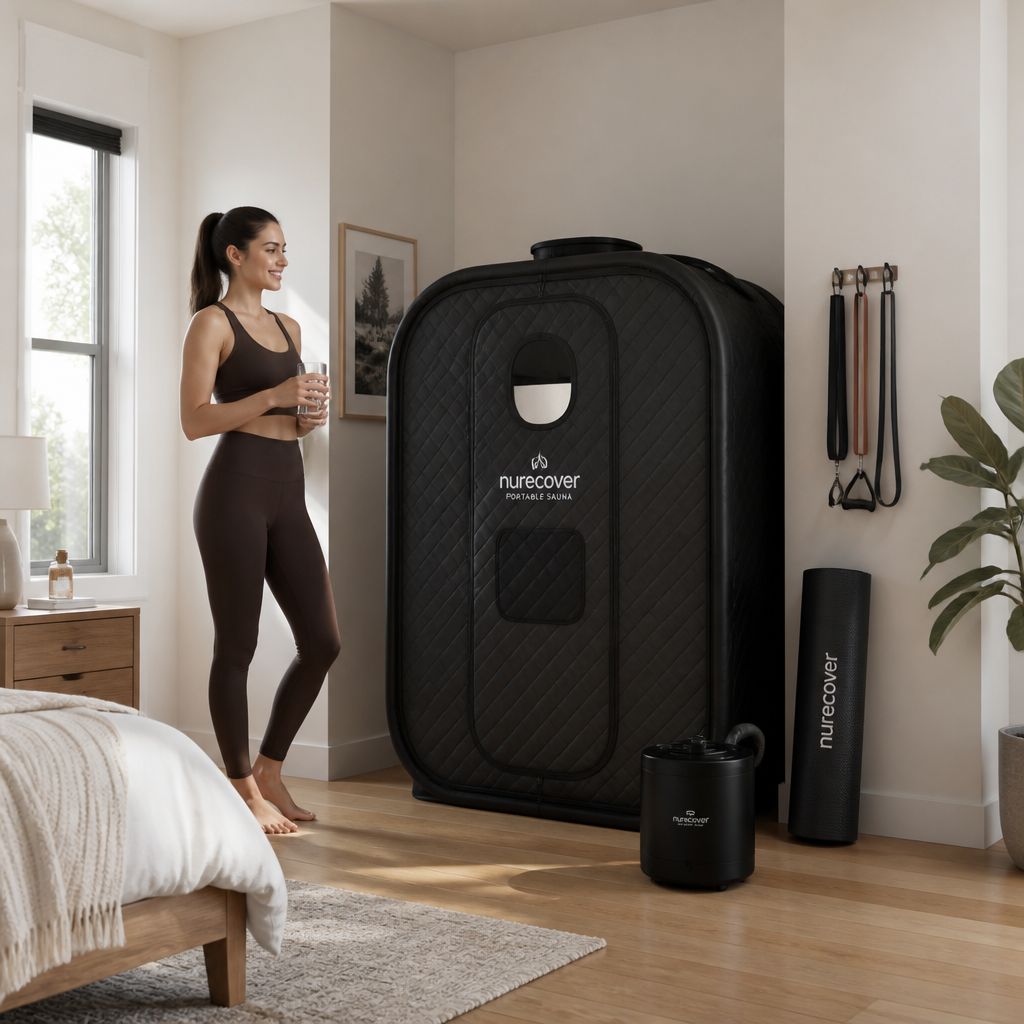
The modern portable sauna is not a compromised version of a real sauna. It is a product designed specifically to solve the problems of space, cost, and convenience that made thermotherapy inaccessible. Quality models like the Alaska Sauna Pro+ heat up in five to ten minutes, fold to store in a closet, and plug into a standard 2000W household outlet. No construction, electrician, or dedicated room is required.
For the amateur athlete, the logistical factor is decisive. Recovery happens when the tool is available at the right time, not when it is necessary to drive to a gym and wait for a free sauna. Having an athlete home sauna changes behavior because it eliminates friction. In practice, athletes who install a portable sauna at home report much more consistent adherence than when they relied on external facilities.
Tip: Place the already-assembled portable sauna near your workout zone or in your usual recovery space. When it is ready to use, the likelihood of using it after a hard workout is significantly higher than if you have to set it up from scratch every time.
The physiological mechanisms: what heat does to the athlete's body
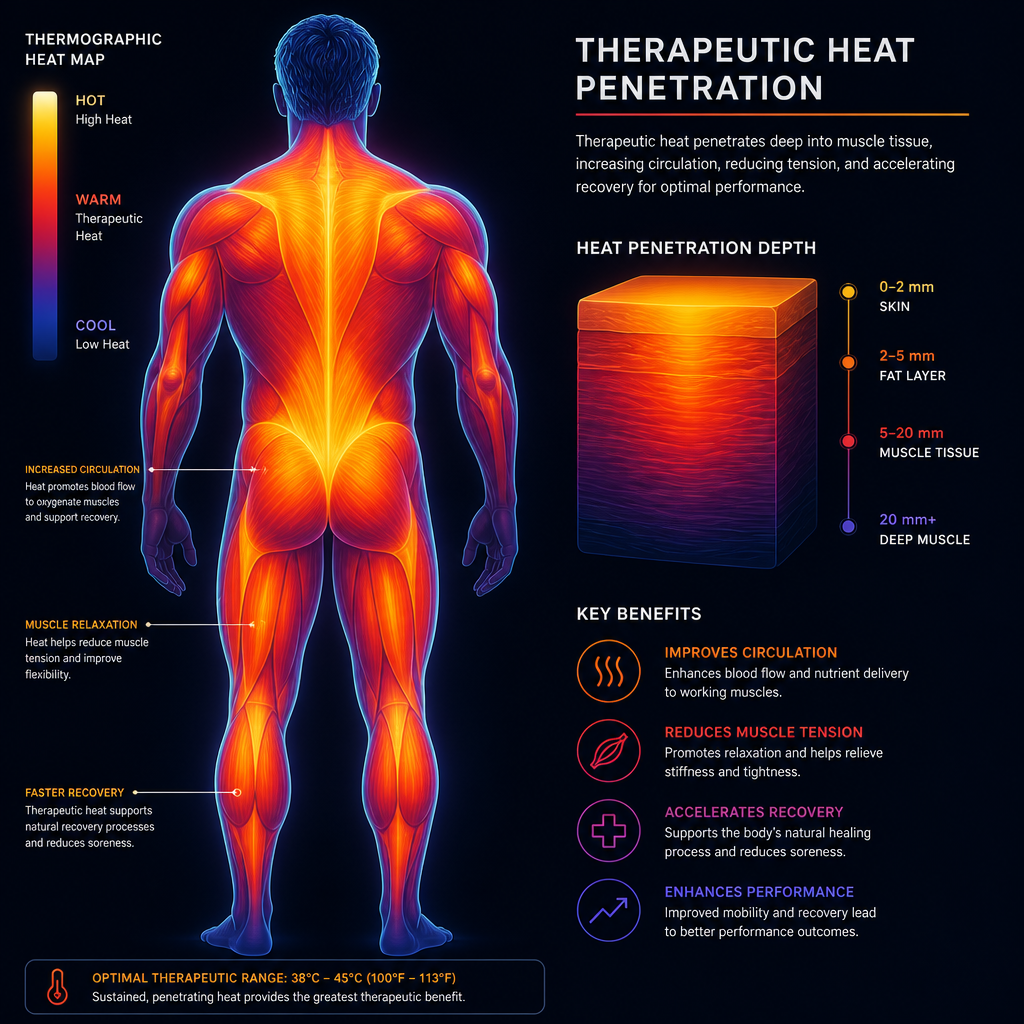
Understanding the mechanism is not an academic detail: it is what transforms the sauna from a relaxing ritual into an intentional recovery protocol. When you enter a sauna, the heat triggers peripheral vasodilation, which increases blood flow and, with it, the transport of oxygen and nutrients to muscle fibers damaged by training. Simultaneously, it accelerates the removal of metabolic waste like lactate, which contributes to delayed onset muscle soreness and the feeling of "heavy legs."
The role of Heat Shock Proteins
The most relevant mechanism at the molecular level is the activation of Heat Shock Proteins (HSPs). These proteins are produced by cells in response to thermal stress and function as molecular chaperones: they help repair damaged proteins, protect cells from further stress, and accelerate tissue regeneration processes. For an athlete training three to five times a week, stimulating HSP production regularly means that muscle cells are in better condition to absorb the next training load.
Benefits for sleep and the nervous system
Thermotherapy also has a documented effect on sleep quality. Exposure to heat followed by the body's natural cooling encourages a drop in core temperature, which is one of the signals that induces deep sleep. For the amateur athlete who trains at the end of the day, a sauna session 60 to 90 minutes before bed can significantly improve overnight recovery, which is where much of the muscle repair effectively occurs.
Regular sauna use can improve cardiovascular, pulmonary, and immune health, in addition to reducing the risk of high blood pressure and contributing to active recovery after intense exercise.
Types of portable sauna: which one best serves the amateur athlete
There is no single type of portable sauna, and the right choice depends on the primary goal, available space, and budget. The market is essentially divided into three categories, each with distinct characteristics that are important to know before investing.
| Portable Sauna Type | Main Characteristics | Suitable for Amateur Athlete |
|---|---|---|
| Steam sauna (capsule) | Capsule format with external steam generator, heats in 5-10 min, temperature up to 60 °C, compact and foldable, plugs into household outlet. Includes internal chair. | Excellent. Ideal for post-workout recovery at home or in an apartment. Easy to store and use frequently. Lower entry cost without compromising effectiveness. |
| Portable infrared sauna (tent/panel) | Uses infrared panels instead of steam, deeper tissue penetration, lower temperatures (45-55 °C), 20-30 minute sessions, moderate energy consumption. | Good option for those seeking deeper tissue action or who have sensitivity to humid environments. Slightly larger and more expensive than the steam capsule format. |
| Outdoor barrel sauna (semi-portable) | Treated wood, wood or electric heating, temperature up to 90 °C, experience closest to a traditional Finnish sauna, requires outdoor space. | Suitable for those with a garden or terrace who seek the traditional experience. Less flexible in terms of daily logistics. Higher initial investment. |
For most amateur athletes living in apartments or urban homes who want to integrate thermotherapy into their daily routine without complications, the capsule-format steam sauna is the most practical entry point. It is the solution that best combines accessibility, effectiveness, and real-world convenience.
Tip: If your primary goal is post-high-intensity training muscle recovery, prioritize the moist heat of a portable steam sauna. Steam facilitates sweating, and the feeling of encompassing heat is perceived as more intense at lower temperatures than in a dry sauna, which is more tolerable for beginners.
How to integrate the sauna into your training routine without complications
The most practical question for the amateur athlete is not whether the sauna works, but rather how to fit it into a day already filled with training, work, and family. The good news is that the portable sauna was designed precisely to adapt to the user's routine, not the other way around.
When to use: post-workout vs. rest days
For active recovery, the ideal time is between 30 to 60 minutes after finishing your workout, once you have rehydrated. Avoid entering the sauna immediately after exercise, when body temperature is already elevated and your hydration status may be compromised. On rest days, the sauna acts as passive recovery, keeping tissues warm and in good circulatory condition without imposing a new load on the system.
Duration and frequency for amateur athletes
Two to three 15-20 minute sessions per week are sufficient to produce consistent benefits. A common mistake is confusing more time with better results: sessions exceeding 30 minutes without accumulated experience increase the risk of dehydration and excessive cardiovascular stress. Start with 10 to 15 minutes for the first few weeks and increase progressively as the body adapts to the thermal stimulus.
Hydration before and after
Always enter well-hydrated. A 20-minute sauna session can result in significant sweat loss. Drink at least 500 ml of water before the session and replenish fluids immediately afterward. If you trained before the sauna, this precaution is even more important because a fluid deficit already exists before you step in.
Contrast therapy as the next step
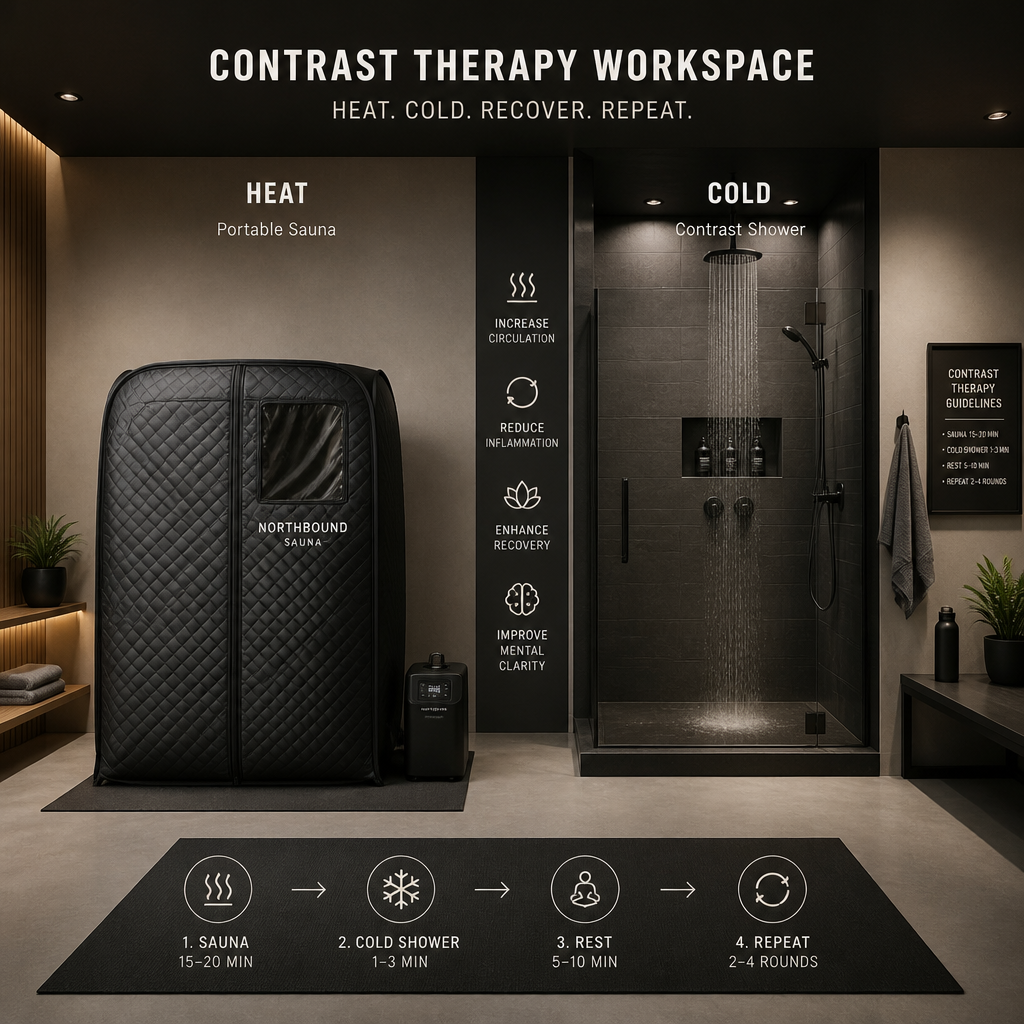
For amateur athletes who already have an established sauna routine, the next natural step is contrast therapy: deliberate alternation between heat and cold. This protocol, long used by elite athletes, is now completely within reach at home with the combination of a portable sauna and an ice bath or a cold water chiller.
The principle is simple: heat dilates blood vessels and the subsequent cold constricts them. This alternation creates a vascular pumping effect that accelerates peripheral circulation, removes metabolic waste more efficiently, and reduces muscle inflammation more expressively than either modality alone. For a runner completing a long weekend workout or a cyclist finishing a three-hour ride, this contrast protocol can make the difference in recovery time before the next quality effort.
The Alaska Recover offers integrated solutions that combine portable sauna with ice baths and chillers, designed specifically for this type of protocol at home or in professional spaces. Combining these two tools is what distinguishes a serious recovery approach from an only occasional routine.
Frequently Asked Questions
Is the portable steam sauna as effective as a traditional Finnish sauna for recovery?
For the primary goal of post-workout muscle recovery, the portable steam sauna produces the same core physiological mechanisms: vasodilation, activation of heat shock proteins, and induction of sweating. The difference lies in the maximum temperature (60 °C in most portable steam models, versus 80-100 °C in a fixed Finnish sauna) and the overall experience. For most amateur athletes, this temperature difference does not compromise recovery results, especially with regular use.
Can I use the portable sauna every day?
Daily use is possible for healthy individuals without contraindications, but it is not necessarily more effective than three weekly sessions for sports recovery purposes. The body needs time to respond to the thermal stimulus and consolidate adaptations. If you want to use it every day, keep sessions short, between 10 and 15 minutes, and ensure careful hydration before and after each session.
How long after the workout should I enter the sauna?
The ideal is to wait 30 to 60 minutes after finishing your workout. This interval allows the body to begin its natural temperature cool-down and allows you to rehydrate properly. Entering the sauna immediately after exercise, with the body already in thermal stress and potentially dehydrated, increases the risk of dizziness and unnecessary cardiovascular strain.
Is the portable sauna suitable for athletes over 40?
Yes, and it is often especially relevant for this group. From the age of 40, recovery time tends to increase and the capacity for muscle regeneration slows down. Regular thermotherapy helps maintain good peripheral circulation, reduce muscle and joint stiffness, and improve sleep quality, all factors that directly affect the ability to train consistently. As with any intervention, people with cardiovascular conditions or other health issues should consult a doctor before starting.
What is the difference between a portable steam sauna and an infrared sauna for the amateur athlete?
A steam sauna uses moist heat and raises the ambient temperature up to 60°C, producing intense and rapid sweating. An infrared sauna acts at lower temperatures but with deeper tissue penetration. For general post-workout muscle recovery, both are effective. If you are prone to respiratory issues or prefer a less humid environment, the infrared sauna is more comfortable. If you prioritize heating speed and entry cost, a portable capsule-style steam sauna is the most direct choice.
Can I combine a portable sauna with an ice bath at home?
Yes, and it is one of the most effective combinations available to the amateur athlete. The usual protocol is: 15 to 20 minutes in the sauna, exit and cool down briefly for 2 to 5 minutes, then cold water immersion for 2 to 5 minutes. You can repeat the cycle one to three times depending on your tolerance and experience. This combination is fully achievable at home with a portable sauna and a chiller-compatible immersion tub, such as the solutions Alaska Recover provides for home use.
Do you already have a portable sauna at home, or are you considering integrating thermotherapy into your recovery routine? Share your experience or questions in the comments.
References
- Sauna after training: benefits for athletes and muscle recovery (On Running)
- How the sauna can accelerate muscle recovery and maximize sports results
- Scientific study on passive heating with portable sauna and physiological responses in recreational athletes (ScienceDirect)
- Innovations in portable sauna design in 2025 and their impact on the home user
- The contrast technique in the sauna: the secret of elite athletes applied to the amateur context