


Finishing a marathon is an extraordinary feat. What happens in the 48 hours that follow, however, determines how long your body will need to return to the track, and whether your next race will go well or be sabotaged by accumulated inflammation and untreated muscle damage. Post-marathon recovery does not start the next day: it starts in the first few minutes after crossing the finish line. And an ice bath, when used judiciously, is one of the most effective tools at your disposal during this critical window.
Table of Contents
Table of Contents
- What happens to the body in the 48 hours after a marathon
- Quick Summary
- Post-marathon ice baths: what science says
- Practical protocol: how to take an ice bath after a race
- Contrast therapy vs. standalone ice bath
- Common post-marathon recovery mistakes
- The 48 hours in detail: what to do beyond the ice bath
- Frequently Asked Questions
- References
What happens to the body in the 48 hours after a marathon
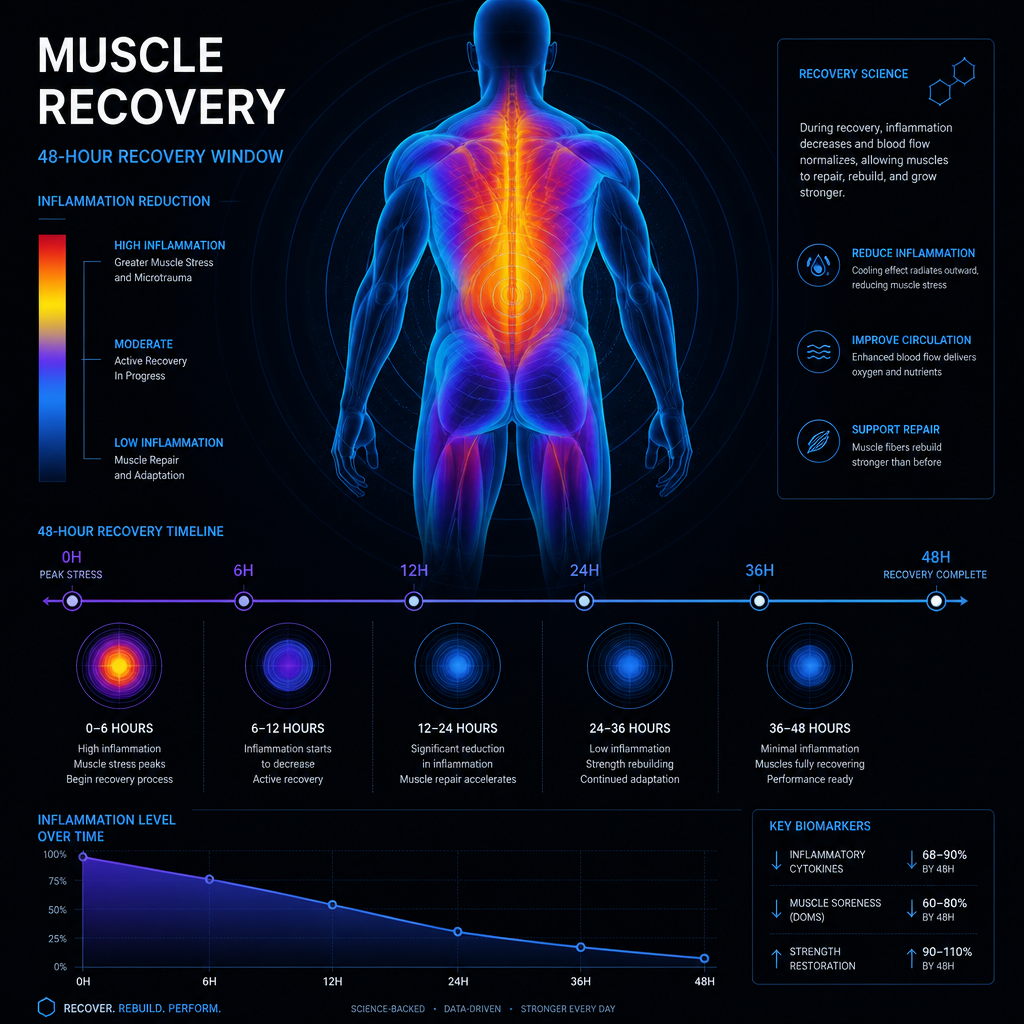
A marathon is not just a long run. It is a massive muscle-damaging event. Over 42.195 km, muscle fibers suffer repeated micro-tears, glycogen stores are depleted, inflammatory markers skyrocket, and blood levels of creatine kinase (CK)—a direct indicator of muscle damage—reach peaks that can persist for several days.
In the first hours after arriving, the body enters an acute inflammatory phase. This inflammation is natural and necessary to initiate the repair process. The problem arises when it is left unmanaged: persistent pain, joint stiffness, edema, and prolonged fatigue set in, delaying your return to training by days or even weeks.
The first 48 hours are the window where decisions have the greatest impact. Ignoring recovery at this stage is the equivalent of building a house with cracked foundations.
Quick Summary
| Key Idea | Explanation |
|---|---|
| The 48 hours after the race are decisive | Marathon-induced muscle damage peaks between 24 and 48 hours. Acting in this window reduces inflammation and accelerates repair. |
| Ice baths reduce delayed-onset muscle soreness | Cold water immersion has been identified in systematic reviews as effective in reducing DOMS at 24, 48, and 96 hours after intense exercise. |
| The ideal temperature is between 10°C and 15°C | Excessively low temperatures can cause exaggerated vasoconstriction and discomfort. The effective zone for most runners is between 10°C and 15°C. |
| 10 to 15 minutes is the recommended time | Shorter sessions are less effective; sessions over 20 minutes provide no additional benefits and increase risks. 10 to 15 minutes is the sweet spot. |
| Ice baths do not replace sleep and nutrition | Cryotherapy amplifies recovery, but it does not compensate for poor diet, dehydration, or sleep deprivation in the hours following the race. |
| Do not use ice baths for every workout | With regular training, routine use can blunt muscle adaptations. Reserving cryotherapy for competitions and high-load blocks is the correct approach. |
| Chillers ensure controlled and reproducible temperatures | Ice melts and the temperature fluctuates. A chiller keeps the temperature stable throughout the entire session, which is essential for a consistent protocol. |
Before moving on to the concrete protocol, it is important to understand why cold water immersion works so differently from other forms of recovery, and why the 42 km of a marathon create a specific context where its benefits are more relevant than in any other type of training.
Post-marathon ice baths: what science says
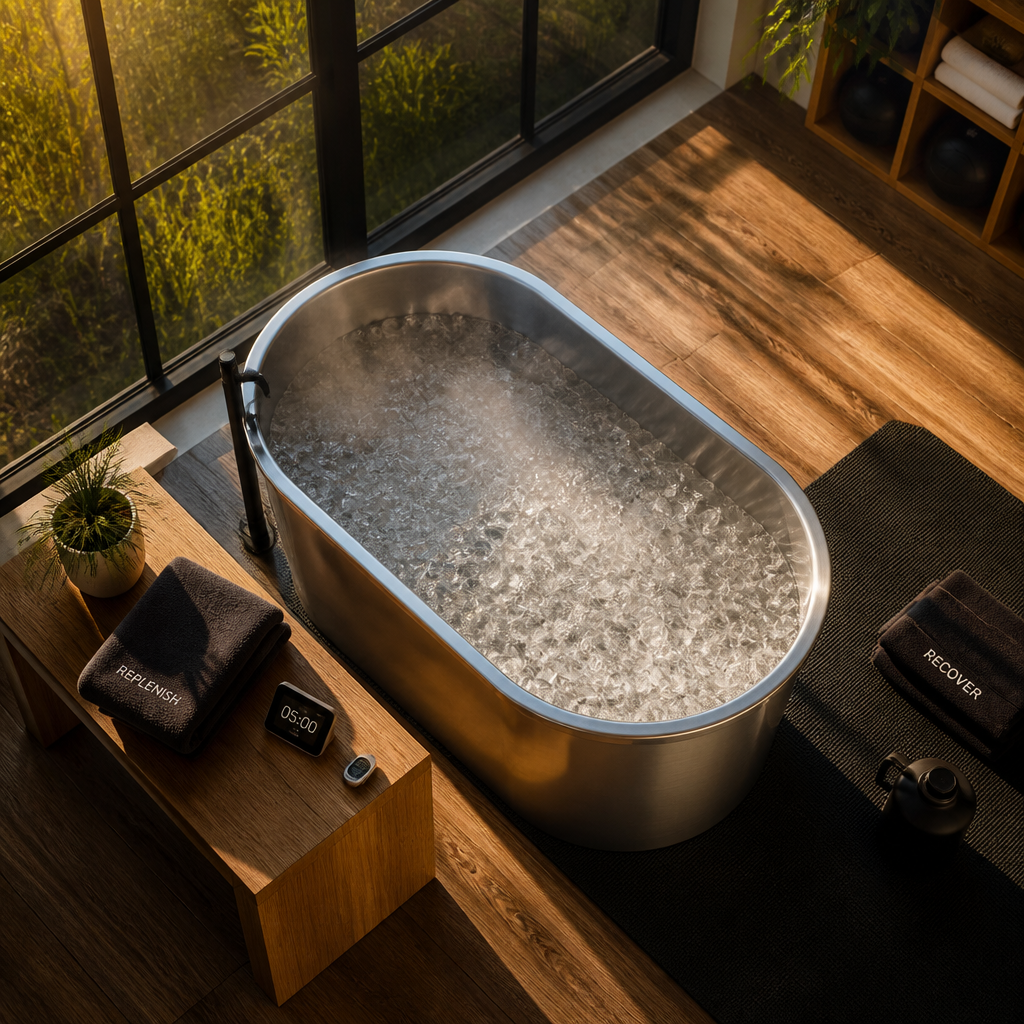
The evidence regarding cold water immersion (CWI) after high-intensity exercise is more robust than many people think. Systematic reviews and meta-analyses have identified CWI as an effective protocol for reducing the effects of delayed-onset muscle soreness at 24, 48, and 96 hours after exercise. A reduction in the perception of effort 24 hours after exercise has also been documented.
In the specific context of marathons, a study published on PubMed analyzed the effects of CWI on recovery after a trail marathon, measuring muscle damage markers such as creatine kinase (CK), muscle function, and inflammatory markers such as interleukin-6 (IL-6) and C-reactive protein (CRP), with measurements taken immediately after the race, at 24 hours, and at 48 hours. The data confirm the relevance of this time window for intervention.
How cold affects muscles after 42 km
The main mechanism of post-exertion cryotherapy is peripheral vasoconstriction. When the body enters cold water, blood vessels on the muscle surface constrict, reducing blood flow to the damaged areas. This limits local edema and reduces the accumulation of inflammatory metabolites.
Upon exiting the water, a rewarming phenomenon occurs that causes reactive vasodilation: blood returns to muscle areas with more oxygen and nutrients, favoring repair processes. This alternation of vascular pressure is one of the mechanisms that explains the effectiveness of immersion after long runs, where the total volume of affected muscle tissue is much higher than in a conventional workout.
The analgesic effect is equally relevant: the low temperature reduces nerve conduction velocity, which decreases pain perception and allows the runner to move with more comfort in the hours following the race.
Cryotherapy is intended for runner recovery after an intense race. With the application of cold, recovery is much faster and the athlete regains their pace more quickly. Benefits include preventative anti-inflammatory action, a decrease in fatigue and muscle spasms, and rapid circulatory activation.
Tip: If you have never taken an ice bath after a race, do not debut the protocol on marathon day. Try it first during long training runs of 30 km or more to understand your tolerance and avoid adding an unknown variable at a moment of higher physiological stress.
Practical protocol: how to take an ice bath after a race
An effective protocol is not just about getting into any container with cold water and getting out when you can't take it anymore. There are variables that determine whether the result will be positive or ineffective.
Temperature: between 10°C and 15°C
Literature consistently points to the range between 10°C and 15°C as the effective zone for recovery. Below 8°C, the risk of excessive vasoconstriction and muscle discomfort increases without documented additional gain. Above 15°C, the vasoconstrictor effect is lower and the anti-inflammatory benefits decrease. Keeping the temperature stable throughout the session is essential. Ice added to a regular bathtub melts progressively and raises the temperature, making the protocol inconsistent. An integrated chiller, such as those available in the Alaska Recover range, maintains the exact temperature throughout the entire session without the need for intervention.
Duration: 10 to 15 minutes
Sessions of 10 to 15 minutes are sufficient to activate the relevant physiological mechanisms. Sessions over 20 minutes have not shown additional benefits and increase discomfort. Moderation is key: excessive exposure reduces the method's effectiveness and should not be viewed as a matter of mental toughness.
Timing: in the first hours after crossing the finish line
The ideal time for the first ice bath is in the first 1 to 3 hours after finishing. In this window, acute inflammation is setting in, and early intervention has the greatest impact. Waiting for the next day significantly reduces effectiveness.
In races over several consecutive days (such as stage ultramarathons), immersion can be repeated the next day, but in isolated races like an urban marathon, a well-executed session on the day of the event is usually sufficient for the acute phase.
Tip: After exiting the immersion, dress immediately in warm clothing and move gently for 5 to 10 minutes. Active rewarming favors reactive vasodilation and boosts the session's recovery effect.
Contrast therapy vs. standalone ice bath
Contrast therapy, which alternates between cold and hot water immersion, is another approach used by runners for post-marathon recovery. But which of the two is more effective in this specific context?
| Method | Main Mechanism | Best For |
|---|---|---|
| Standalone ice bath (CWI) | Prolonged vasoconstriction, reduction of edema and acute inflammation | First hours after the marathon, when inflammation is in its most acute phase |
| Contrast therapy (cold/heat) | Alternating vasoconstriction and vasodilation, stimulation of the circulatory system | Active recovery phase, 24 to 48 hours after the race, when DOMS is at its peak |
| Standalone sauna | Vasodilation, muscle relaxation, elimination of metabolites via sweat | Passive recovery 48h or more after the race, when acute inflammation has subsided |
In practice, the most effective combination for a marathon runner is to use the ice bath in the first hours after finishing and, the next day, opt for a contrast therapy session or a sauna. Integrated saunas from Alaska Recover, which combine sauna and cold immersion on a single platform, were designed precisely for this type of two-day protocol.
What does not work is reversing the order: using heat in the first hours (long hot shower, sauna immediately after finishing) amplifies acute inflammation and can aggravate muscle edema in the following hours.
Common post-marathon recovery mistakes
After years of experience in this field, the mistakes that most delay recovery for runners are not technical. They are behavioral. And they repeat themselves with remarkable consistency.
Using an ice bath every training day
This is one of the most documented misconceptions. Routine cold water immersion after strength or hypertrophy training has been shown to blunt anabolic signaling and reduce gains in strength and muscle mass over time compared to active recovery. For regular training, reserving cryotherapy for competitions and high-load blocks is the correct approach. The marathon is precisely the type of event that justifies the protocol.
Taking anti-inflammatories preventatively
Taking ibuprofen or diclofenac before or immediately after a marathon "to prevent pain" is a common and counterproductive practice. Anti-inflammatories interfere with the inflammatory cascade that triggers the muscle tissue repair process. The result is more controlled immediate pain, but a slower and less complete recovery in the medium term.
Neglecting hydration and nutrition in the first 3 hours
An ice bath does not compensate for a missed meal. Consuming a meal rich in carbohydrates and protein in the first 2 to 3 hours after the marathon is crucial for replenishing glycogen stores and providing the amino acids needed for muscle repair. Cryotherapy acts on inflammation, not energy replenishment. The two interventions are complementary, not alternatives.
Ignoring sleep on the night after the race
After the excitement of a marathon, many runners sleep poorly the following night. But it is precisely during deep sleep that most growth hormone release and tissue repair processes occur. Sleep deprivation on the night after the race sabotages everything done in the recovery protocol. No recovery equipment can compensate for 5 hours of sleep.
The 48 hours in detail: what to do beyond the ice bath
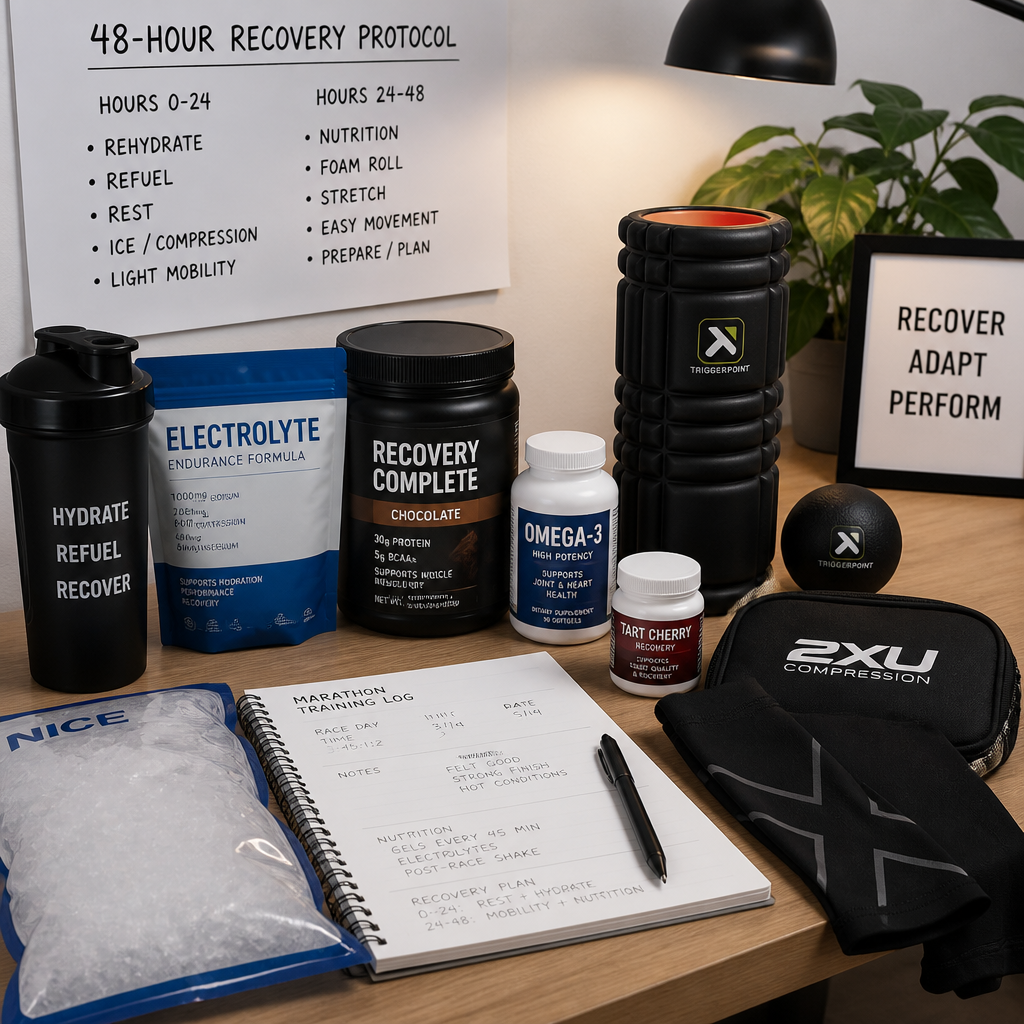
The ice bath is one piece of the protocol, not the complete protocol. In the 48 hours after a marathon, recovery is multidimensional.
First 6 hours
Immediate rehydration, meal rich in carbohydrates and proteins within 2 to 3 hours, ice bath in the first 1 to 3 hours after finishing, compression clothing to reduce edema in the lower limbs. Gentle movement (walking slowly) is preferable to total immobility: it helps move inflammatory metabolites and prevents muscles from stiffening in a resting position.
Between 6h and 24h
Sleep is the priority. Regular nutrition with an emphasis on protein. Gentle mobility, no loads. Avoid excessively hot showers (high temperature promotes vasodilation and can aggravate existing edema). Gentle massage can help mobilize accumulated fluid, but it should be light, especially if muscles are still very tender.
Between 24h and 48h
Delayed-onset muscle soreness (DOMS) usually peaks between 24 and 48 hours. This is the phase where contrast therapy or a moderate-temperature sauna session can be introduced. Light walking or slow swimming are the most recommended forms of exercise. Avoid running in this window, even if the pain is bearable. Muscle tissue is still in active repair.
Tip: If you have access to a chiller-equipped immersion tub, such as those in the Alaska Recover professional line, consider a second, shorter 8 to 10-minute session on the morning after the race, especially if muscle soreness is intense. It is not mandatory, but it can reduce the peak of DOMS that occurs between 24 and 48 hours.
Frequently Asked Questions
How long after the marathon should I take an ice bath?
The ideal time is in the first 1 to 3 hours after crossing the finish line. In this window, acute inflammation is setting in, and early intervention has the greatest impact on reducing edema and muscle pain. Waiting until the next day significantly reduces the session's effectiveness for the acute inflammatory phase.
What is the ideal temperature for an ice bath after a marathon?
The most effective and documented range is between 10°C and 15°C. Below 8°C, risks increase without proven additional benefits. Above 15°C, the anti-inflammatory effect is lower. A chiller with precise temperature control, like those used with Alaska Recover immersion tubs, is the most reliable way to consistently maintain this range.
Can I use a simple cold shower instead of an immersion tub?
A cold shower has some effect, but it is much less effective than full immersion. Immersion involves a much larger surface area of the body and creates uniform hydrostatic pressure on tissues that a shower cannot replicate. For a race as demanding as a marathon, a dedicated immersion tub or basin is the most appropriate option.
Is an ice bath safe for every runner?
For most healthy runners, yes. There are, however, contraindications: uncontrolled cardiovascular diseases, Raynaud's syndrome, open wounds or skin lesions, and certain circulatory conditions. If you have any doubts about your specific condition, consult a doctor before starting any cryotherapy protocol. Never submerge immediately after a sauna session without a transition period.
Should I take an ice bath after every long run during marathon training?
No. Routine use of ice baths after regular workouts can blunt the muscle adaptations you are trying to build. Reserve cold water immersion for competitions, peak training sessions, and very high-volume blocks. In your day-to-day routine, active recovery, sleep, and nutrition yield better long-term results.
How long should I stay in the immersion?
Between 10 and 15 minutes is the recommended range for most runners. Sessions under 5 minutes are generally ineffective. Sessions over 20 minutes do not provide documented additional benefits and increase discomfort and the risk of hypothermia in people with lower cold tolerance. Start with 8 to 10 minutes if it is your first time after a race.
Can I combine ice baths with sauna on the same day after a marathon?
In the first hours after a marathon, the priority is the ice bath, not the sauna. Using a sauna immediately upon finishing, when acute inflammation is at its peak, can amplify muscle edema. The combination of cold and heat (contrast therapy) is more suitable from 24 hours after the race, once the acute phase has subsided. Alaska Recover offers solutions that integrate both elements for this type of phased protocol.
Share your experience: how did you manage the 48 hours after your last marathon, and what made the biggest difference in your recovery?
References
- Cryotherapy in sports recovery: what the scientific evidence says
- Cold water immersion and post-exercise recovery: scientific review
- Effects of cold water immersion and cherry juice on recovery after a marathon
- Multiple cold water immersions and exercise-induced muscle damage
- Post-marathon recovery: how to avoid injuries and improve performance