


Most people try ice baths for the first time for physical reasons: muscle recovery, inflammation reduction, performance improvement. But there is an effect that few anticipate and which often becomes the main reason for continuing. Cryotherapy and mental health are linked by concrete neurological mechanisms, and data shows that controlled cold exposure produces measurable changes in mood, anxiety, and psychological resilience. This article explains how this process works, what science confirms, and how to integrate ice baths into a routine that benefits both the body and the mind.
Table of Contents
- Quick Summary
- Neurological Mechanisms of Cold on the Mind
- Cold and Dopamine: What Happens in the Brain
- Ice Bath as an Anti-Stress Tool
- Mental Benefits of Cryotherapy: What Studies Say
- Contrast Therapy and Psychological Well-being
- Comparison of Cryotherapy Approaches for Mental Health
- How to Start Safely
- Frequently Asked Questions
- References
Quick Summary
| Key Insight | Explanation |
|---|---|
| Dopamine spikes with cold | Exposure to cold water causes a dopamine increase of up to 250%, according to research published in the European Journal of Physiology, higher than that of many common stimulants. |
| Norepinephrine reduces anxiety | Cold water immersion increases norepinephrine by 300 to 400%, a neurotransmitter associated with focus and emotional regulation. |
| Acute stress trains resilience | Cold acts as a controlled micro-stressor. Regular repetition improves the nervous system's ability to manage daily chronic stress. |
| 2 to 3 sessions per week are enough | In practice, sessions of 2 to 5 minutes at temperatures between 10°C and 15°C, performed regularly, produce measurable results in mental well-being. |
| Contrast therapy enhances effects | Alternating sauna with an ice bath amplifies the endorphin response and produces a state of deep relaxation that cold immersion alone rarely achieves. |
| Consistency beats intensity | A common mistake is starting with water that is too cold. Gradually adapting the temperature ensures better adherence and longer-lasting results. |
| Ice bath well-being goes beyond physical recovery | Regular users report improved sleep, reduced mental rumination, and a sense of self-efficacy, effects that persist for hours after the session. |
Neurological Mechanisms of Cold on the Mind
When the body comes into contact with cold water, the nervous system triggers an immediate and coordinated response. Skin thermoreceptors send alarm signals to the hypothalamus, which activates the sympathetic-adrenal axis. The result is not just physical; it is a cascade of neurotransmitters that alters mental state in a measurable and, with regular practice, lasting way.
What the data shows consistently is that this process is not simply the body reacting to cold; it is the nervous system learning to regulate itself in the face of an acute stress stimulus. This distinction is central to understanding why cryotherapy and mental health are so directly linked.
The role of the autonomic nervous system
Cold water immersion initially activates the sympathetic nervous system—the fight-or-flight mode. Heart rate increases, breathing becomes shallow, and peripheral vessels constrict. But as the user stays in the water and breathing is controlled, the parasympathetic nervous system begins to regain control. This active training of the transition between the two systems is, in practice, one of the most powerful mechanisms that cryotherapy offers for emotional regulation.
Those who practice regularly describe this process as learning to keep calm under pressure. It is not a metaphor; it is literally what the nervous system is training for.

Endorphins and beta-endorphins in cold immersion
Cold exposure stimulates the release of beta-endorphins, the body's natural painkillers. These compounds produce a sense of mild euphoria and reduce the perception of pain, both physical and emotional. In regular users, this effect tends to be more pronounced and last longer after each session.
Tip: If you feel agitated rather than calm after an ice bath, it means your sympathetic system was not sufficiently regulated. Try to prolong your exhale during the session, breathing in through your nose for 4 seconds and exhaling slowly through your mouth for 6 to 8 seconds.
Cold and Dopamine: What Happens in the Brain
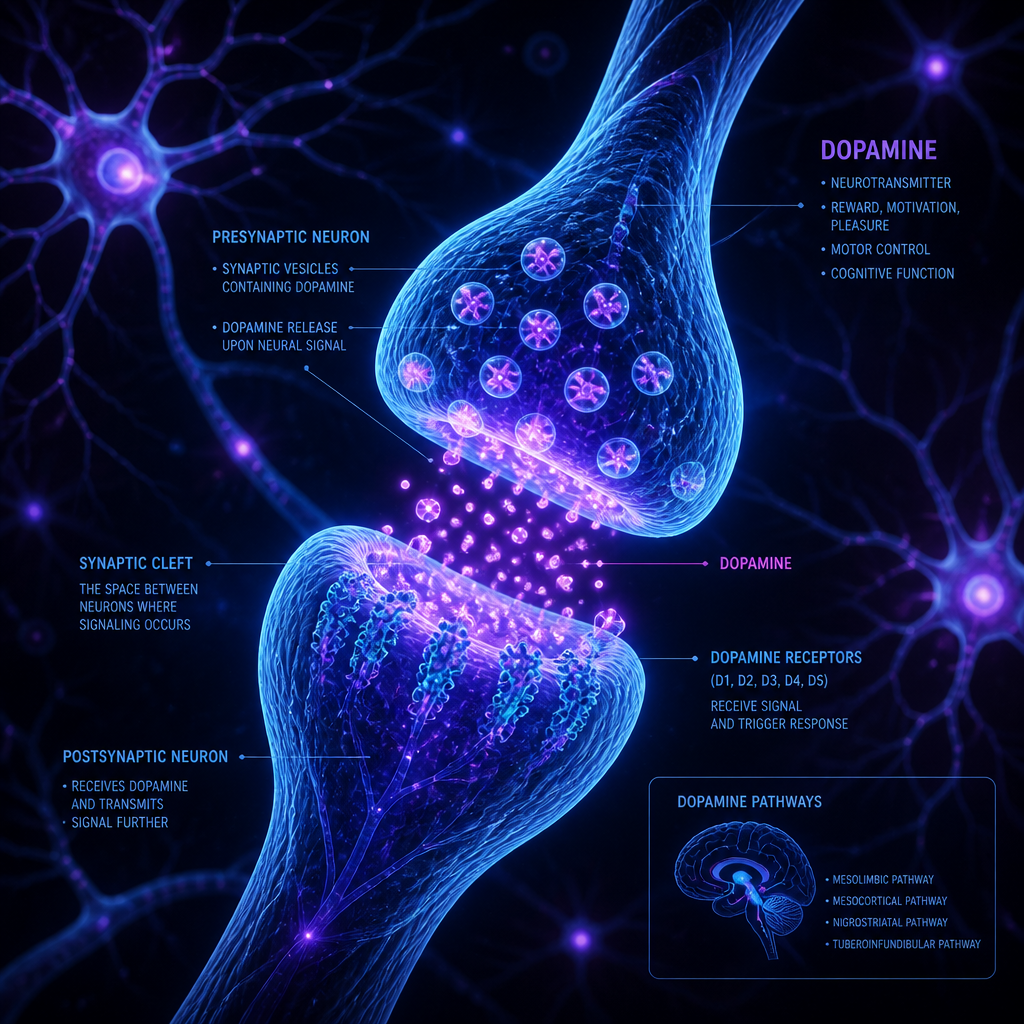
The relationship between cold and dopamine is one of the most robust findings in this field. A study published in the European Journal of Physiology demonstrated that cold water immersion raises dopamine levels by up to 250% above baseline, and this increase is sustained for several hours after the session. For context, this number is higher than that produced by most pleasurable foods and is comparable to high-intensity physical activity.
Dopamine is not just the neurotransmitter of pleasure; it is the neurotransmitter of motivation, focus, and anticipation. Chronically low levels of dopamine are associated with anhedonia, procrastination, depression, and lack of initiative. Raising these levels naturally and repeatedly has real practical implications.
Dopamine versus adrenaline: an important distinction
A common mistake is to confuse the post-ice-bath state with an adrenaline spike. These are distinct phenomena. Adrenaline produces immediate but ephemeral activation; dopamine produces sustained motivation and a sense of reward. This is why many regular users describe their morning ice baths as the moment that defines the quality of the entire day, not just the first few minutes.
In practice, the ice bath works best as a morning routine precisely for this reason. The elevated dopamine window that follows the session is ideal for creative work, decision-making, or any activity that requires focus and mental clarity.
"Cold water immersion produces 250% increases in dopamine and 300 to 400% in norepinephrine, which are sustained for hours. There is no other behavior that we know of that produces this neurochemical profile." - Dr. Andrew Huberman, Neurobiology Laboratory, Stanford University
Norepinephrine and emotional regulation
Norepinephrine, also significantly elevated by cold exposure, plays a central role in mood regulation and stress response. Adequate levels of this neurotransmitter are associated with better focus, greater frustration tolerance, and a reduced capacity for mental rumination. Several antidepressants and anxiolytics act precisely on norepinephrine systems, which places cryotherapy in a position of relevant complementarity with conventional therapeutic approaches.
Ice Bath as an Anti-Stress Tool
Chronic stress is one of the biggest public health problems in contemporary Europe. According to Eurostat, more than 40% of European workers report high levels of work-related stress. Conventional regulation mechanisms—physical exercise, meditation, quality sleep—are effective but require time and consistency that is difficult to maintain. The ice bath offers a complementary alternative with a particularly favorable time-benefit ratio.
The anti-stress mechanism of the ice bath works on two levels. In the immediate term, cold immersion interrupts cycles of rumination by forcing involuntary mindfulness. It is impossible to ruminate on professional problems when your body is in contact with 10°C water. In the medium term, repeated exposure trains the hypothalamic-pituitary-adrenal axis to respond with less intensity to external stressors.
Hormesis: the principle behind the benefit
The relevant scientific concept here is hormesis: the adaptive response of an organism to low-intensity stress stimuli. When the body is repeatedly exposed to a controlled and safe stressor, it becomes progressively more efficient at managing that and other types of stress. This is the same principle that makes physical exercise beneficial. The difference is that the ice bath can produce a significant hormetic response in sessions of just 2 to 5 minutes.
Data consistently shows that users who practice cold immersion regularly for 8 weeks show measurable reductions in chronic cortisol markers, the primary biological indicator of accumulated stress.
Tip: To maximize the anti-stress effect, do not leave the water immediately when you feel the urge to. That moment of discomfort is precisely the training stimulus. Stay for another 15 to 30 seconds and breathe calmly. It is this ability to choose to stay that, with repetition, transfers to managing daily stress.
Mental Benefits of Cryotherapy: What Studies Say
Research on the mental benefits of cryotherapy has grown considerably in the last decade. A 2008 study published in Medical Hypotheses by Nikolai Shevchuk proposed cold immersion as an adjunctive treatment for depression, based on the intensity of the effects on the brain's monoaminergic systems. This work continues to be cited in clinical contexts and has subsequently generated a series of more controlled trials.
A 2016 Dutch study with 3,000 participants analyzed the impact of daily cold showers on subjective health and absenteeism. Participants who ended their shower with 30 to 90 seconds of cold water reported a 29% reduction in sickness-related absenteeism and significant improvement in self-reported mood over 90 days.
Anxiety and cold immersion
Anxiety responds well to controlled cold exposure for specific reasons. The increase in norepinephrine improves the regulation of the stress axis, and the training of the autonomic nervous system described earlier reduces the deficient parasympathetic activation that characterizes many anxious states. Users with generalized anxiety often report that ice baths give them a sense of control that other methods cannot replicate as quickly.
This sense of self-efficacy—the conviction that one is capable of managing difficult states—is in itself therapeutic. It is not a placebo effect. It is a measurable result of repeating an experience of discomfort managed successfully.
Sleep and cognitive recovery
Core body temperature needs to drop slightly for deep sleep to occur. Cold immersion, especially when performed in the late afternoon, accelerates this core cooling process and is associated with shorter sleep latency and a higher proportion of slow-wave sleep. Regular ice bath users consistently report improved sleep quality, a factor with a direct and measurable impact on psychological well-being.
Contrast Therapy and Psychological Well-being
Contrast therapy, the alternating between intense heat and cold immersion, produces distinct and often superior psychological effects compared to cold immersion alone. The heat of the sauna activates the endogenous opioid system independently, releasing beta-endorphins and producing a state of deep relaxation. When this state is followed by cold immersion, the release of dopamine and norepinephrine occurs over a nervous system that is already partially regulated, which amplifies and prolongs the positive effects.
In practice, those who use the sauna solutions combined with Alaska Recover ice baths describe the heat-cold cycle as the most effective protocol they have experienced for managing weeks of high professional pressure. The combination is not just additive; it is synergistic.
Recommended contrast protocol for mental benefits
Data points to cycles of 10 to 15 minutes of sauna followed by 2 to 3 minutes of cold immersion, repeated 2 to 3 times per session. This protocol maximizes the amplitude of the neurochemical response. The total 45- to 60-minute session produces a state of well-being that many users describe as comparable to a high-quality meditation session, but with a lower barrier to entry.
Alaska Recover provides integrated solutions that make this protocol accessible both in a home context and in commercial facilities such as gyms, clinics, and hotels. The range of ice baths includes options with precise temperature control that allow for consistent conditions between sessions, which is critical for obtaining reproducible neurological results.
Comparison of Cryotherapy Approaches for Mental Health
There are several ways to access the mental health benefits of cryotherapy. Each approach has a different cost, convenience, and efficacy profile, and the right choice depends on the context of use and the intended frequency.
| Approach | Mental Health Advantages | Practical Limitations |
|---|---|---|
| Ice bath with integrated chiller (e.g., Alaska Recover) | Controlled and consistent temperature; allows full-body immersion; ideal for regular protocols; combines with sauna for contrast therapy. Most predictable neurochemical results due to consistent conditions. | Higher initial investment. Requires adequate space. Optimal solution for frequent home use or commercial facilities. |
| Cold showers | Zero additional cost; accessible to anyone; real norepinephrine and dopamine stimulus, though lower than full immersion. Useful as an entry point and as a daily supplement. | Smaller surface area in contact with cold reduces the intensity of the response. Inconsistent temperature depending on water supply. Difficult to combine with formal contrast protocols. |
| Whole-body cryotherapy chambers | Very short sessions (2 to 3 minutes) with extreme temperatures. Available at specialized centers. Intense sympathetic response with documented dopamine effect. | High cost per session; requires travel to a specific facility; hinders consistency. Research on psychological benefits is less extensive than for water immersion. Does not allow for integrated contrast therapy. |
How to Start Safely
Starting ice baths for mental benefits does not require temperature extremes or long sessions. In practice, most people achieve relevant neurological results with temperatures between 10°C and 15°C for 2 to 5 minutes. Below 10°C, discomfort increases significantly without a proportional increase in benefits for most people.
The most common mistake is starting with water that is too cold, influenced by online content that glorifies extreme temperatures. This leads to negative experiences that reduce the likelihood of continuing. Consistency over weeks and months is what produces lasting neurological changes, not occasional intensity.
Recommended progression for beginners
For the first two weeks, start with a water temperature between 15°C and 18°C for 2 to 3 minutes. In weeks 3 and 4, reduce it to 12°C to 15°C and increase the duration to 3 to 5 minutes. From the fifth week onwards, try temperatures between 10°C and 12°C if your response to the previous protocol is comfortably manageable. This progression allows the nervous system to adapt gradually and ensures each session is experienced as a success.
Who should take extra precautions
People with cardiovascular diseases, uncontrolled hypertension, Raynaud's syndrome, or those taking medication that affects temperature regulation should consult a doctor before starting any cold immersion protocol. The initial response to cold includes a spike in blood pressure and heart rate, which is harmless in most healthy people but poses a real risk to specific populations.
Alaska Recover solutions allow for precise temperature control, which is crucial for following a safe progression. A quality chiller keeps the water exactly at the set temperature, eliminating the variability that makes progression protocols difficult to execute with rigor.
Tip: Avoid ice baths in the 2 to 3 hours before sleep if your goal is to improve sleep. Although cold immersion helps sleep in the long term, the spike in dopamine and norepinephrine immediately after the session can make it harder to fall asleep. The ideal time is in the morning or early afternoon.
Frequently Asked Questions
How many sessions per week are necessary for psychological benefits?
Available studies and practical experience point to 3 to 5 sessions per week as the ideal frequency for achieving lasting mental benefits. Less than 2 sessions per week produces slower neurological adaptations. More than one session per day shows no additional benefits and may interfere with physical recovery.
Can an ice bath replace psychological treatment or medication?
No. Cryotherapy is a complementary tool, not a substitute for clinical treatment for diagnosed mental disorders. Its effects on mood, anxiety, and stress are real and documented, but they should be integrated as part of a broader approach to well-being. Any change to medication or a therapeutic plan must be discussed with a healthcare professional.
What is the ideal ice bath temperature for mental health?
The 10°C to 15°C range best balances neurological efficacy and tolerability for most people. Below 10°C, additional benefits are marginal for most users, and the risk of hyperventilation or a negative experience increases. Above 18°C, the dopamine and norepinephrine response is significantly lower.
Is there a difference in mental benefits between men and women?
Current research does not identify clinically significant differences in the neurological response to cold between genders. There are individual differences in cold tolerance related to body composition, muscle mass, and history of exposure, but not to sex alone. Individualized progression is more important than any adjustment based on gender.
Does an ice bath help with depression?
There is positive preliminary evidence, namely the work of Shevchuk published in Medical Hypotheses, which proposes cold immersion as an adjuvant in the treatment of mild to moderate depression. The proposed mechanism involves the stimulation of cold receptors in the skin that activate the prefrontal cortex and the serotonergic system. However, controlled clinical evidence is still limited, and no cryotherapy protocol should be adopted as a primary treatment for depression without medical supervision.
Can I take an ice bath every day?
Yes, with moderate temperatures (12°C to 15°C) and durations of 2 to 5 minutes, daily ice baths are safe for healthy individuals with no contraindications. For athletes with physical recovery goals, there may be an advantage in limiting frequency during strength training periods to avoid inhibiting hypertrophic adaptations. For mental benefits exclusively, daily use is sustainable and well-tolerated by most practitioners.
Have you already integrated ice baths into your mental wellness routine? Share your experience in the comments and tell us what has changed for you.
References
- Scientific research database on health and neurology - PubMed / NCBI
- Global data on mental health and psychological well-being - World Health Organization
- European statistics on work-related stress and mental health - Eurostat
- Evidence-based health articles on cold therapies and the nervous system - Harvard Health Publishing
- Repository of scientific studies on cryotherapy and neurochemistry - ScienceDirect