


You train hard and your muscles are destroyed the next day. An intense leg workout or a long run is all it takes for DOMS to kick in and turn every staircase into a nightmare. The question that divides athletes, coaches, and wellness enthusiasts is always the same: do you dive into an ice bath or head straight for the sauna? The answer isn't simply "it depends" and leaving it at that. Each method acts differently on muscle tissue, inflammation, and your body's adaptation to training. Understanding the difference between ice bath vs. sauna is what separates smart recovery from a haphazard routine.
Table of Contents
- Quick Summary
- What happens to the muscle after training
- Ice bath: mechanisms and evidence
- Sauna: mechanisms and evidence
- Direct comparison: cold vs. heat
- Contrast therapy: the best of both worlds
- When to use each method by training profile
- Frequently Asked Questions
- References
Quick Summary
| Key point | Explanation |
|---|---|
| Cold reduces acute inflammation | Cold water immersion causes vasoconstriction, limits edema, and reduces muscle soreness in the first 24 to 96 hours post-workout. |
| Heat accelerates tissue repair | The sauna promotes vasodilation, increases oxygen and nutrient flow to the muscles, and aids in the relaxation of damaged fibers. |
| Ice baths may hinder muscle growth | Using cold water immersion immediately after strength training can attenuate anabolic signaling and reduce long-term hypertrophy. |
| Sauna is better suited for strength training | Those training to gain muscle mass benefit more from post-workout sauna, as it does not interfere with the hypertrophic response. |
| Contrast therapy combines both | Alternating cold and heat creates a vascular pumping effect that removes metabolic waste and reduces residual edema more effectively than either method alone. |
| Timing matters as much as the method | Cold is most useful in the acute phase of inflammation. Heat is more effective in the sub-acute and chronic phase, once the muscle has begun repair. |
| Not all athletes react the same way | Runners and endurance athletes tolerate and benefit more from ice baths than pure strength athletes looking to maximize hypertrophy. |
What happens to the muscle after training
When you finish an intense workout, your muscle isn't just tired. It is literally damaged at the microstructure level. Muscle fibers suffer micro-tears, lactic acid and other metabolic waste products accumulate, and the immune system triggers an inflammatory response to initiate repair. Paradoxically, this inflammation is necessary for you to grow stronger, but when it is excessive or poorly managed, it is what leaves you limping for three days.
The central question of recovery is, therefore: how to accelerate the removal of waste and the arrival of nutrients to the muscles without unnecessarily interfering with natural adaptation processes? This is where cold and heat take completely different physiological paths, with distinct practical consequences depending on your goal.

Ice bath: mechanisms and evidence
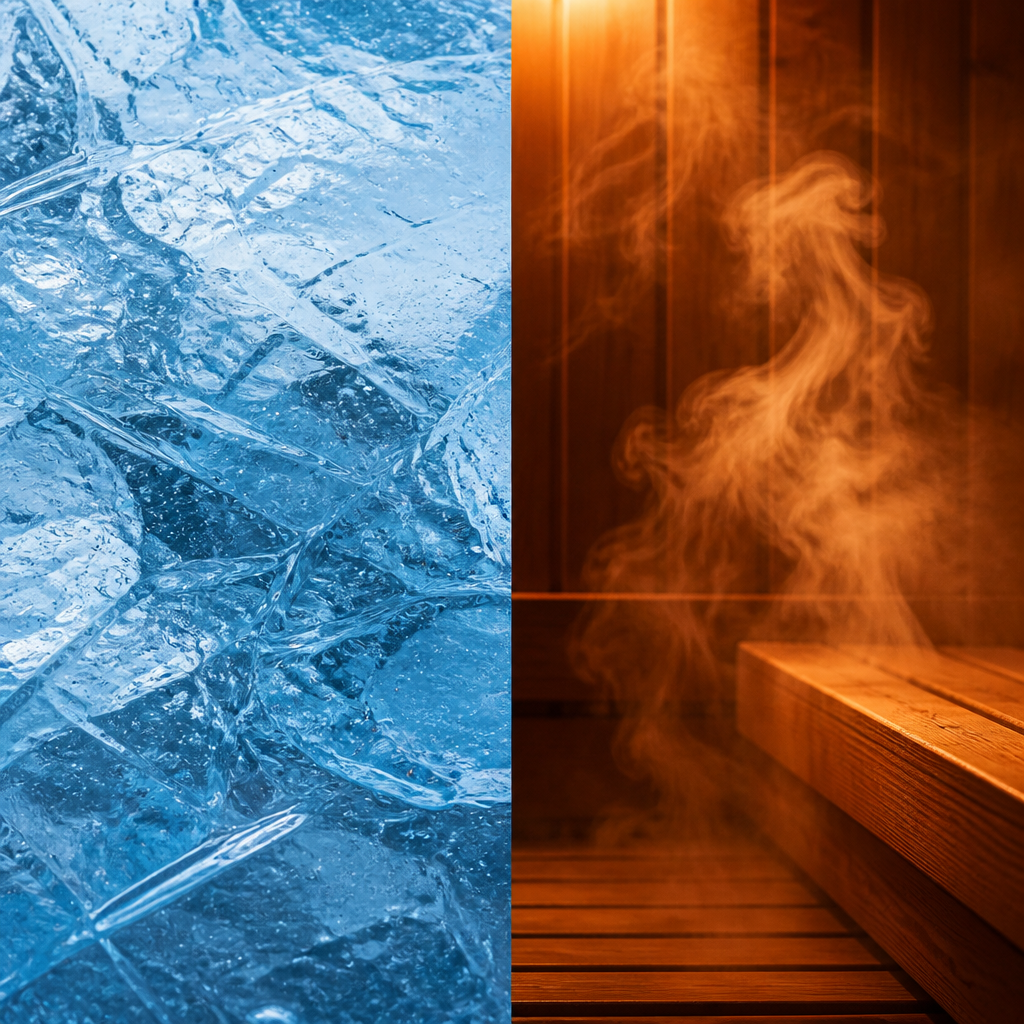
Cold water immersion works primarily through vasoconstriction. When the body is exposed to low temperatures, blood vessels contract, which reduces blood flow to peripheral tissues, limits edema, and slows down inflammatory cascades. When you exit the water, a reactive vasodilation occurs, helping to "flush out" accumulated metabolic waste.
Scientific evidence regarding the benefits of ice baths for Delayed Onset Muscle Soreness (DOMS) is consistent. A meta-analysis published in the Journal of Sports Sciences, covering 17 studies and 366 participants, concluded that cold water immersion significantly reduced DOMS compared to passive rest at 24, 48, 72, and 96 hours post-exercise. The 2016 Cochrane review confirmed these benefits, pointing to reductions in DOMS and perceived fatigue compared to simple rest.
The most studied protocol is between 10 and 15 degrees Celsius for 10 to 15 minutes, ideally within the two hours following an intense workout. In practice: a portable ice bath with a temperature-controlled chiller allows you to maintain this range precisely and repeatably, which makes all the difference compared to filling a household bathtub with ice and hoping for the best.
The problem with ice baths for those wanting to grow
There is an important warning that many cold plunge enthusiasts ignore. Using cold water immersion immediately after strength training can attenuate anabolic signaling and reduce muscle fiber hypertrophy in the long term. The inflammatory response that cold suppresses is precisely the same one the body uses to repair and grow thicker muscle fibers. If your main goal is hypertrophy, the systematic use of ice baths after every weightlifting session works against that goal.
This does not mean that ice baths are harmful in an absolute sense. It means they are a tool with context. For endurance athletes, for high-load phases where recovery between sessions is a priority, or for competition with little rest time, the ice bath is highly effective. For those training strength three times a week with the goal of gaining muscle mass, daily post-workout use is not the smartest strategy.
Tip: If you train for strength and want to use a cold plunge, do so at least 4 to 6 hours after your session, not immediately after. This preserves part of the anabolic signaling while still allowing you to enjoy some anti-inflammatory benefit.
Sauna: mechanisms and evidence
The sauna acts in the opposite way to the ice bath. Heat causes vasodilation, increases blood flow to muscles, and improves the delivery of oxygen and essential nutrients to tissues undergoing repair. Studies show that sauna heat can increase blood circulation, leading to better supply of oxygen and nutrients to muscles, accelerating recovery. Additionally, heat promotes the relaxation of tense muscle fibers, reduces joint stiffness, and has documented effects on stress reduction.
From a body composition standpoint, the sauna does not interfere with the hypertrophic response to strength training. On the contrary, heat exposure stimulates the production of heat shock proteins (HSPs), which play a role in maintaining muscle integrity and preventing protein degradation. This is a mechanism that favors, rather than hinders, the goals of those training for growth.
Sauna and the nervous system
Another frequently underestimated benefit of the sauna is its effect on the nervous system. After intense training sessions, the central nervous system accumulates fatigue that is not visible in the muscles but affects the quality of subsequent sessions. Regular sauna exposure promotes a state of deep relaxation, reduces cortisol levels, and improves sleep quality, which is, ultimately, the most important recovery window of all.
For athletes who train with high frequency, such as triathletes, cyclists, or runners preparing for competition, integrating the sauna into their weekly routine offers benefits that go beyond the muscle and are felt in the form of more energy, better focus, and fewer overuse injuries.
Tip: Use the sauna in a dedicated session, separated from your main workout by at least 30 minutes, and hydrate well before and after. A 15 to 20-minute session at temperatures between 80 and 100 degrees Celsius is sufficient to obtain physiological benefits without overtaxing the cardiovascular system.
Direct comparison: cold vs. heat
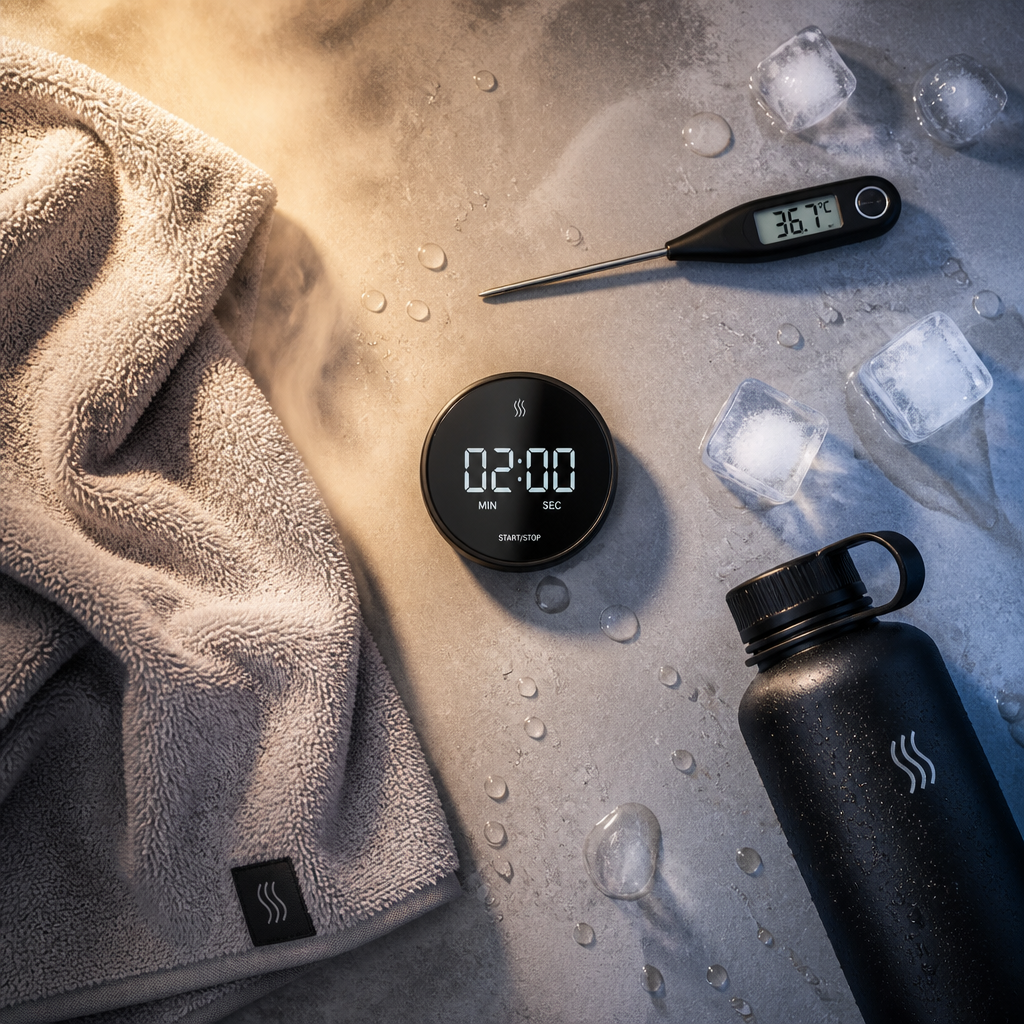
Placing the two methods side-by-side helps to understand where each has a real advantage. There is no absolute winner, but there is a more suitable method for each profile, goal, and recovery phase.
| Criterion | Ice Bath (Cold Plunge) | Sauna |
|---|---|---|
| Primary mechanism | Vasoconstriction, acute inflammation reduction | Vasodilation, increased blood flow and muscle relaxation |
| DOMS reduction | High efficacy in the first 24 to 96 hours post-workout | Moderate efficacy, most useful in the sub-acute phase |
| Hypertrophy compatibility | May reduce muscle mass gains if used immediately after strength training | Does not negatively interfere with hypertrophy; may be favorable |
| Muscle relaxation | Limited immediately; improves after rewarming | High, especially for chronic muscle tension and stiffness |
| Effect on nervous system | Stimulating, increases alertness and mental clarity | Parasympathetic, reduces cortisol and improves sleep |
| Ideal user profile | Endurance athletes, high-load phases, competition | Strength athletes, chronic recovery, stress, and sleep quality |
| Typical protocol | 10 to 15 minutes between 10 and 15 degrees Celsius | 15 to 20 minutes between 80 and 100 degrees Celsius |
In the acute phase after intense exertion, cold is the first line of response. In the sub-acute and chronic phase, heat takes center stage. The key is to understand which phase the muscle tissue is in before choosing the method.
Contrast therapy: the best of both worlds
Contrast therapy, which alternates heat and cold exposure systematically, is the approach most used by high-performance athletes precisely because it combines the benefits of both methods while mitigating the limitations of each. The alternation of temperatures stimulates circulation and creates a vascular pumping effect that assists in the removal of metabolic waste and the reduction of residual edema.
In practice, a typical contrast protocol begins with the sauna for 10 to 15 minutes, followed by cold water immersion for 2 to 3 minutes, repeating this cycle two to three times. The physiological logic is simple: heat dilates vessels and increases perfusion, cold constricts them and pushes blood into the body's interior. This alternation creates a circulatory movement superior to what either method could achieve in isolation.
This is the model that premium recovery facilities, wellness studios, hotels, and European sports clinics are integrating into their spaces. For home use, combining an ice bath with a chiller and a personal sauna allows you to replicate this protocol accurately, without relying on a gym or spa. Investing in your own contrast therapy equipment is, for those who train regularly, one of the most cost-effective decisions in the long run.
The combination of sauna and ice bath has gained popularity among athletes and people seeking muscle relaxation and recovery after intense workouts. When applied with a structured protocol, contrast therapy can facilitate the reduction of chronic edema and pain sensitivity more consistently than either method in isolation.
When to use each method by training profile
The choice between an ice bath, sauna, or contrast therapy should be guided by three concrete variables: your training goal, the recovery phase you are in, and the frequency with which you train. Answering this question vaguely helps no one.
For runners, cyclists, and triathletes
Endurance athletes train with high volume, multiple weekly sessions, and little recovery time between them. The ice bath is the most direct ally in this context: it reduces DOMS quickly and allows you to return to training the next day with fewer limitations. The sauna can be integrated into active recovery days or recovery nights, contributing to sleep quality and nervous system relaxation. For high-load weeks, a contrast protocol two to three times a week offers the most complete recovery.
For strength and fitness practitioners
Those who train for strength with the goal of hypertrophy should be more careful with the timing of their ice bath. Using a cold plunge immediately after leg or back day can interfere with the anabolic response you built during the session. The practical recommendation is to reserve the ice bath for days when there was no strength training, or to wait at least 4 to 6 hours after the session. The sauna, on the other hand, can be used more freely and is particularly useful for treating accumulated muscle tension and joint stiffness.
For home users and wellness
Those who are not competition athletes but want to integrate recovery as part of a healthy lifestyle have in contrast therapy the most versatile and sustainable option. Two weekly sauna sessions followed by cold water immersion produce cardiovascular benefits, reduce accumulated stress, and improve general well-being in a measurable way. For this profile, regularity outweighs any protocol subtleties: doing it consistently is more important than technical perfection.
Frequently Asked Questions
Is it safe to leave the sauna and immediately enter an ice bath?
For healthy individuals without serious cardiovascular conditions, the transition from the sauna to the ice bath is safe when done with a minimum interval of 30 to 60 seconds. The so-called "thermal shock" is often exaggerated in popular discourse. The body has effective adaptation mechanisms for temperature changes, and this is precisely the logic of contrast therapy. Those with high blood pressure, heart arrhythmias, or other cardiovascular conditions should consult a doctor before starting this protocol.
What is the ideal temperature for an ice bath for muscle recovery?
The protocol with the most scientific support is between 10 and 15 degrees Celsius for 10 to 15 minutes. Below 10 degrees, the risk of hypothermia increases without additional proportional benefit. Above 15 degrees, the vasoconstrictive effect decreases. A temperature-controlled chiller, such as those available in integrated Alaska Recover systems, allows you to maintain this range precisely in every session.
Do ice baths help with muscle recovery after running?
Yes, especially in the first 24 to 48 hours after a long or intensive run. The reduction of acute inflammation and the decrease in DOMS are well documented by scientific literature for endurance athletes. For those who run regularly and have little time between sessions, the ice bath is a highly efficient recovery tool that allows you to maintain training load without accumulating excessive fatigue.
Does the sauna increase muscle mass?
The sauna by itself does not increase muscle mass, but it can create favorable conditions for strength training to produce better results. The stimulation of heat shock proteins, improved blood circulation, and increased sleep quality contribute to a hormonal environment more conducive to recovery and muscle growth. What the sauna does not do is replace training, but it can amplify its effects when used as a regular supplement.
How many times a week should I use an ice bath or sauna?
For athletes in a high-load phase, two to four weekly sessions of ice bath or sauna are a reasonable benchmark. For wellness users without competitive goals, two weekly sessions of sauna or contrast therapy produce measurable benefits in recovery and general well-being. Consistency over weeks and months is more important than maximum frequency over short periods.
Can I use the sauna and the ice bath on the same day?
Yes, and that is exactly what contrast therapy proposes. The most common sequence begins with the sauna and ends with the ice bath, which leaves the nervous system in a more alert state and facilitates the removal of metabolic waste. Reversing the order, starting with cold and ending with heat, promotes relaxation more and is preferable before sleeping.
What is the difference between a portable ice bath and a system integrated with a chiller?
A portable ice bath without temperature control relies on the manual addition of ice to reach the desired temperature, which makes the protocol imprecise and inconsistent. A system integrated with a chiller, such as those available in the Alaska Recover range, maintains the programmed temperature automatically in every session, which guarantees the repeatability of the protocol and eliminates the logistics of ice. For regular and professional use, the difference in the quality of the experience and the consistency of the results is significant.
Do you already use ice baths, saunas, or contrast therapy in your recovery routine? Tell us what works best for you and what questions you still have about these methods.
References
- Contrast therapy with sauna and ice bath: benefits and scientific evidence
- Clinical study on cold water immersion and attenuation of muscle damage
- How cold-heat contrast therapy works in muscle recovery
- Cold or heat for post-workout recovery: practical analysis
- How the sauna aids in post-workout muscle recovery