


If you've ever finished a brick block and felt your legs burning while trying to recover in time for the next workout, you know exactly what the problem is: triathlon leaves no room for slow recovery. With three disciplines demanding different muscle groups and, often, double sessions in the same week, the recovery window between efforts is too short to rely solely on passive rest. The ice bath for triathletes is no longer a trend for elite athletes; it has become a practical tool for anyone who takes recovery seriously. But applying it incorrectly, or at the wrong time, can waste its potential or even compromise training adaptations.
Table of Contents
- Essential Summary
- What happens to the body during cold water immersion
- Protocol: temperature, duration, and depth of immersion
- When to use ice baths in a triathlon training plan
- Contrast therapy: combined cold and heat for multidisciplinary recovery
- Comparison of immersion recovery methods
- Common mistakes that negate the benefits of cryotherapy
- Equipment for home and professional use
- Frequently Asked Questions
- References
Essential Summary
| Key Point | Explanation |
|---|---|
| Ideal temperature for endurance recovery | Between 10 and 15°C. Below 10°C increases discomfort without proportional benefit for endurance athletes. Above 15°C, anti-inflammatory efficacy is lost. |
| Optimal duration per session | 10 to 15 minutes. Shorter sessions are insufficient to reduce muscle temperature. More than 15 minutes adds no benefits and increases the risk of hypothermia. |
| When to use after endurance training | Within 30 to 60 minutes after the session. The sooner, the greater the impact on reducing acute inflammation and delayed onset muscle soreness. |
| When NOT to use | Immediately after strength training aimed at hypertrophy. Cold immersion inhibits the inflammatory response necessary for muscle growth. |
| Contrast therapy in competition weeks | Alternating cold (10-15°C) and hot (36-38°C) in 1 to 2-minute cycles accelerates metabolite removal and restores muscle function faster than cold alone. |
| Recommended frequency | Reserve for the most intense workouts, brick blocks, competitions, or double sessions. Overuse reduces endurance training adaptations. |
| Suitable equipment for triathletes | A water chiller with precise temperature control eliminates temperature uncertainty, making the protocol reproducible and safe at home or in professional facilities. |
What happens to the body during cold water immersion
When you step into a 12°C bath after a long triathlon workout, the body responds immediately and systemically. Peripheral blood vessels constrict (vasoconstriction), heart rate decreases, and blood is redirected to core organs. This process reduces local blood flow in the affected muscles, limiting the acute inflammatory response and decreasing tissue swelling.
The second relevant mechanism for triathletes is the effect on pain perception. Immersion cryotherapy acts as a natural analgesic, interrupting the pain-spasm-pain cycle that compromises the quality of workouts over the following 24 to 48 hours. In practical terms, this means you can swim, cycle, or run with better joint mobility and less perceived neuromuscular fatigue.
There is also an effect on the autonomic nervous system. Cold exposure activates the parasympathetic nervous system, which is associated with recovery and relaxation states. For athletes who train twice a day or have competitions on consecutive days, this effect is more valuable than it seems: a calmed nervous system recovers faster.
Cold water immersion doesn't accelerate recovery because it eliminates inflammation. It accelerates it because it makes it controlled, preventing acute inflammation from turning into chronic pain that lasts for days.
Protocol: temperature, duration, and depth of immersion
This is where most athletes go wrong: they either use water that is too cold (below 8°C) in the conviction that "colder is better," or they use water that is too lukewarm (above 18°C) because it is more tolerable. Both extremes reduce the efficacy of the protocol.
Temperature
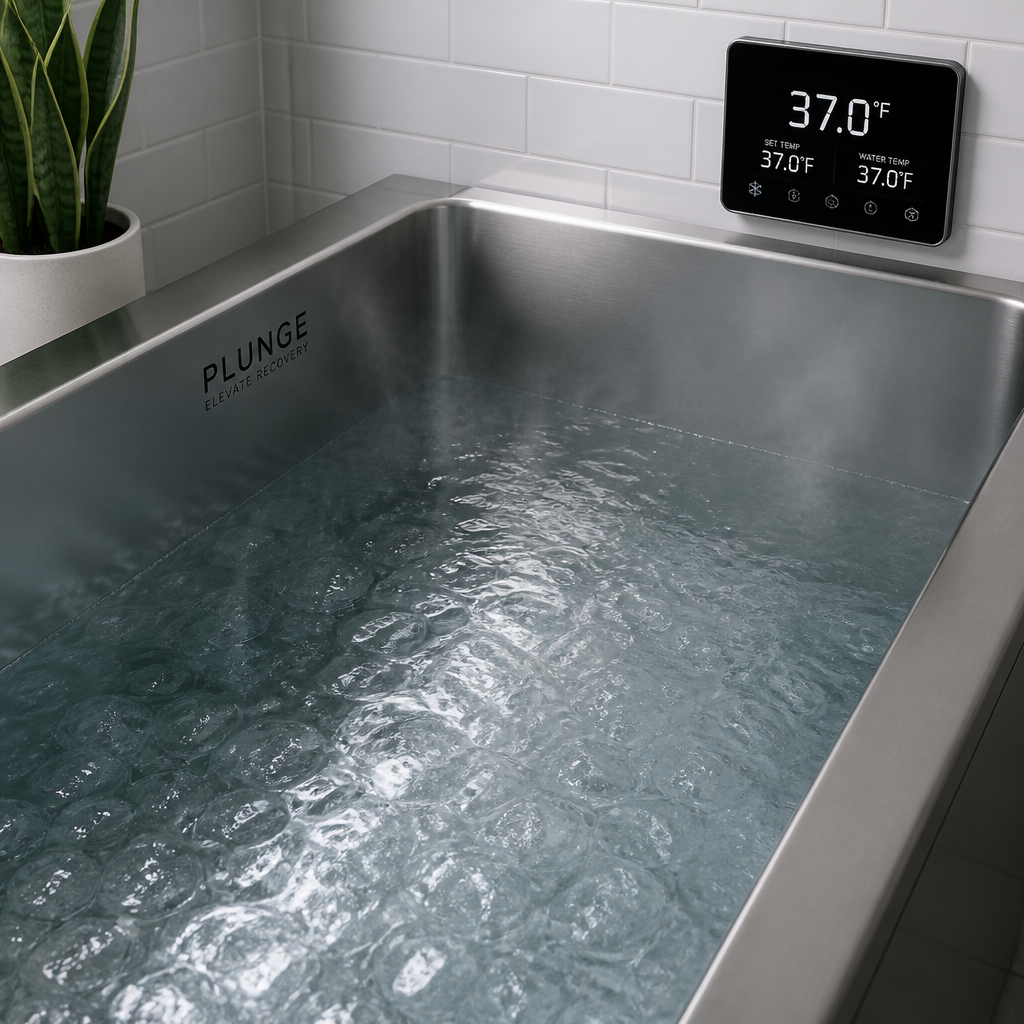
For endurance exercise recovery, temperatures between 10 and 15°C have the most support in scientific literature. This range activates enough vasoconstriction to reduce inflammation without causing the thermal shock that prevents the session from being completed properly. A water chiller, such as those available at Alaska Recover, allows this temperature to be maintained consistently regardless of ambient temperature, which is impossible with regular ice.
Duration
The 10 to 15-minute range is the most effective for triathletes. Shorter sessions, below 8 minutes, do not allow muscle temperature to drop sufficiently. Sessions above 20 minutes add no additional benefit and unnecessarily increase discomfort and the risk of superficial hypothermia.
Depth of immersion
For triathletes, waist-deep immersion is the minimum acceptable level after running or cycling training, as it concentrates the effect on the most affected muscle groups: quadriceps, hamstrings, calves, and glutes. After long sessions involving the whole body, neck-deep immersion enhances the effect on fatigue in the torso and the arms worked during swimming.
Tip: If you are new to cold immersion, start with 15°C water for 8 minutes and reduce the temperature by 1°C per week until you reach 10-12°C. Gradual adaptation improves tolerance and makes the protocol sustainable in the long term.
When to use ice baths in a triathlon training plan
The biggest practical question for triathletes isn't "how to do" an ice bath, it's "when to do it." And the answer depends on the goal of the workout you just completed.
After endurance training and brick blocks
This is the ideal context. After long bike rides, high-volume runs, or brick blocks (chained bike and run), an ice bath within the first 30 to 60 minutes after the effort reduces acute muscle inflammation and shortens the time until the next quality workout. The logic is simple: triathlon doesn't give you unlimited recovery days, and any tool that reduces residual pain has a direct impact on training consistency.
After competition or race simulations
Here, the ice bath is clearly justified. After a triathlon race or an intense simulation, the level of muscle damage is high and the recovery window may be short, especially in stage races or weeks with consecutive competitions. Using cold immersion in this context does not compromise adaptations, because the goal isn't to progress; it's to recover.
What NOT to do
Do not use an ice bath immediately after strength sessions aimed at hypertrophy or power. The local inflammation that cold immersion suppresses is precisely the signal that triggers muscle protein synthesis. Research published in the Journal of Physiology has demonstrated that cold water immersion can substantially reduce muscle mass and strength gains when used regularly after strength training. For triathletes who do resistance training in the preseason, this is a relevant point to consider.
Tip: In weeks of intense training with double sessions, use the ice bath after the second session of the day, not after the first. The goal is to prepare the body for the second session or the next day, rather than using it as an automatic ritual after every effort.
Contrast therapy: combined cold and heat for multidisciplinary recovery
If an ice bath alone is effective, contrast therapy goes one step further by combining vasoconstriction and vasodilation in alternating cycles. The mechanism is direct: cold constricts blood vessels, while heat dilates them. This alternation acts as a physiological pump that accelerates the removal of metabolites accumulated in the muscles and restores circulation faster than either method used in isolation.
For triathletes, contrast therapy is especially relevant in competition weeks or high-load phases, where the goal is to recover in less than 24 hours to return to training or competing with quality. Studies on contrast therapy have documented that athletes who use this method can return to baseline levels of muscle strength and power about 24 hours earlier than athletes who use only passive recovery.
Practical contrast protocol
An effective protocol for triathletes after races or very intense workouts is to alternate between cold water (10 to 15°C) and hot water (36 to 38°C) in 1 to 2-minute cycles for a total of 12 to 18 minutes. Always start in the cold and finish in the cold to keep the anti-inflammatory effect dominant. Combining a cold immersion tub with a Finnish sauna or infrared sauna is the most complete solution for those who want to implement this protocol at home or in professional recovery facilities.
For athletes like Ironman or half-Ironman triathletes who compete on consecutive days, contrast therapy is clearly superior to cold alone, because the heat also reduces muscle stiffness and restores range of motion more quickly.
Comparison of immersion recovery methods
| Method | Best Usage Context | Limitations for Triathletes |
|---|---|---|
| Ice Bath (isolated cold immersion) | After high-volume training, brick blocks, single competitions. Effective for immediate reduction of inflammation and perceived muscle pain. | Less effective than contrast for stage races. Not recommended after strength training aimed at hypertrophy. |
| Contrast Therapy (alternating cold + heat) | Competitions on consecutive days, weeks of maximum load, 24-hour recovery. Restores muscle strength and power faster. | Requires simultaneous access to a cold tub and a heat source (sauna or hot tub). Longer protocol. |
| Tepid water immersion (15-20°C) | Beginner athletes or those in cold adaptation phases. Maintains some anti-inflammatory effect with less discomfort. | Reduced efficacy compared to temperatures between 10 and 15°C. Less impactful in high-intensity contexts. |
Common mistakes that negate the benefits of cryotherapy
The ice bath has a learning curve that goes beyond cold tolerance. Most mistakes aren't about enduring the temperature, but about what you do before, during, and after.
Entering the water without a cool-down
Coming off a maximal effort and immediately entering a 10°C tub without a transition phase (5 to 10 minutes of light walking or mobility) causes excessive thermal shock. The heart is still racing, core temperature is high, and abrupt vasoconstriction can cause dizziness or nausea. Wait for your heart rate to drop below 100 bpm before entering the tub.
Using temperatures below 8°C unnecessarily
The idea that "the colder, the better" is one of the most persistent myths in the recovery world. For endurance recovery, 10 to 12°C is the sweet spot. Temperatures below 8°C increase discomfort, make it difficult to complete the necessary 10 to 15 minutes, and produce no proven additional benefits for this type of athlete.
Warming up abruptly after the ice bath
A classic mistake is getting out of the tub and going straight into a hot shower to "compensate." This partially reverses the effects of vasoconstriction and reduces the efficacy of the protocol. The ideal approach is to dry off, put on warm clothes, and let the body warm up gradually over the next 15 to 20 minutes.
Ignoring contraindications
Cold water immersion has real contraindications: uncontrolled hypertension, severe circulatory problems, and diseases like cryoglobulinemia make ice baths dangerous. Any triathlete with pre-existing cardiovascular conditions should consult a doctor before starting a regular cold immersion protocol.
Equipment for home and professional use
The difference between an effective protocol and an inconsistent one is often the equipment. A bucket of cold tap water and a few ice cubes isn't a protocol; it's a makeshift solution. The temperature is unpredictable, the immersion is partial, and the experience is uncomfortable enough to ensure that most people give up after two weeks.
For triathletes who want to integrate cold immersion in a serious and sustainable way, two categories of equipment are relevant. For home use, portable and fixed ice baths with integrated chillers allow you to set and maintain the exact temperature without relying on ice, making the protocol reproducible and convenient. For professional facilities, gyms, physiotherapy clinics, wellness-focused hotels, and performance centers, stainless steel cold immersion tubs with active water circulation and filtration systems are the correct solution.
The Alaska Recover provides solutions for both individual home use and commercial facilities in Portugal and across Europe, with water chillers that allow precise temperature control. Combining a cold immersion tub with one of the saunas from the Alaska range allows for the implementation of full contrast therapy, the most advanced protocol available for the multidisciplinary recovery of triathletes.
Tip: If you are considering equipment for a gym or performance center, prioritize a system with automatic temperature control and an active water filtration system. Lack of filtration is the main reason why commercial tubs go out of service quickly in intensive use environments.
Frequently Asked Questions
How often should a triathlete take an ice bath?
There is no universal ideal weekly number, but the guiding principle is to reserve cold immersion for the most demanding workouts: brick blocks, long sessions, competitions, and days with double sessions. Using an ice bath after every workout, including easy sessions, reduces exercise adaptations without bringing proportional benefit. Two to four sessions per week during high-load periods is a reasonable starting point for most amateur triathletes.
Does an ice bath help with recovery between swimming, cycling, and running on the same day?
In sprint or Olympic triathlon races, where transitions are very short, ice baths are not applicable between disciplines. The relevant context is recovery between training sessions of different disciplines on the same day. A 10-minute immersion at 12°C after the morning session can significantly reduce accumulated muscle fatigue before the afternoon session, especially when the first session was of high intensity.
What is the difference between an ice bath and chamber cryotherapy (cryogenic chamber)?
Chamber cryotherapy exposes the body to extremely cold air (usually between -110°C and -140°C) for two to three minutes, without water immersion. Cold water immersion, due to the thermal conductivity of water, is generally more effective at reducing actual muscle temperature than chamber cryotherapy for the same duration. For endurance recovery, cold water immersion remains the most accessible, best-studied, and most effective method for athletes training at home or in conventional performance centers.
Can I combine an ice bath with recovery supplementation?
Yes, and the combination makes physiological sense. Cold immersion reduces acute inflammation and muscle soreness. Recovery nutrition, especially protein and carbohydrates ingested within the 30 to 60-minute window after exertion, acts on protein synthesis and glycogen replenishment. The two mechanisms do not interfere with each other. The frequent mistake is to replace one with the other: an ice bath does not replenish glycogen or repair muscle fibers in the same way that proper nutrition does.
Does an ice bath improve triathlon performance or just help with recovery?
Available evidence suggests that an ice bath does not directly improve performance during a race. The benefit is indirect: by reducing the perception of pain and residual fatigue between training sessions, it allows the athlete to train more consistently and with higher quality over time. For amateur triathletes with a dense training schedule, this consistency has a real impact on performance progression, even though the ice bath itself does not replace a structured training plan.
What temperature is too cold for a recovery ice bath?
For endurance training recovery, dropping below 8°C offers no proven advantages and increases the risk of extreme discomfort, peripheral hypothermia, and difficulty in completing the necessary immersion time. The zone between 10 and 15°C is where the balance between efficacy and tolerance is best. Athletes with more experience in cold immersion can work comfortably close to 10°C. Beginners should start at 14 to 15°C.
Do you already use ice baths in your triathlon routine? Share your experience in the comments, including what worked and what you would change in your protocol.
References
- Scientific analysis on ice bath protocols for endurance athletes, optimal temperature and duration
- What is contrast therapy and how to apply it in triathlon recovery
- How cold water immersion can improve triathlon recovery and performance
- Study on cold water immersion protocols and neuromuscular recovery
- Post-workout recovery techniques for triathletes, including cryotherapy and ice baths