


Finishing a long run is an achievement. What happens in the following hours determines when you will return to training and with what quality. Muscle soreness, inflammation, and accumulated fatigue are the real enemies of running consistency. The ice bath for runners is one of the recovery tools with the most decades of practical use in high-performance sports, and there are concrete reasons for this. This guide explains how cryotherapy works physiologically, how to apply it intelligently, and why it is worth investing in a solution suited to your training level.
Table of Contents
- Quick Summary
- What happens in the body after a run
- How an ice bath accelerates recovery
- Cryotherapy for running: what science says
- Temperature and duration: the parameters that matter
- Comparison: ice bath vs. other recovery options
- How to integrate an ice bath into your running routine
- Choosing the right solution: home or professional space
- Frequently Asked Questions
- References
Quick Summary
| Key Point | Explanation |
|---|---|
| Ideal temperature | Between 10°C and 15°C is the most effective window for runner immersion. Below 10°C increases discomfort without proportional benefit. |
| Recommended duration | Between 10 and 15 minutes per session. Longer sessions do not increase benefits and may be counterproductive. |
| Right timing | An ice bath is most effective in the first hours after running, especially after long workouts or competitions. |
| Vasoconstriction and inflammation reduction | Cold water immersion reduces local blood flow, limiting muscle edema and relieving post-exertion pain. |
| Post-run muscle recovery | Runners who use cryotherapy regularly report less delayed onset muscle soreness (DOMS) in the days following training. |
| Do not use before strength training | Cryotherapy immediately before strength sessions can block muscle adaptations. Reserve it for after training. |
| Consistency is more important than perfection | Doing regular ice baths, even if not under ideal conditions, produces better results than sporadic perfect sessions. |
What happens in the body after a run
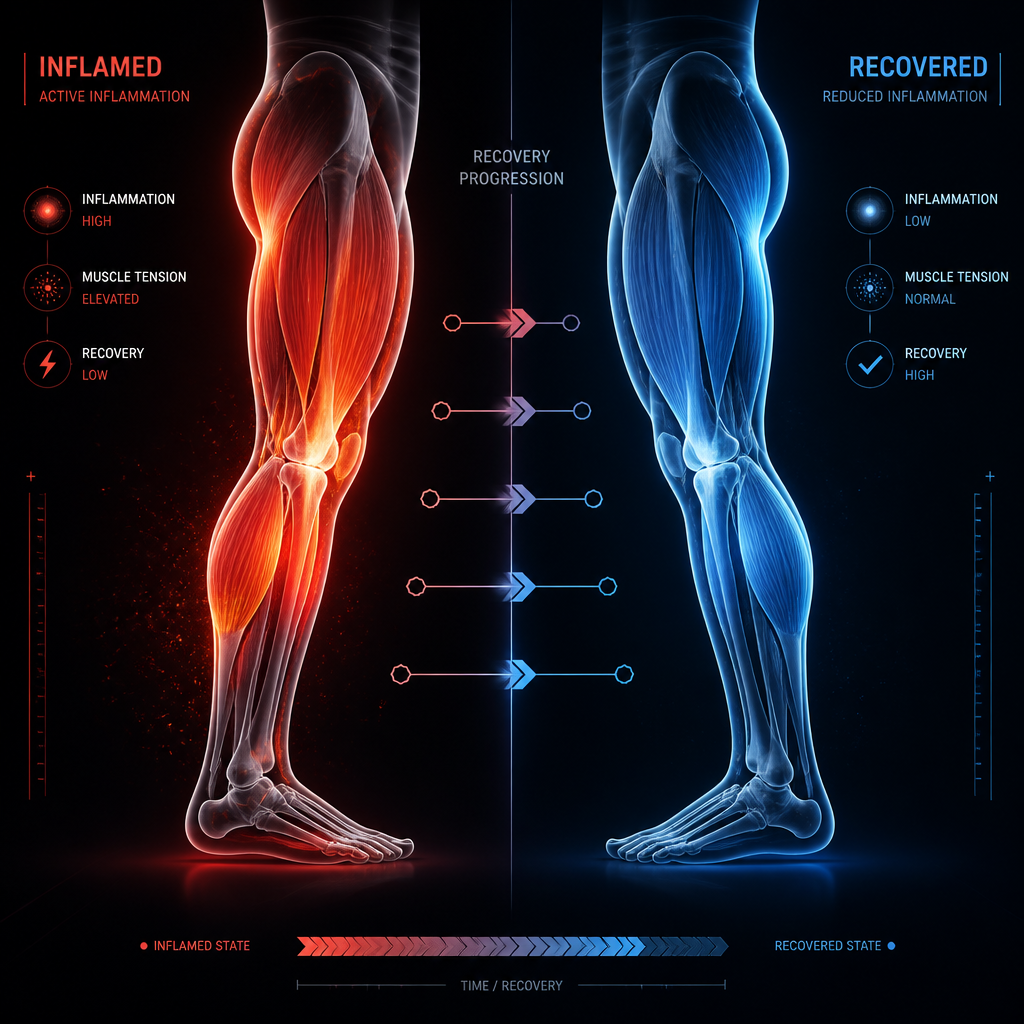
When you finish a moderate to high-intensity run, your body doesn't stop working. The leg muscles, especially the quadriceps, calves, and hamstrings, have sustained micro-tears in the muscle fibers. This is a normal and necessary process for adaptation, but it produces localized inflammation, metabolite accumulation, and increased muscle temperature.
This inflammatory state is what causes delayed onset muscle soreness, known as DOMS, which typically appears between 24 and 48 hours after exertion. For a runner who trains four to six times a week, managing this recovery window well determines the quality of subsequent workouts.
The most common mistake is underestimating the cumulative impact of consecutive sessions without proper recovery. Residual fatigue builds up session after session, and performance begins to decline before the runner realizes why.
How an ice bath accelerates recovery
The physiological logic of the ice bath is straightforward. When the body is exposed to cold water, blood vessels constrict, a process called vasoconstriction. This contraction reduces blood flow to the affected muscle tissues, limiting edema and the accumulation of inflammatory fluid in the muscles.
When you leave the water and your body returns to normal temperature, vasodilation occurs—meaning the vessels dilate and blood flows with increased intensity. This alternating pumping effect helps flush out metabolites like lactate and delivers nutrients and oxygen to the tissues in recovery.
Beyond the vascular effect, the cold temperature has a local anesthetic effect that reduces the perception of muscle pain. It does not eliminate inflammation completely, but it makes the days following training more functional and less limiting.
Tip: Do not get into an ice bath immediately after running without first stopping and letting your heart rate come down. Wait 10 to 15 minutes after training before beginning immersion.
Cryotherapy for running: what science says
The application of cold in sports recovery has decades of clinical use. Cold water immersion, specifically, is one of the most studied forms of cryotherapy for endurance athletes.
Evidence consistently points to real benefits in reducing DOMS and subjective perceptions of recovery after intense efforts. However, it is important to distinguish between two different contexts: acute injury recovery and post-workout recovery.
Post-workout recovery vs. injury recovery
In the context of an acute injury, such as a sprain or contusion, ice applied in the first few hours reduces edema and manages pain. This application is different from systematic post-workout immersion.
For post-run recovery, cold water immersion works primarily as a modulator of the inflammatory response, making muscles functional more quickly. Science does not claim it eliminates inflammation, but rather that it makes it more controlled and less debilitating.
The application of cold in sports recovery has changed a lot in recent decades. The smartest approach is to use cryotherapy after intense efforts to modulate inflammation, not to eliminate it entirely. Controlled inflammation is part of training adaptation.
What cryotherapy does not do for runners
It is important to be honest. The ice bath does not replace rest, sleep, or post-workout nutrition. It does not directly increase muscle strength nor does it improve VO2 max. Used in isolation and without a complete recovery strategy, its impact is limited. Its real value lies in adding to a set of practices, not in replacing any of them.
There is also evidence that using cryotherapy too frequently, especially after strength training, can block some of the adaptations the training causes. For runners who also engage in weightlifting, this is a relevant nuance to keep in mind.
Temperature and duration: the parameters that matter
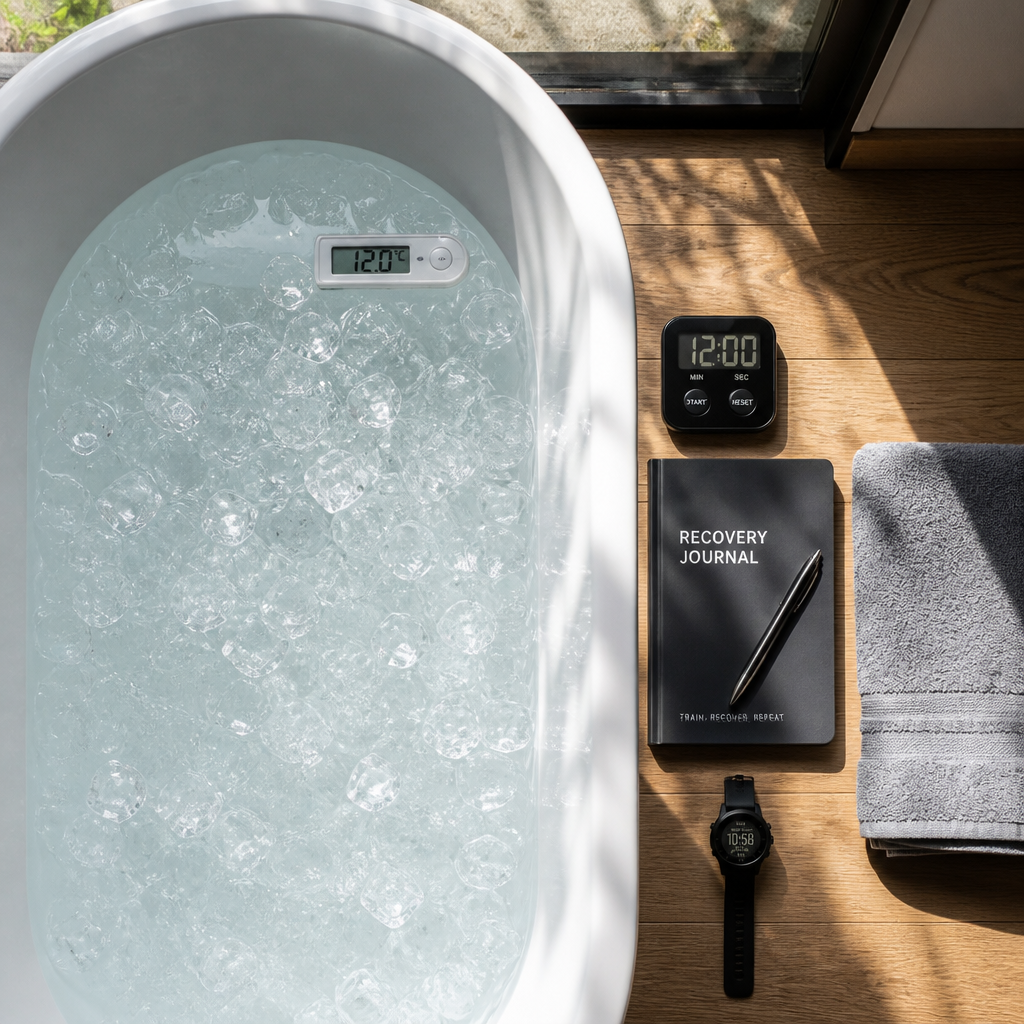
Clinical practice and the accumulated experience of endurance coaches point to a clear window of efficacy. The water temperature should be between 10°C and 15°C. Below 10°C, discomfort increases significantly without the benefits increasing in the same proportion. Above 15°C, the vasoconstrictor effect is reduced.
The ideal duration is between 10 and 15 minutes. Shorter sessions, below 5 minutes, have limited impact. Longer sessions, above 20 minutes, increase the risk of hypothermia and do not add proportional benefits.
Full or partial immersion
For runners, waist-down immersion is sufficient in most cases. The main muscle structures affected by running—quadriceps, calves, hamstrings, and glutes—are covered with immersion up to the waist or lower torso.
Full torso immersion may be relevant in very long races, such as marathons or ultras, but for regular training, it is unnecessary and may make it difficult to stay in the water for the appropriate amount of time.
Tip: Use a water thermometer to check the temperature before getting in. Relying on touch to estimate the temperature is unreliable and often leads to ineffective sessions, either due to the temperature being too high or too low.
Comparison: ice bath vs. other recovery options
There are several approaches available for post-run recovery. Each has real advantages, and the choice depends on the runner's context, training frequency, and goals.
| Recovery Method | Key Benefits for Runners | Limitations |
|---|---|---|
| Ice bath (cold water immersion) | Quickly reduces DOMS, controls muscle inflammation, improves functionality in the days after training | Requires proper equipment for temperature control, can be uncomfortable initially |
| Contrast therapy (alternating cold and heat) | Combines vasoconstrictor and vasodilator effects, improves peripheral circulation, more complete feeling of recovery | Requires access to a sauna or hot bath and cold bath simultaneously, more demanding protocol |
| Foam rolling and stretching | Accessible, improves mobility and reduces myofascial tension, no equipment cost | Lacks the systemic effect of cryotherapy, limited impact on reducing inflammation |
In practice, the most effective combination for serious runners is an ice bath immediately after long or intense training, complemented by contrast therapy on moderate training days. Foam rolling and stretching work well as a daily supplement, regardless of cryotherapy use.
How to integrate an ice bath into your running routine
Most runners who start with ice baths make the same mistake: they use them every day, regardless of the type of training. This approach is not ideal. The ice bath is a specific recovery tool, most valuable after high-intensity efforts.
When to use and when to avoid
Use an ice bath after long runs, interval training, races, and any session that leaves muscles significantly fatigued. Avoid it before strength training sessions scheduled for the same or the next day, as it can blunt the muscle adaptations that strength training aims to stimulate.
On light training or active recovery days, the focus should be on mobility, nutrition, and sleep. Ice baths on these days are optional and have marginal impact.
Practical protocol for runners
A realistic protocol for a runner who trains four to five times a week might be: an ice bath after the longest session of the week, usually on the weekend, and after any interval session with intensity above the anaerobic threshold. For remaining sessions, passive recovery or contrast therapy is sufficient.
This pattern of use is sustainable long-term and maximizes the benefit of cryotherapy without compromising training adaptations.
Choosing the right solution: home or professional space
For a runner training at home or in a gym, the practical question is always the same: how to keep the water at the right temperature consistently. Filling a bathtub with water and ice works occasionally, but it is inconvenient, inconsistent in temperature, and quickly becomes an obstacle to consistency.
A portable ice bath with an integrated cooling system solves the problem at the root. It keeps the temperature stable throughout the session, with no need to constantly buy ice. For those who train several times a week, the convenience cost justifies the investment in the medium term.
At Alaska Recover, the range of ice baths and chillers was developed precisely for this user profile: athletes and fitness enthusiasts who need a reliable solution, easy to use, and suitable for home or professional spaces. Portable models are ideal for individual home use, while solutions integrated with a chiller serve gyms, clinics, and wellness studios that want to offer quality cryotherapy to their clients.
For those also looking for contrast therapy, the combination of an ice bath with a compact sauna is the most complete way to implement temperature-based recovery at home or in a professional space. Alaska Recover offers these solutions together, which simplifies the decision and ensures compatibility between equipment.
Frequently Asked Questions
What is the ideal temperature for an ice bath after a run?
The most effective temperature for muscle recovery is between 10°C and 15°C. This range is cold enough to induce vasoconstriction and reduce inflammation, without the risks associated with temperatures below 10°C. For beginners, it is advisable to start near 15°C and gradually lower it as your body adapts.
How long should I stay in an ice bath?
Between 10 and 15 minutes is the duration most supported by clinical practice and the experience of endurance coaches. Sessions under 5 minutes have limited impact. Above 20 minutes, the risk of hypothermia increases without additional benefits to justify the extra time.
Can I take an ice bath every day?
It is neither necessary nor recommended for most runners. Daily use can blunt muscle adaptations to training, especially if you are doing complementary strength training. Reserve the ice bath for the most demanding training days and alternate with other forms of recovery on other days.
Does an ice bath replace rest and sleep?
No. The ice bath is a complementary tool, not a substitute. Quality sleep, adequate nutrition, and active rest days are the pillars of recovery. Cryotherapy works best when added to these practices, not when used to compensate for a lack of them.
What is the difference between contrast therapy and an isolated ice bath?
An isolated ice bath uses only cold to induce vasoconstriction and modulate inflammation. Contrast therapy alternates periods of cold and heat, combining the vasoconstrictor effects of cold with the vasodilator effects of heat. For runners, contrast therapy may be more effective in contexts of high accumulated fatigue, but it requires access to a sauna or hot bath simultaneously with the cold bath.
Is an ice bath safe for all runners?
For most healthy runners, yes. However, people with cardiovascular diseases, uncontrolled hypertension, Raynaud's syndrome, or hypersensitivity to cold should consult a doctor before starting any cryotherapy protocol. Cold exposure causes a temporary increase in blood pressure and heart rate, which may be contraindicated in some clinical cases.
How to keep water temperature stable during the session?
The most practical solution is to use an ice bath with a chiller or an integrated cooling system. Improvised solutions using store-bought ice lose temperature rapidly, especially in warm environments, making sessions inconsistent. Proper equipment ensures that the temperature remains in the correct range from the beginning to the end of each session.
Have you tried an ice bath in your running routine? Share your experience in the comments, including what worked, what was difficult, and what you changed over time.