


Do you train hard, but recovery is still your weak point? An ice bath is likely the most underrated recovery tool for amateur athletes and one of the most widely used by elite athletes. Immersing yourself in water between 10 and 15 degrees Celsius after an intense workout is not masochism; it's applied physiology. Immersion cryotherapy reduces inflammatory markers, attenuates delayed onset muscle soreness (DOMS), and accelerates the return to training, and the scientific evidence accumulated in recent years has made these effects very difficult to ignore.
Table of Contents
- Key Takeaways
- What Is an Ice Bath
- How It Works Physiologically
- Main Benefits for Athletes
- Temperature, Duration, and Protocol
- Comparison with Other Recovery Methods
- Home Ice Bath vs. Professional Equipment
- Most Common Mistakes
- Frequently Asked Questions
- References
Key Takeaways
| Key Idea | Explanation |
|---|---|
| Ideal temperature between 10 and 15°C | This range offers anti-inflammatory benefits without a high risk of hypothermia or excessive discomfort. |
| Reduction of inflammatory markers | Cold water immersion can reduce levels of creatine kinase (CK) and interleukin-6 (IL-6), confirming less muscle damage. |
| Attenuation of DOMS | Delayed onset muscle soreness, which peaks between 24 and 72 hours after training, is significantly reduced with regular immersion protocols. |
| Immediate vasoconstriction | Cold constricts blood vessels, limiting edema and facilitating the removal of metabolic byproducts like lactate. |
| Documented mental benefit | A 2023 review of 22 studies found that ice bath protocols reduced anxiety symptoms by 28% in groups of elite athletes and clinical populations. |
| Proper equipment makes a difference | A water chiller or professional tub maintains a constant temperature, something impossible to replicate consistently with household ice. |
| Timing is critical | Using an ice bath immediately before strength training sessions can limit muscle adaptations. The right time is after training, not before. |
What Is an Ice Bath
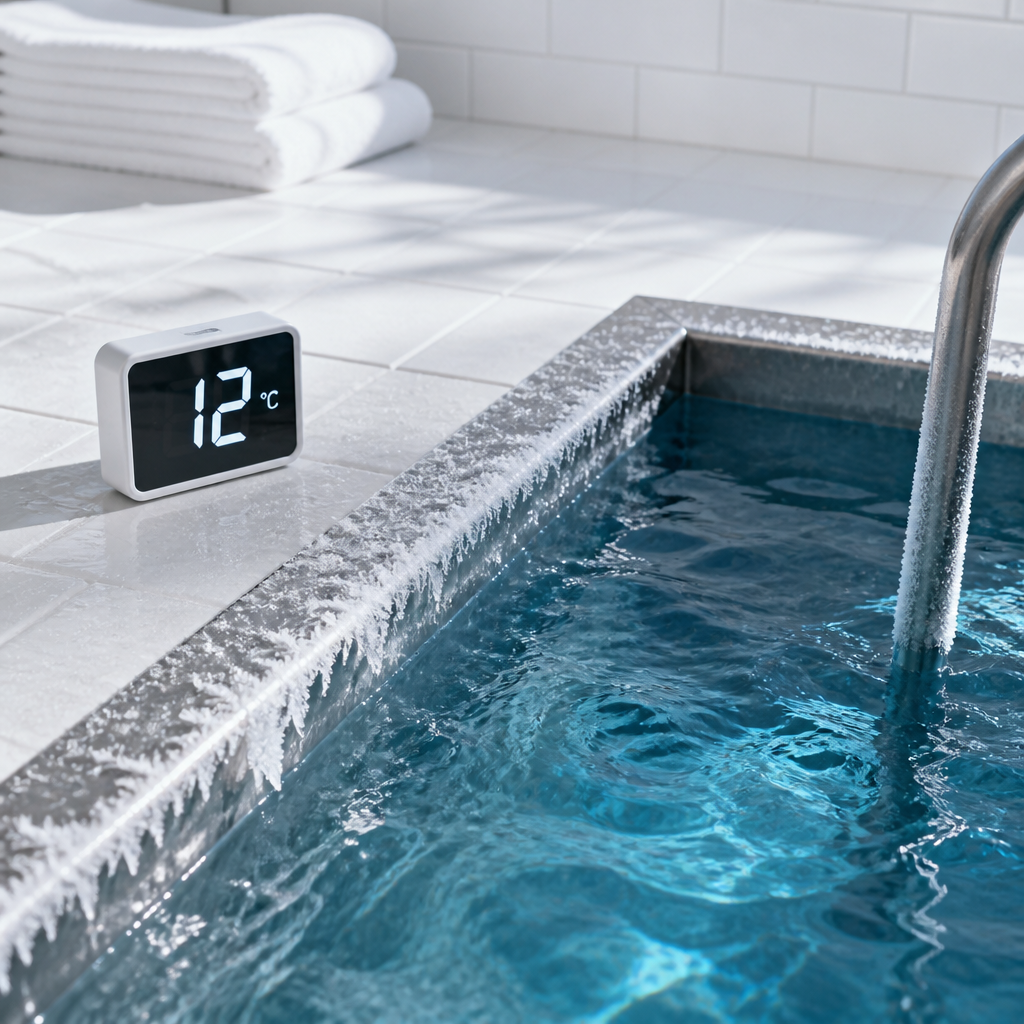
An ice bath consists of total or partial body immersion in cold water, generally kept between 10 and 15 degrees Celsius for a controlled period. The term "ice bath" is popular, but the essential element is not the ice cubes themselves, but the water temperature. Adding ice is merely a means to reach and maintain this thermal range, especially in home settings where a dedicated cooling system is unavailable.
This practice falls under the field of immersion cryotherapy, a recovery modality that leverages the effects of cold on the cardiovascular, muscular, and nervous systems. Unlike whole-body cryotherapy in nitrogen chambers, the ice bath is accessible, measurable, and replicable, making it the most practical choice for athletes of all levels.
The distinction between an ice bath and a cold water bath is more technical than practical. In ice baths, cubes are used to quickly lower the temperature, a method very common among high-performance teams. In cold water baths, cooled water is used without ice, which is equally effective in most contexts. What matters is respecting the temperature range, not the format.
How It Works Physiologically
When the body is exposed to cold water, the immediate response is vasoconstriction, the narrowing of peripheral blood vessels to reduce blood flow to exposed tissues. This mechanism has a direct effect on acute inflammation: it limits the infiltration of inflammatory cells into damaged tissues and favors the removal of metabolic byproducts accumulated during exercise, such as lactate and hydrogen ions.
The transient hypothermic state induced by immersion also reduces local cellular metabolism. This means less secondary tissue damage—that is, the process of cell destruction that occurs in the hours following intense exertion—without compromising long-term regeneration mechanisms. Cold exposure also desensitizes nociceptors, the nerve endings responsible for pain perception, and enhances the release of endogenous opioids, contributing to faster subjective recovery.
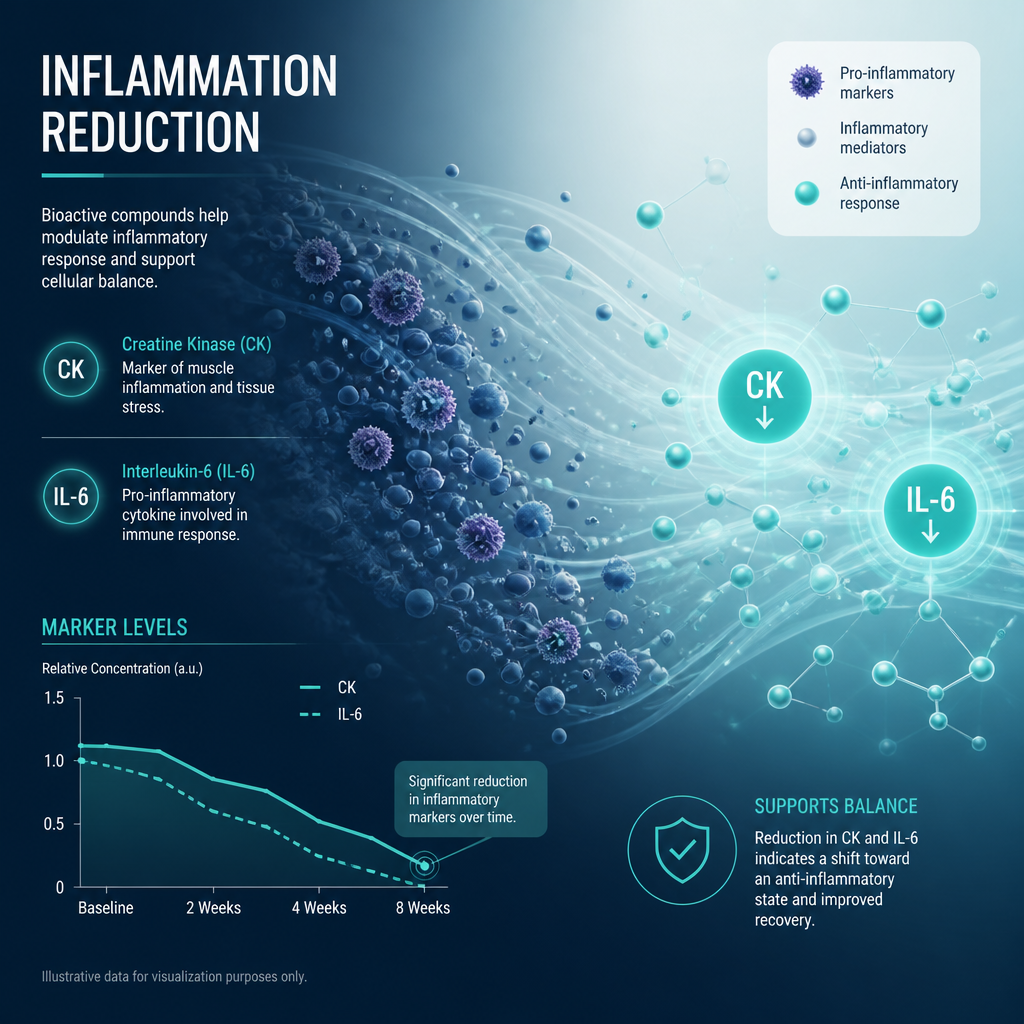
At the biomarker level, cold water immersion has been shown to reduce levels of creatine kinase (CK) by approximately 32% and interleukin-6 (IL-6) by about 28% compared to passive recovery groups, confirming that the effect is not just perceptual, but measurable and biologically significant.
What happens when you get out of the water
After immersion, the body begins an active rewarming process: blood vessels dilate rapidly in a phenomenon of reactive vasodilation. This process increases blood flow to the muscles and peripheral tissues, facilitating the transport of nutrients and the removal of cellular debris. It is precisely this alternation between constriction and dilation that explains much of the benefit of contrast therapy, the combination of cold and heat used in advanced recovery protocols.
Main Benefits for Athletes
The most documented and relevant benefit for athletes is the reduction of delayed onset muscle soreness, internationally known as DOMS. This muscle pain and stiffness, which peaks between 24 and 72 hours after eccentric or high-intensity exercise, is one of the main limiting factors between consecutive training sessions. Cold water immersion protocols have consistently shown to attenuate DOMS, allowing athletes to return to training faster and with better movement quality.
Beyond physical recovery, evidence also points to mental benefits. A 2023 review of 22 studies found that ice bath protocols reduced anxiety symptoms by 28% in groups of elite athletes, as well as military and clinical populations. For athletes in intense competition periods, this anxiolytic effect is just as relevant as muscle recovery.
For runners, cyclists, and triathletes who accumulate high training volume over weeks, the ability to consistently reduce systemic inflammation makes a real difference in progression throughout a macrocycle. It is not just about feeling less pain the next day; it is about protecting the quality of subsequent training and, in the long run, reducing the risk of overuse injuries.
Impact on mental health and sleep
Cold exposure activates the sympathetic nervous system, causing a release of adrenaline and noradrenaline. This hormonal response, when regularly stimulated in a controlled setting, seems to contribute to greater stress resilience and a sense of well-being after the session. Many athletes also report an improvement in sleep quality in the nights following immersion sessions, although this is a field that still requires more systematic research.
Temperature, Duration, and Protocol
The temperature range between 10 and 15 degrees Celsius is the most supported by scientific literature for muscle recovery and inflammation reduction. Temperatures below 10°C offer no proven additional benefits and significantly increase the risk of excessive discomfort, prolonged numbness, and, in extreme cases, hypothermia. Above 15°C, physiological effects begin to diminish, especially regarding vasoconstriction and acute inflammation control.
In terms of duration, most protocols used in sports contexts fall between 10 and 15 minutes. For beginners, it is recommended to start with 5 to 8 minutes and increase progressively as you adapt to the cold. Sessions longer than 20 minutes show no evidence of additional benefit and unnecessarily increase discomfort.
The right time for immersion is immediately after training or, at most, within the first two hours. Using an ice bath before strength sessions can block part of the desired muscle adaptations, such as protein synthesis. On days with high volume or technical training where the priority is rapid recovery for a second session, the ice bath is a direct choice. On days focused on strength adaptations, passive recovery may be preferable.
Tip: If you are starting out, set a timer for 5 minutes and focus on slow, controlled breathing. The tendency to breathe shallowly in a panic is the main reason beginners get out before the time is up. Control your breathing, and the rest is easier than it looks.
Comparison with Other Recovery Methods
There are several recovery tools available to athletes, but not all operate using the same mechanisms nor are they suitable for the same contexts. The table below compares the three most used methods based on their practical characteristics and the most appropriate usage profile.
| Method | Main Mechanism | Best Application |
|---|---|---|
| Ice Bath (Immersion Cryotherapy) | Vasoconstriction, reduction of acute inflammation, DOMS relief | After high-intensity workouts, competitions, high-volume days |
| Sauna (Heat Therapy) | Vasodilation, muscle relaxation, heat shock response | Active recovery, low-intensity days, improved peripheral circulation |
| Contrast Therapy (Cold and Heat) | Alternation between vasoconstriction and vasodilation, vascular pumping effect | Advanced recovery protocols, athletes with high weekly training volume |
Contrast therapy, which combines cold water immersion with heat exposure from a sauna, is increasingly adopted in gyms, clinics, and performance centers. The vascular "pumping" effect resulting from alternating between constriction and dilation is particularly effective for eliminating metabolites and reducing residual muscle tension. For those who already use ice baths regularly, adding a sauna to the protocol is a natural and complementary step.
Tip: In a contrast therapy session, always finish with the cold. The final vasoconstriction reduces residual edema and prolongs the anti-inflammatory effect. Finishing with heat causes vasodilation, which is great for relaxation but less effective for acute inflammation control.
Home Ice Bath vs. Professional Equipment
The simplest option to start is a household bathtub filled with cold water and bags of ice. It works, but it has obvious limitations: the temperature is difficult to control, the ice melts quickly, and maintaining protocol consistency over weeks becomes frustrating and expensive. For sporadic sessions, it is acceptable. For athletes who train four to six times a week, it is insufficient.
A portable ice tub with an integrated water chiller solves the temperature issue with precision. The water is maintained in the ideal range automatically, and the equipment is ready to use whenever needed, without relying on ice blocks. Alaska Recover offers portable solutions for home use and professional systems for gyms, clinics, and wellness spaces, all designed to maintain constant temperature and ensure a hygienic and controlled immersion experience.
For commercial spaces like gyms, hotels, or physiotherapy clinics, the investment in a professional immersion system is justified by durability, the ability to support multiple daily users, and the aesthetic presentation that communicates quality to the final customer. A portable PVC tub may suffice for an individual athlete at home, but it does not project the same credibility in a premium recovery space.
Consistency is the true asset of the ice bath. A mediocre protocol applied regularly far outweighs a perfect protocol applied only when the equipment is available.
The initial cost of a quality chiller is higher than bags of ice, but within a few months, the investment evens out, not counting the advantages of precise temperature, hygiene, and convenience. For those who take recovery seriously, the question is not whether to invest in proper equipment, but when.
Most Common Mistakes
The most frequent mistake among beginners is trying to do too much too soon. Immersing yourself in 8°C water in the first session, without prior adaptation, turns the experience into a negative memory that discourages continuity. Cold adaptation is progressive: start at 15°C, reduce by one degree per week until you reach your working range, and the process will be much more sustainable.
Another common mistake is using the ice bath indiscriminately, including before strength or hypertrophy training sessions. Cold water immersion before training can compromise neuromuscular recruitment and reduce the effectiveness of the session. The ice bath is a post-exertion recovery tool, not a reverse warm-up.
Ignoring equipment hygiene is also a real problem in shared-use contexts. Stagnant, lukewarm water is an environment conducive to bacterial growth. A system with filtration and automatic temperature control eliminates this risk effectively. At home, changing the water regularly and sanitizing the tub after each use is mandatory, not optional.
Finally, many athletes abandon the protocol in the first few weeks for not feeling immediate results. The effects of immersion cryotherapy are cumulative. The impact on systemic inflammation, sleep quality, and training resilience intensifies with consistency over weeks, not days.
Frequently Asked Questions
What is the ideal temperature for an ice bath?
The range most supported by scientific evidence is between 10 and 15 degrees Celsius. This temperature offers anti-inflammatory and DOMS reduction benefits without the risks associated with lower temperatures, such as prolonged numbness or hypothermia. For beginners, starting near 15°C and adjusting progressively is the most sensible approach.
How long should I stay in an ice bath?
Most protocols used in sports contexts fall between 10 and 15 minutes. Beginners should start with 5 to 8 minutes and increase gradually. Sessions longer than 20 minutes show no evidence of additional benefit and increase the risk of discomfort and excessive numbness.
Is an ice bath suitable for amateur athletes or just professionals?
It is suitable for anyone who trains regularly and wants to improve recovery between sessions. Amateur athletes, runners, cyclists, and triathletes benefit just as much as professionals, provided the protocol is adapted to their physical condition level and individual cold tolerance.
Can I take an ice bath every day?
Yes, provided the protocol is appropriate and the body is adapted. However, in training periods focused on hypertrophy and strength gains, taking an ice bath daily may attenuate some of the desired muscle adaptations. During periods of high volume or competition, daily use is justified. The specific goal should guide the frequency.
What is the difference between a portable ice bath and a professional chiller system?
The main difference lies in temperature precision and consistency. A portable tub with household ice does not keep the temperature stable throughout the session, and the initial temperature is difficult to control. An integrated chiller system keeps the water in the ideal range automatically, is more hygienic, and allows for consistent use without relying on ice. For intensive or commercial use, the chiller system is the clear choice.
Can an ice bath replace other forms of recovery like stretching or massage?
It should not replace them, but complement them. The ice bath is particularly effective for controlling acute inflammation and DOMS. Stretching and mobility work on different aspects, such as range of motion and the quality of fascial tissue. A complete recovery strategy combines several tools, each with its own role and timing for application.
Have you tried incorporating ice baths into your recovery routine? Tell us how it went and what you felt during your first sessions.
References
- Scientific guide on ice baths for athlete recovery, with an analysis of physiological mechanisms and biomarkers
- Review of the main benefits of ice baths for athletes, including data on anxiety reduction
- Ice baths after training: documented benefits, recommended temperature, and how to perform them correctly