


Most gyms lose members for a simple reason: they offer exactly the same as the place down the street. Cardio equipment, free weights, locker rooms, and not much else. When the value proposition is identical, price becomes the only decision criterion, and that is where the gym always loses. Offering an ice bath at the gym changes that equation in a concrete way. It transforms recovery into a differentiated service, creates a post-workout ritual that members look forward to repeating, and justifies premium membership levels. This article explains exactly how and why it works.
Table of Contents
- Key Takeaways
- What Changes in Retention When Cold Recovery is Available
- Physical and Mental Benefits Members Experience
- Revenue Models for Gyms and Fitness Studios
- Comparison: Cryotherapy Solutions for Commercial Use
- How to Implement a Cold Recovery Program
- Common Mistakes That Destroy Ice Bath ROI
- Frequently Asked Questions
- References
Key Takeaways
| Key Conclusion | Explanation |
|---|---|
| Ritual builds loyalty | A post-workout ice bath becomes a routine members want to repeat, increasing gym visit frequency. |
| Immediate differentiation from competitors | Most gyms do not offer cold recovery. Having this solution positions your space as a performance destination, not just an exercise facility. |
| Premium membership upsell | Access to the ice bath can be included in a higher-tier plan, generating incremental revenue without significantly increasing operating costs. |
| Accelerated recovery, more workouts per week | Cold water immersion reduces muscle inflammation and delayed onset muscle soreness, allowing members to train more consistently. |
| The right equipment is decisive | For commercial use, you need a chiller with stable temperature control, continuous filtration, and a structure certified for multiple daily sessions. |
| Contrast therapy increases perceived value | Combining an ice bath with a sauna transforms a simple recovery session into a premium wellness experience. |
| Staff training is as important as equipment | Cold recovery programs fail primarily due to lack of protocol and guidance, not because of the equipment itself. |
What Changes in Retention When Cold Recovery is Available
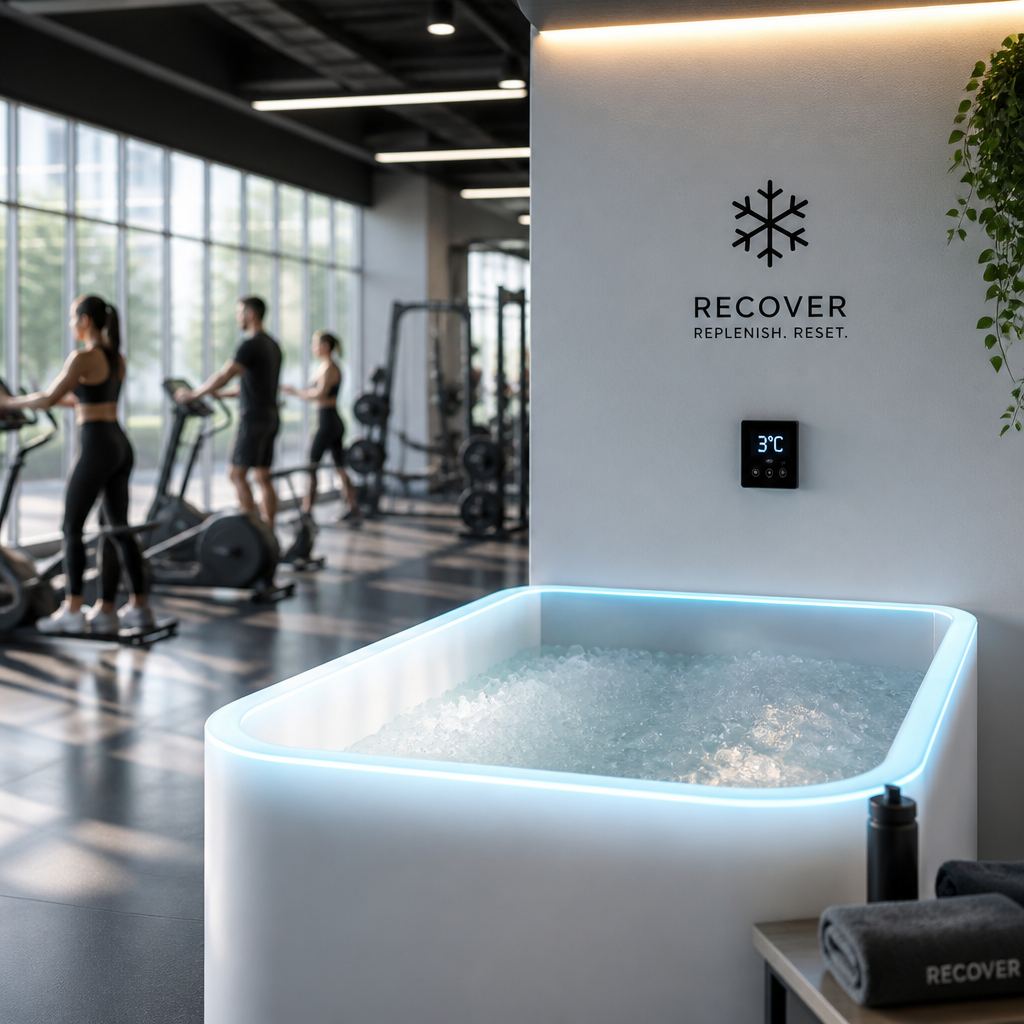
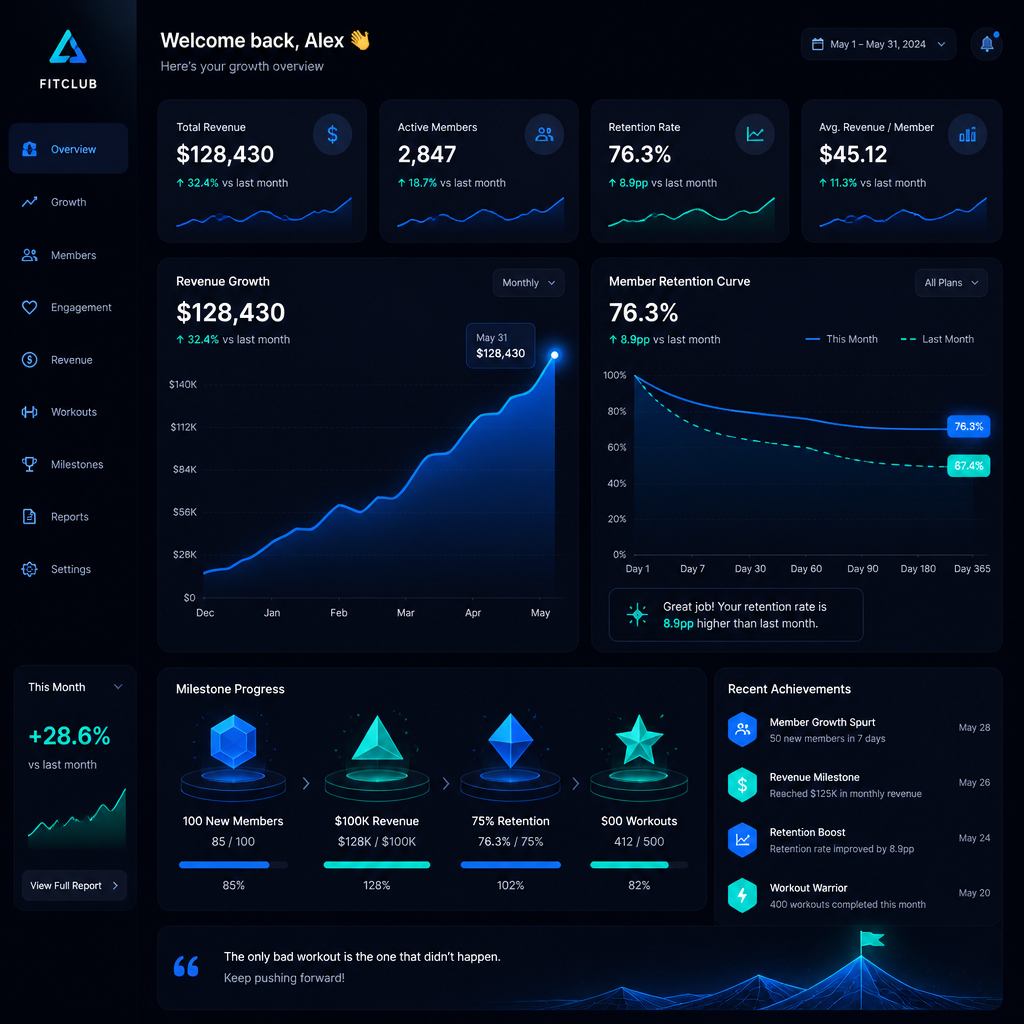
The logic of gym retention is simple: a member who uses more services within the same space is less likely to cancel. Cold recovery is one of those services with a special characteristic: it creates a repeatable ritual. A member who discovers they feel significantly better in the 24 hours following a workout when using the ice bath will want to repeat that experience. The gym visit is no longer just about the workout; it now includes recovery.
Spaces that position the ice bath as part of a structured recovery offering, rather than a mere accessory, consistently record higher visit frequency and better retention metrics per member. The reason is direct: the member now has two reasons to show up—training and recovery.
There is also a social component that should not be underestimated. Group cold therapy, or simply seeing other members using the ice bath, creates curiosity, conversation, and a collective identity within the gym. This sense of community is one of the biggest long-term retention factors in any fitness space.
Physical and Mental Benefits Members Experience
Members don't stay loyal to equipment. They stay loyal to the results they feel. That is why understanding what an ice bath does to the body is essential for communicating the service convincingly.
Muscle Recovery and Inflammation
Cold water immersion reduces nerve impulse transmission, decreasing pain perception, and triggers vasoconstriction, which limits local inflammation in muscle tissue. This mechanism is why high-performance athletes use cold therapy after intense training or competitions, particularly in endurance sports. For gym members with demanding training routines, the practical result is recovering faster and being able to maintain a higher training frequency.
There is an important caveat to communicate honestly: cold water immersion immediately after strength training can, in some contexts, interfere with long-term hypertrophy adaptations. For members whose primary goal is muscle mass gain, the ideal protocol is to use the ice bath with a delay after strength training, or to reserve it for cardiovascular and endurance training days. Communicating this nuance positions the gym as a space of genuine expertise, not just a seller of services.
Mental Benefits and Resilience
Voluntarily entering cold water requires concentration, breath control, and tolerance for discomfort. These are the exact same mental resources that allow an athlete to stay focused during a difficult set or complete a workout when motivation is low. Many practitioners describe a state of mental clarity and high energy for 30 to 60 minutes after a cold immersion session, which makes the ice bath an attractive tool not only for physical recovery but also for general well-being and energy management throughout the day.
Tip: When communicating the ice bath to members, avoid unverified medical claims. Focus on the experiential benefits that are widely recognized: reduction of muscle pain, a sense of increased energy, and improved mental well-being. Members trust an honest gym more than one that promises miracles.
Revenue Models for Gyms and Fitness Studios
A commercial ice bath is not just a member benefit. It is a revenue unit. There are several ways to monetize it, and the choice of the right model depends on the gym's profile and its clientele.
Premium Plan with Ice Bath Access
The most direct way to generate a return is to create a higher-tier membership plan that includes unlimited access to the ice bath and potentially the sauna. This model works well in gyms that already have a member base with some spending power and are looking for a concrete reason to justify a higher monthly fee. The member compares the value of the service with external alternatives, such as spas or wellness centers, and realizes they pay less with more convenience.
Individual Sessions by Appointment
For gyms that do not want to create multiple plans, the option of standalone, pay-per-use recovery sessions is an effective alternative. This model allows you to capture revenue from non-members and base-plan members, while serving as a gateway to premium plan membership. Appointment management should be simple, ideally via an app or online system, so as not to create unnecessary friction.
Contrast Therapy Packages
Combining the ice bath with a sauna into a contrast therapy package is the model with the highest perceived value. A structured session of alternating between hot and cold, lasting 45 to 60 minutes, can be sold at a significantly higher price than an isolated session of either service. Wellness studios and premium gyms across Europe already offer this format as an anchor service.
Spaces that position the ice bath as part of a structured recovery offering, rather than a simple extra, consistently record higher revenue per member and measurable improvements in retention.
Partnerships with Sports Teams and Companies
Gyms with a cold recovery area installed become attractive for partnerships with athletics clubs, cycling teams, triathlon groups, and companies offering corporate wellness programs. This channel can generate bulk bookings during off-peak hours, optimizing equipment profitability without increasing operational load during peak periods.
Comparison: Cryotherapy Solutions for Commercial Use
There is no one-size-fits-all solution for every gym. Choosing the right equipment for commercial recovery must take into account daily user volume, available space, investment budget, and the level of maintenance the team can guarantee. The table below compares the three most common approaches.
| Solution | Ideal Profile | Advantages and Limitations |
|---|---|---|
| Tub with integrated chiller (e.g., Alaska Recovery PRO with Chiller Boost) | Premium gyms, fitness studios, sports recovery centers | Stable temperature down to 3°C, app control, multiple daily sessions, reduced maintenance. Higher initial investment, but faster return thanks to service consistency. |
| Portable tub with separate chiller | Gyms in testing phase, spaces with permanent installation restrictions | Positioning flexibility, lower initial investment. Less suitable for high daily user volumes; requires more active hygiene and maintenance management. |
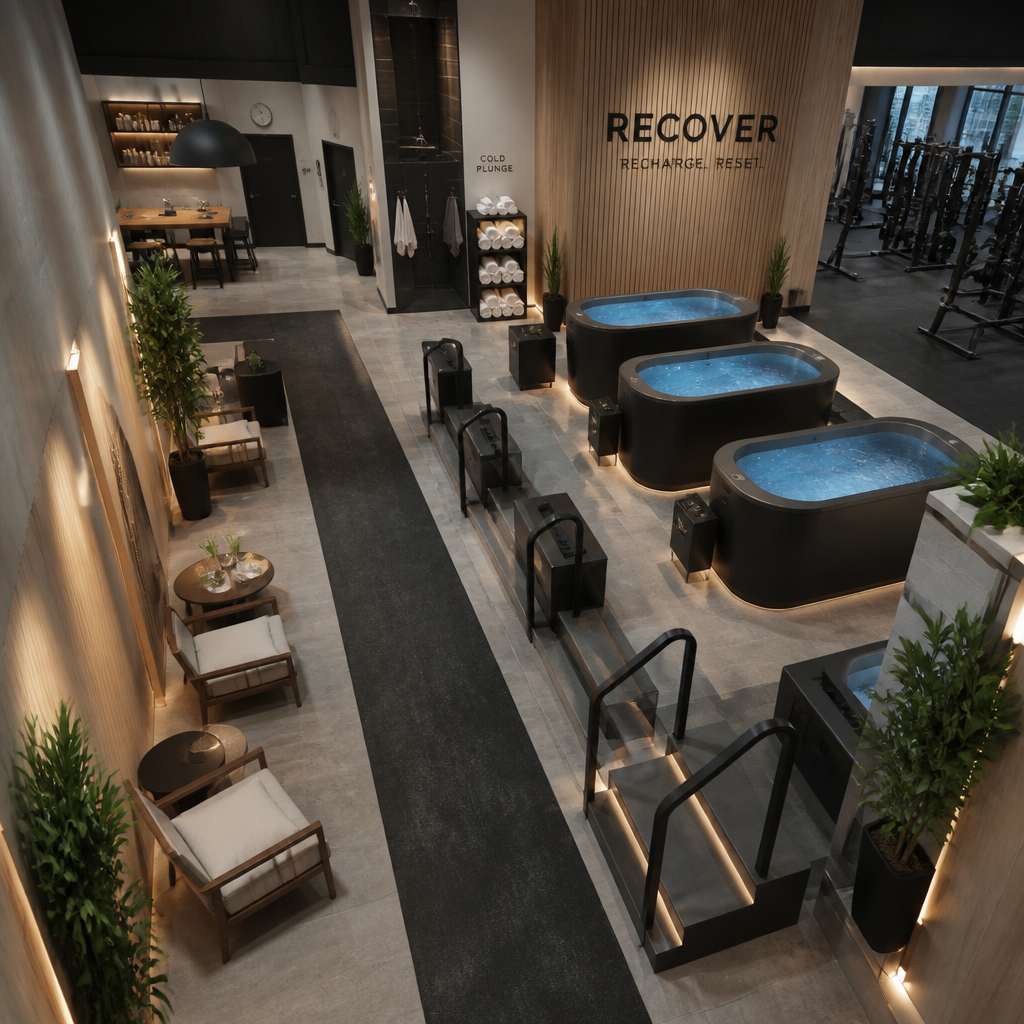
| Recovery zone with contrast therapy (ice bath + sauna) | Wellness studios, hotels, premium sports facilities | Maximum perceived value, allows for premium contrast therapy packages. Requires more space and investment, but positions the space in a market segment with less direct competition. |
For intensive commercial use, choosing a system with a high-power chiller and continuous filtration is not a luxury: it is an operational necessity. Equipment that does not maintain a stable temperature during peak hours or that requires frequent shutdowns for maintenance does not generate the post-workout ritual that justifies retention. Alaska Recover, with the PRO line for commercial use, was designed precisely to meet this requirement, with a reinforced structure, 5cm insulation, and continuous cooling via a 1080W chiller.
Tip: When evaluating commercial equipment, always check the safety certifications of the filtration system and the chiller. For facilities open to the public, ensure components meet applicable standards in your country. A hygiene or safety issue in a commercial space has consequences that go far beyond the cost of replacing the equipment.
How to Implement a Cold Recovery Program
Installing an ice bath in a gym without a usage protocol is the fastest path to unused equipment and dissatisfied members. Successful implementation has four components that cannot be ignored.
Defining the Session Protocol
Beginners should start with 2 to 5 minutes at temperatures between 10 and 15°C. Experienced users can extend sessions up to 15 minutes at lower temperatures. The protocol should be adjusted to the user profile, not applied uniformly. For members doing intense strength training, the timing between the workout and the cold session can influence results, so staff should have an answer prepared for this question.
Staff Training
Cold recovery programs in gyms fail primarily due to a lack of consistent protocol and a lack of guidance, not because of equipment quality. The team needs to know how to introduce new users to the practice, recognize situations that require caution, and maintain a rigorous daily maintenance and hygiene routine. This knowledge should be documented and reviewed regularly, not just in the initial setup manual.
Hygiene and Maintenance Management
Clear signage, a simple booking system, and a quick staff response to hygiene concerns have more impact on daily retention than any technical feature of the equipment. Daily checks of temperature and water clarity, weekly filter cleaning, and periodic water changes are the basis of any quality commercial operation. Systems with continuous filtration and remote control via app, like Alaska Recover chillers, significantly reduce the operational load of these tasks.
Communication to Members
Introducing the ice bath to the space is an opportunity for active communication. An open demonstration session, a beginner’s guide available in the physical space, and a clear explanation of the different access plans are enough to generate initial adoption. From there, members who try it and feel results become the best promoters of the service within the gym community.
Common Mistakes That Destroy Ice Bath ROI
Most gyms that invest in cold recovery and don't see a return make the same mistakes. Knowing them before moving forward saves time, money, and frustration.
Choosing Residential Equipment for Commercial Use
This is the most frequent and most expensive mistake in the long run. Equipment designed for home use, with one or two sessions per day, cannot withstand the load of an active gym. The temperature does not remain stable between consecutive sessions, filtration is not sufficient for the user volume, and components deteriorate much faster. The cost of replacement and service downtime eventually outweighs the initial savings.
Having No Protocol or Training
An ice bath without a protocol is just a cold tub. The difference between a service that retains members and equipment that creates problems lies in the consistency of the protocol and the team's level of knowledge. Without these two elements, the adoption rate will be low, complaints will increase, and the equipment will be underutilized.
Not Including the Ice Bath in the Value Proposition
Installing the equipment and not actively communicating it in the sales and renewal process is wasting most of the retention potential. The ice bath should be mentioned during introductory tours, included in communication materials, and referenced as a justification for premium plans. If members don't know it exists or don't understand its value, they won't use it, and if they don't use it, it doesn't build loyalty.
Ignoring Contrast Therapy as an Opportunity
Gyms that already have a sauna and add an ice bath have an immediate opportunity to create a fitness studio cryotherapy service with a clear proposal: contrast therapy. Failing to leverage this combination to create a specific package and communicate it actively means leaving revenue and potential retention on the table. Differentiation from direct competitors, such as spaces that offer only one of the services, becomes much stronger when the two are combined into a structured experience.
Frequently Asked Questions
What is the ideal temperature for an ice bath in a commercial gym?
For commercial use with different user profiles, a temperature between 8 and 12 °C is suitable for most sessions. Beginner users benefit from temperatures close to 12 to 15 °C, while experienced practitioners may prefer sessions below 10 °C. The important thing is that the chiller maintains a stable temperature throughout the entire operating period, including peak hours with multiple consecutive sessions.
How long should an ice bath session last?
For beginners, 2 to 5 minutes is a suitable starting point. Experienced users can extend this to 10 to 15 minutes. In a gym setting, it is advisable to set a maximum duration per session to facilitate booking management and maintain equipment turnover during peak hours.
Does an ice bath interfere with muscle gains?
There is evidence suggesting that cold water immersion immediately after strength training can interfere with the inflammatory signaling required for protein synthesis. For members whose primary goal is hypertrophy, it is recommended to wait a few hours after strength training before using the ice bath, or to reserve cold therapy for cardiovascular and active recovery training days. This is an important distinction to include in member information protocols.
What equipment is needed for commercial use in a gym?
For commercial use, a tub with a capacity and structure suited to the expected volume of users is required, combined with a high-power chiller that maintains a stable temperature between sessions, a continuous filtration system to ensure water quality, and ideally, remote temperature control via an app to facilitate operational management. Equipment with recognized safety certifications is mandatory for facilities open to the public.
How can I include an ice bath in a premium membership plan?
The most direct way is to create a higher-tier plan that includes unlimited access to the ice bath and possibly the sauna, with a price difference that reflects the added value. Alternatively, you can offer individual sessions by appointment at a per-session price, or create contrast therapy packages that combine both services. The chosen model should be clearly communicated at the time of sale and membership renewal.
What is the expected impact on member retention?
It is not possible to guarantee a specific percentage without knowing the context of each gym. What is consistent in the sector's business literature is that members who use multiple services within a facility are significantly less likely to cancel. The ice bath, when integrated as a post-workout ritual and actively promoted, creates exactly this pattern of multiple usage that sustains long-term retention.
Does Alaska Recover have equipment suitable for gyms and fitness studios?
Yes. The Alaska Recovery PRO line, particularly the models with Chiller Boost and Mini Chiller, was developed for more frequent and demanding usage contexts. With a capacity of 450 liters, reinforced insulation, and continuous cooling down to 3 °C, these solutions support multiple daily sessions and are controlled via a mobile app, which facilitates operational management in gyms and studios. Alaska Recover also offers saunas to complement a contrast therapy proposal.
Do you own a gym or fitness studio and have you already tried adding cold recovery to your offering? Tell us what went well and what you would change.
References
- Cold therapy and ice baths: physical and mental benefits for fitness practitioners
- Ice baths for gyms and fitness: commercial value and customer retention
- Why a gym should invest in a cold plunge system
- Commercial cold plunge systems for gyms and wellness centers
- Practical guide to implementing ice baths in gyms: protocol and recovery