


Today's hotel guests don't arrive at a luxury spa just looking for a relaxing massage. They arrive with recovery protocols in mind, with expectations shaped by years of exposure to cold, sauna sessions, and contrast therapy. The hotel ice bath has ceased to be a Nordic eccentricity and has become a genuine selection criterion. According to the Global Wellness Institute, wellness tourism spending reached $894 billion in 2024, a figure that reflects a structural shift: travelers no longer separate physical performance from their holidays.
Table of Contents
- Key Takeaways
- Why Cold and Heat Have Come to the Hotel
- What Guests Demand in a Luxury Spa
- Hotel Ice Baths: From Installation to Experience
- Luxury Wellness with Sauna: The Role of Heat in the Circuit
- Spa with Cryotherapy: What Sets a Premium Space Apart
- Contrast Therapy in Hotels: How to Structure the Protocol
- Comparison of Approaches for Hotels and Spas
- Frequently Asked Questions
- References
Key Takeaways
| Key Idea | Explanation |
|---|---|
| Ice baths have become a hotel selection criterion | Wellness-focused travelers actively search for properties with cold plunges before booking, especially for recovery stays or sports retreats. |
| Contrast therapy increases perceived spa value | Structured hot-cold circuits allow sessions to be charged as standalone treatments, increasing revenue per guest without increasing the number of therapists. |
| A sauna without an ice bath is an incomplete experience | From both physiological and commercial standpoints, offering heat alone misses the contrast effect that justifies premium positioning and guest loyalty. |
| Maintenance is the factor that most differentiates hotels in the long term | A cold plunge system with an integrated chiller and stable temperature control reduces complaints and ensures a consistent experience during every stay. |
| Space design is as important as the equipment | Well-designed contrast areas generate organic social media sharing, acting as free marketing for the hotel. |
| Hotels without this type of offering lose guests to the competition | With the growth of wellness tourism, properties that do not evolve their recovery offerings fall below the expectations of the premium segment. |
| Temperature must be controllable and auditable | Professional systems with dedicated chillers allow temperatures between 7 and 15°C to be maintained consistently, which is impossible with ice or cold running water. |
Why Cold and Heat Have Come to the Hotel
The answer is not just cultural, although the Nordic influence is undeniable. It is economic. Wellness tourism has grown to become one of the global market's greatest forces, with the Global Wellness Institute reporting that the wellness economy reached $6.8 trillion in 2024, having doubled in size since 2013. Hotels have realized that guests who book based on wellness criteria have a higher willingness to spend, lower price sensitivity per room, and higher return rates.
The practical implication is direct: a spa with a sauna, ice bath, and contrast therapy protocol is not an operational luxury—it is a measurable competitive advantage. Guests who find this circuit at one hotel will look for it at the next. What they don't find, they will notice is missing.
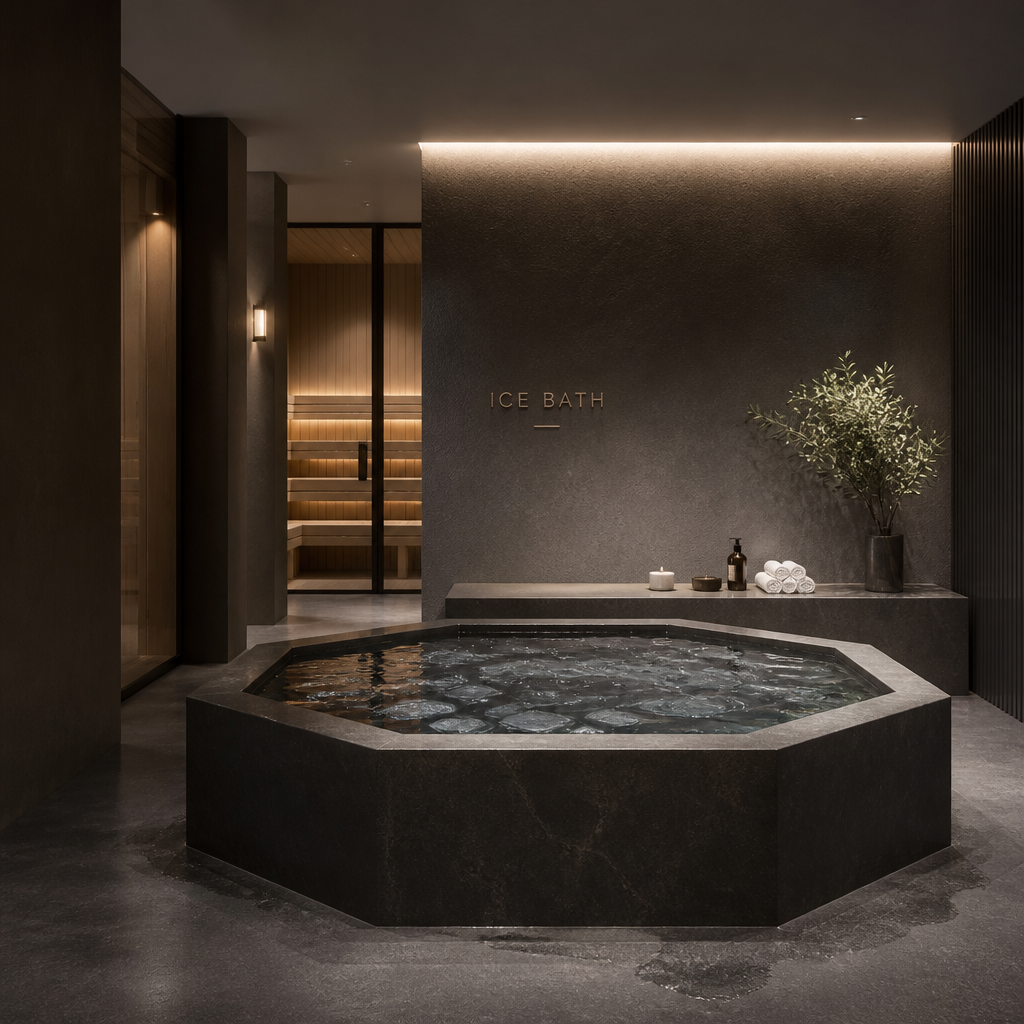

The trend is also fueled by a specific guest profile: amateur athletes, triathletes, runners, and functional training enthusiasts who already have recovery routines at home. When they travel, they do not forgo these routines. If the hotel does not support them, they choose one that does. This reality is changing the design brief for luxury spas around the world.
What Guests Demand in a Luxury Spa
The typical wellness spa guest in 2025 doesn't just want to relax. They want to recover, measure, improve, and return to training faster. This distinction matters because it defines the equipment, protocol, and staff needed to serve this clientele competently.
The thermal circuit as a central experience
Searches for "cold-plunge therapy" have grown significantly in recent years, and hotels are capitalizing on this trend. Properties such as the Grand Hyatt Barcelona have installed ice rooms in their spa circuits, available to guests before or after treatments. This model works because it integrates cold as part of a protocol, not as an isolated attraction.
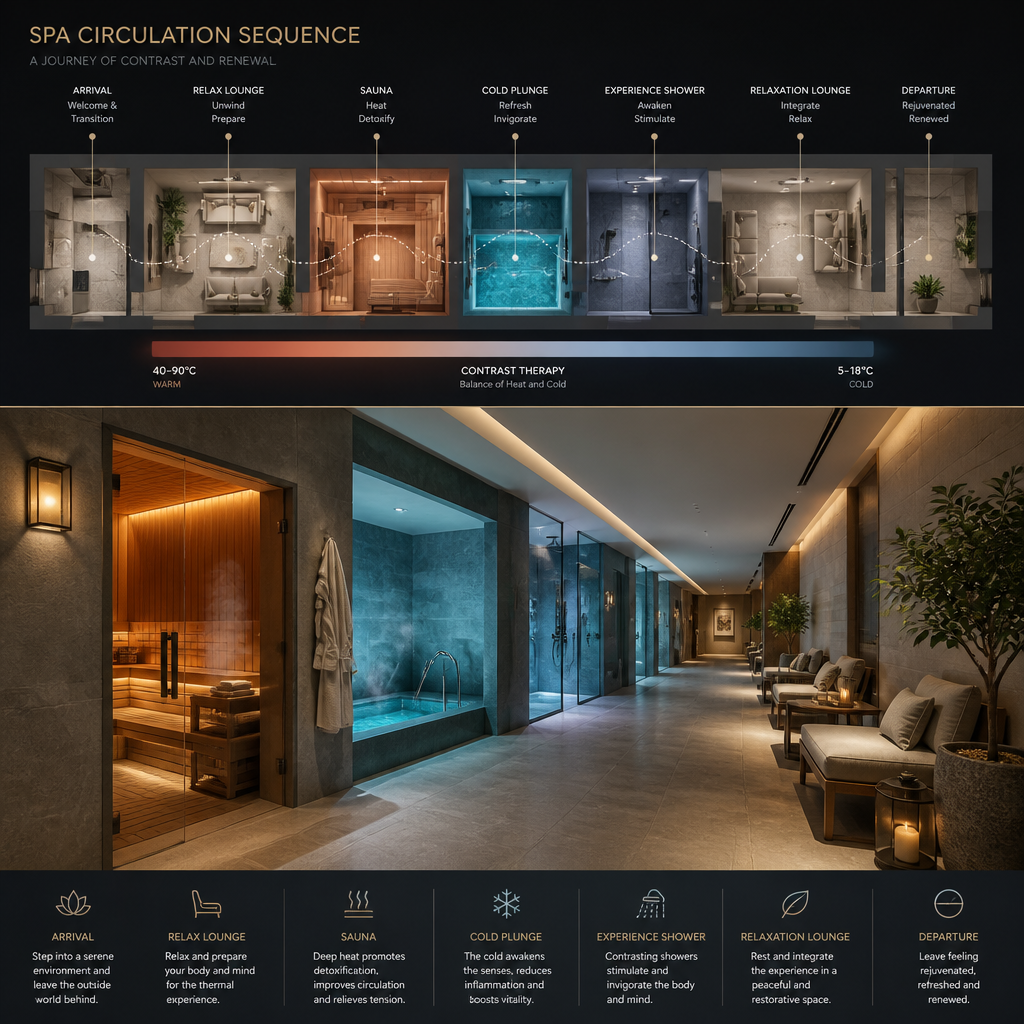
A well-structured circuit includes at least three moments: progressive warming in a sauna or steam room, immersion in a cold plunge or ice bath, and an active recovery period. Without this sequence, the guest does whatever they want in the available space, and the experience loses consistency and impact.
Privacy and control as markers of premium status
What separates a luxury spa experience from a gym with a cold tub is, to a large extent, the context. A private room, controlled temperature, absence of queues, and structured guidance are the elements that justify premium positioning. A hotel offering a shared cold plunge without stable temperature is offering a degraded version of the same product the guest already has or could have at home.
Tip: When setting up the contrast therapy space, define a written welcome protocol for the staff. The difference between a memorable experience and a generic one begins with how the guest is introduced to the circuit, not the equipment itself.
Hotel Ice Baths: From Installation to Experience
Installing an ice bath in a hotel is different from installing one at home or in a gym. The scale of use, the diversity of guest profiles, and the demands of continuous maintenance create requirements that only professional equipment can satisfy. A cold plunge system for commercial use needs to maintain a stable temperature throughout dozens of daily uses, with auditable hygiene and quiet operation.
Integrated chillers versus conventional ice
Hotels that use conventional ice to cool their bath water make a basic operational error: the cost of ice is continuous, the temperature is inconsistent, and the guest experience varies from day to day. An integrated chiller maintains the temperature between 7 and 15°C constantly, without manual intervention between uses.
Alaska Recover offers professional ice bath systems with dedicated chillers, specifically designed for commercial contexts like hotels, spas, and clinics. The difference compared to entry-level solutions is visible in temperature consistency, available water volume, and ease of maintenance. For a hotel with multiple sessions daily, this is not a detail—it determines whether the equipment will still be functioning in six months.
Proper sizing for the hotel context
A common mistake in boutique hotels is undersizing the system's capacity. A cold plunge designed for individual home use cannot handle the pace of a spa with 20 or 30 users per day. The tub volume, chiller capacity, and filtration system need to be calculated for expected peak usage, not the average.
In practice, this means choosing systems with chillers of at least 1 HP for intensive individual-use tubs, and dual or higher-capacity systems for spaces where the cold plunge is part of a group circuit. Alaska Recover sizes solutions according to the space's usage profile, something a generic spa equipment supplier rarely does.
Luxury Wellness with Sauna: The Role of Heat in the Circuit
The sauna is the physiological starting point of any well-designed contrast therapy protocol. Heat dilates blood vessels, raises core body temperature, promotes sweating, and prepares the cardiovascular system for the thermal shock of the cold that follows. Without this prior warming, immersion in cold water is more aggressive and less effective.
From a commercial point of view, the sauna also has the longest history of scientific evidence, which makes communicating it to the guest easier. Finnish tradition, data on improved circulation and reduced muscle inflammation, and cultural familiarity with the concept make the sauna the easiest component to sell in a wellness package.
Finnish sauna versus infrared sauna
The choice between a traditional Finnish sauna and an infrared sauna depends on the available space, the guest profile, and the intensity of the experience the hotel wants to offer. The Finnish sauna operates between 80 and 100°C, with humidity controlled by löyly, and produces a more intense, culturally authentic experience. The infrared sauna operates between 45 and 60°C, penetrates tissues at a cellular level, and is tolerated by guests less accustomed to extreme heat.
For hotels that want a circuit accessible to all guest profiles, the infrared sauna is more versatile. For properties that want an authentic and differentiated Nordic positioning, the Finnish sauna is irreplaceable. Alaska Recover provides both options, with configurations for private spaces and group circuits.
Contrast therapy is not about extreme temperature. It is about the controlled alternation between two opposing physiological states. This control is what transforms an experience of discomfort into a recovery protocol.
Spa with Cryotherapy: What Sets a Premium Space Apart
Cryotherapy is a broad term that encompasses everything from whole-body cryotherapy chambers to cold plunges, ice baths, and controlled cold-water immersion. In the hotel spa context, cold plunge immersion is the most versatile form, offering the best cost-benefit ratio and the highest guest adherence. Whole-body cryotherapy chambers have much higher installation and maintenance costs and require more complex safety protocols.
What differentiates a premium cryotherapy spa is not necessarily the type of equipment, but the quality of the experience built around it. Stable temperature, visible hygiene, clearly communicated entry and exit protocols, and integration with other spa services are the elements that transform a cold plunge into a differentiated service.
Integration with other spa treatments
A mistake many hotels make is treating the cold plunge as a standalone attraction rather than integrating it into the treatment menu. The most effective way to monetize the investment is to create packages that combine contrast therapy with recovery massages, compression sessions, or nutritional protocols. This bundling increases the average spend per guest and creates a more complete experience that justifies a return visit.
Tip: Configure the contrast therapy circuit so that the cold plunge is always the penultimate element, followed by a period of warmed rest. This sequence maximizes the recovery effect perceived by the guest and increases the likelihood of positive reviews about the spa.
Contrast Therapy in Hotels: How to Structure the Protocol
Contrast therapy alternating between cold and hot water can improve short-term recovery, reduce muscle pain, and, in some cases, improve cardiovascular function. The evidence is clear enough to communicate real benefits to the guest without clinical exaggeration. What does not yet exist is a validated universal protocol, meaning hotels have the leeway to develop their own protocols based on the guest profiles they serve.
Basic protocol for guests with no prior experience
For guests with no experience with contrast therapy, the recommended protocol begins with 10 to 15 minutes of sauna at a moderate temperature, followed by gradual immersion in a cold plunge at 12 to 15°C for 2 to 3 minutes. The cycle is repeated two to three times with progressive increases in duration in the cold water. This protocol is safe for most guests and produces noticeable results without excessive exposure.
Advanced protocol for athletes and experienced guests
Athletes and guests with prior cold immersion experience tolerate and benefit from lower temperatures, between 7 and 10°C, and longer durations of 5 to 8 minutes per cycle. For this profile, the value lies in temperature precision and session consistency, which only systems with professional chillers can guarantee. An athlete who uses the hotel's cold plunge as part of their post-workout recovery knows exactly what temperature works for them. If the hotel cannot guarantee it, it loses that guest's loyalty.
Alaska Recover develops ice bath solutions and chillers specifically designed for this level of demand, both for athlete home use and for commercial facilities looking to serve this segment.
Comparison of Approaches for Hotels and Spas
Not all approaches to implementing cold and heat therapy in a hotel produce the same result. The table below compares the three most common solutions in the European luxury wellness market.
| Approach | Suitability for Hotel Use | Main Limitations |
|---|---|---|
| Cold Plunge with Professional Chiller | High. Stable temperature, predictable maintenance, suitable for multiple daily users. Integrates with sauna for a complete contrast therapy circuit. | Higher initial investment. Requires technical space for the chiller. Installation must be planned in advance. |
| Ice Bath with Conventional Ice | Low for commercial use. Can work for one-off events or as a temporary solution. | High and continuous operational cost. Inconsistent temperature. Variable guest experience. Not scalable for intensive daily use. |
| Whole-Body Cryotherapy Chamber | Medium. Very premium positioning but with a narrower audience. Suitable for medical spas or recovery clinics integrated into a resort. | Very high installation cost. Requires certification and strict safety protocols. Experience is less accessible for guests unfamiliar with extreme cold. |
Frequently Asked Questions
What is the ideal temperature for a hotel ice bath?
For hotel use with mixed audiences, the most functional temperature is between 10 and 15°C. This range is effective for producing the physiological benefits of cold immersion and is tolerable by most guests, including those without prior experience. For spas serving athletes or those wanting more technical positioning, temperatures between 7 and 10°C are more appropriate but require more careful communication to the guest.
How many daily uses can a professional cold plunge support?
A professional system with a properly sized integrated chiller supports between 20 and 50 daily uses, depending on the chiller's capacity and the tub's volume. The limiting factor is usually not the cold itself, but the water filtration and hygiene system. A good hotel cold plunge system includes continuous filtration and pH control to ensure water quality for every use.
Is contrast therapy safe for all hotel guests?
For most healthy adults, yes. There are, however, relevant contraindications for people with cardiovascular disease, uncontrolled hypertension, Raynaud's, or pregnancy. A responsible hotel communicates these contraindications clearly at the entrance to the area and includes a brief screening questionnaire in the circuit booking process. Staff must be trained to identify signs of distress during a session.
Is it worth installing a sauna and cold plunge in a smaller boutique hotel?
Yes, provided the hotel's positioning is aligned with wellness tourism. In boutique hotels, a private contrast therapy room can become the spa's most powerful differentiator, precisely because the personalized experience and lack of wait times are what premium segment guests value most. Investing in smaller-scale professional equipment is perfectly feasible and provides a measurable return in package rates and online reviews.
How does Alaska Recover differ from other spa equipment suppliers?
Alaska Recover is a Portuguese brand specializing in cold and heat recovery solutions, with a range extending from portable ice baths for home use to integrated professional systems with chillers for hotels, spas, and clinics. The focus is on durability, design, and long-term technical support, with specific knowledge of the European market. Unlike generic spa equipment suppliers, Alaska Recover sizes and configures solutions based on the actual usage profile of the space.
What financial return can a hotel expect from a cold plunge?
Direct return comes from marketing contrast therapy sessions as standalone treatments, including them in recovery packages, and increasing the average spa spend per guest. The indirect return, often underestimated, comes from competitive differentiation, an increase in positive reviews, and guest loyalty in the wellness segment. Hotels that have integrated thermal circuits consistently report that the spa is cited as a reason for returning.
Have you tried contrast therapy at a hotel or spa? Share your experience in the comments and tell us what made the difference in the quality of the space and the protocol.