


Most people who want to try ice baths at home start the same way: they fill up the bathtub, dump in a bag of supermarket ice, and shiver for two minutes before giving up. Not because the benefits aren't real, but because no one explained the right temperature, the proper duration, or which equipment makes a difference in the long run. This guide corrects that. Whether you are an athlete, a fitness enthusiast, or simply someone looking to improve recovery and well-being without leaving home, what follows is everything you need to start right and keep going.
Table of Contents
- Quick Summary
- What it is and why it works
- Proven benefits of cold water immersion
- Temperature, time, and frequency: the numbers that matter
- Home setup options: from bathtub to chiller tank
- Comparison of home approaches
- Contrast therapy: sauna and ice together
- Safety and contraindications you can't ignore
- Frequently Asked Questions
- References
Quick Summary
| Key Point | Explanation |
|---|---|
| Ideal temperature for beginners | Between 12°C and 15°C. Effective, safe, and more tolerable for those starting out. |
| Target temperature for regular practitioners | Between 5°C and 10°C. This is where physiological effects are more pronounced. |
| Recommended duration | 1 to 3 minutes for beginners. Maximum of 10 to 15 minutes for experienced users. |
| Weekly frequency | 2 to 3 times per week is enough. Quantity does not replace consistency. |
| Best time of day | After training or late afternoon. Avoid immediately before bed if you have trouble sleeping. |
| Minimum viable equipment | A regular bathtub with ice works for testing. For real consistency, an immersion tank with a chiller is the way to go. |
| Most common mistake | Entering too slowly. A quick immersion is safer and less uncomfortable than hesitating on the edge. |
What it is and why it works
An ice bath, also called cold water immersion or a cold plunge, involves submerging your body, usually up to your neck, in water at temperatures below 15°C for a controlled period. It is not a social media trend. It is a practice with decades of use in high-performance sports, and in recent years, with growing scientific research to support it.
The logic behind the cold stimulus is simple: the body reacts to the sudden drop in temperature by activating a series of response mechanisms. Blood vessels constrict, the heart rate temporarily slows down, and the nervous system triggers a set of neurotransmitters that have a direct effect on mood, focus, and muscle recovery.
Cold water immersion triggers the release of important neurotransmitters such as dopamine, serotonin, and norepinephrine, all linked to the modulation of the neural stress response and emotion-related circuits.
In practical terms, this means that a well-executed ice bath is not just a tool for physical recovery. It is also a mental state regulator, something those who practice regularly notice after just a few weeks.
Proven benefits of cold water immersion
There is a lot of noise surrounding the benefits of cold exposure. It is worth separating what has real support from what is marketing. The benefits below have sufficient consistency in the literature to be presented without excessive qualifications.
Accelerated muscle recovery
Cold water immersion after intense training reduces markers of muscle damage and inflammation, improves perceived soreness in the following 24 to 96 hours, and allows athletes to resume training sooner. This is the benefit with the most data and the one that led to the widespread use of ice baths in high-performance sports.
Tip: Ideally, take the ice bath a few hours after training, not immediately. Giving your body 30 to 60 minutes allows initial anabolic processes to occur before applying the cold stimulus.
Neurological effect and mood improvement
Cold exposure significantly increases levels of norepinephrine and dopamine. Studies show that even brief exposures of about three minutes can contribute to improved mood and reduced inflammation, especially in beginners. Regular practitioners describe increased alertness and lower reactivity to stress throughout the day.
Support for metabolism and body composition
Regular cold exposure can increase metabolic rate, as the body expends energy to maintain its internal temperature. The activation of brown adipose tissue, which converts energy into heat, is a mechanism associated with cold exposure. The impact on body composition is not dramatic, but it is real when combined with proper training and nutrition.
Improved sleep quality
Cold therapy can support the natural drop in body temperature that facilitates falling asleep. Many practitioners report improvements in sleep quality when they take their ice bath in the late afternoon, rather than close to bedtime.
Temperature, time, and frequency: the numbers that matter
This is the aspect where most people get lost due to conflicting information. Reality is simpler than it seems.
Temperature
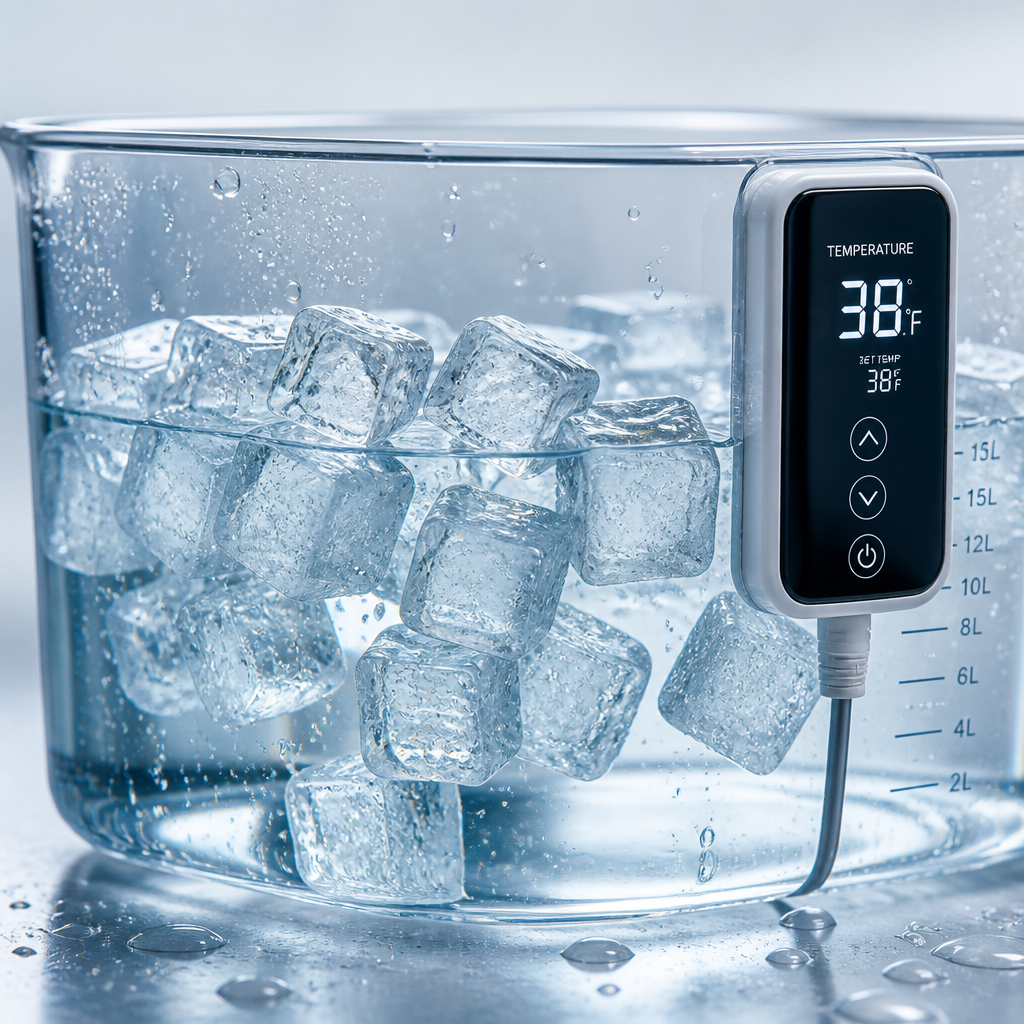
For beginners, a temperature between 12°C and 15°C is perfectly sufficient to start feeling the benefits. You don't need 3°C on your first day. With experience, the 5°C to 10°C range is where the physiological effects are most pronounced. Immersion baths generally range between 7°C and 16°C depending on individual experience and tolerance.
Duration
For beginners, start with 1 to 2 minutes. Progressively build up to 3 to 5 minutes. Experienced practitioners can go up to 10 to 15 minutes, but never exceed that limit. Exceeding 15 minutes without supervision is unnecessary and increases the risk of hypothermia.
Tip: Don't worry too much about the exact time in the first few weeks. The initial goal is consistency, not performance. A 90-second plunge three times a week is worth more than 10 minutes done once a month.
Frequency
Two to three sessions per week is the recommended range for most people. Quality and consistency have more impact than high frequency. Increasing to every day without need does not provide relevant additional benefits for most users.
Home setup options: from bathtub to chiller tank
Here is where the practical decision begins. The setup you choose determines whether you can create a real habit or if the ice bath becomes just another thing you tried once and abandoned.
Regular bathtub with ice
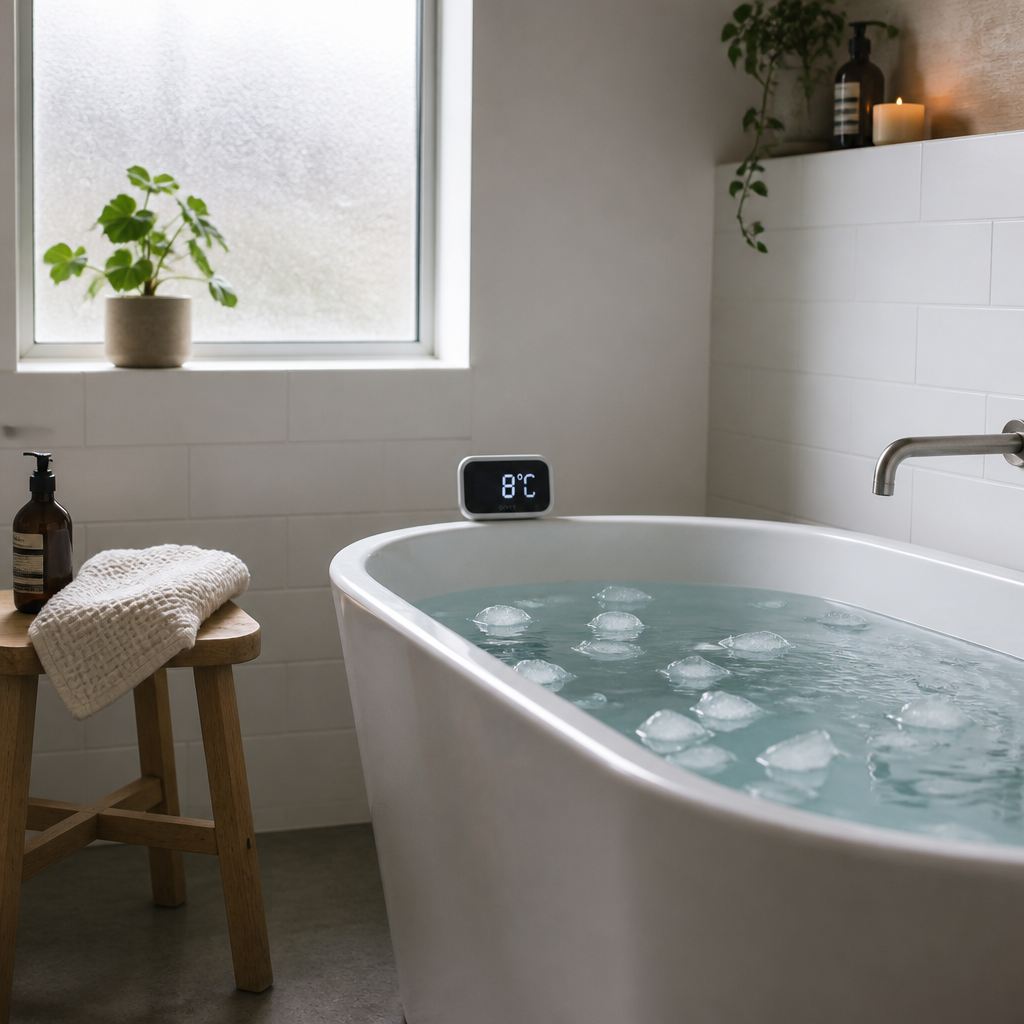
The most accessible solution for testing. You fill the tub with tap water and add ice until you reach the desired temperature. Does it work? Yes, for experimenting. The problem is inconsistency: the temperature varies each session, it depends on an ice supply (with recurring cost and logistics), and a domestic bathtub does not allow for full immersion up to the neck comfortably. In the long run, it is a frustrating solution.
Portable immersion tank
Portable immersion tanks are specifically designed for this purpose. They have a depth and shape that allow for full immersion, are easier to fill and empty than a bathtub, and there are premium quality options for home use. They still depend on ice or an external chiller to maintain the temperature, but they are a significant jump in terms of experience and ergonomics compared to a regular bathtub.
Integrated system with chiller
It is the most practical solution for regular use. A water chiller attaches to the tank and maintains a constant temperature without the need to add ice. You can set the exact temperature, control it remotely via an app, and have your session ready in minutes. The initial cost is higher, but it eliminates the recurring cost of ice, procurement logistics, and temperature variability. For those practicing two to three times a week, the return is clear in the medium term.
At Alaska Recover, the Alaska Mini Chiller can cool water down to 3°C and connects directly to the immersion tank, with full control via an iOS and Android app. It is an example of what it means to have a home setup running without daily friction.
Comparison of home approaches
| Approach | Pros | Limitations |
|---|---|---|
| Regular bathtub + ice | Zero initial cost. Good for testing the practice. | Inconsistent temperature. Recurring ice costs. Incomplete immersion. Hard to maintain as a habit. |
| Portable immersion tank | Superior ergonomics. Full immersion. Easy to assemble and store. Good for small spaces. | Still requires ice or external chiller for controlled temperature. |
| Immersion tank + chiller | Constant and controllable temperature. No buying ice. Remote app control. Ideal for regular use. | Higher initial investment. Requires periodic water and filter maintenance. |
The right choice depends on your goal. If you simply want to see if the practice benefits you before investing, start with the bathtub. If you already know you want to make this a weekly habit, jump straight to a chiller system. The intermediate step of a tank without a chiller makes sense if you have space or budget limitations but still want an experience superior to the bathtub.
Contrast therapy: sauna and ice together
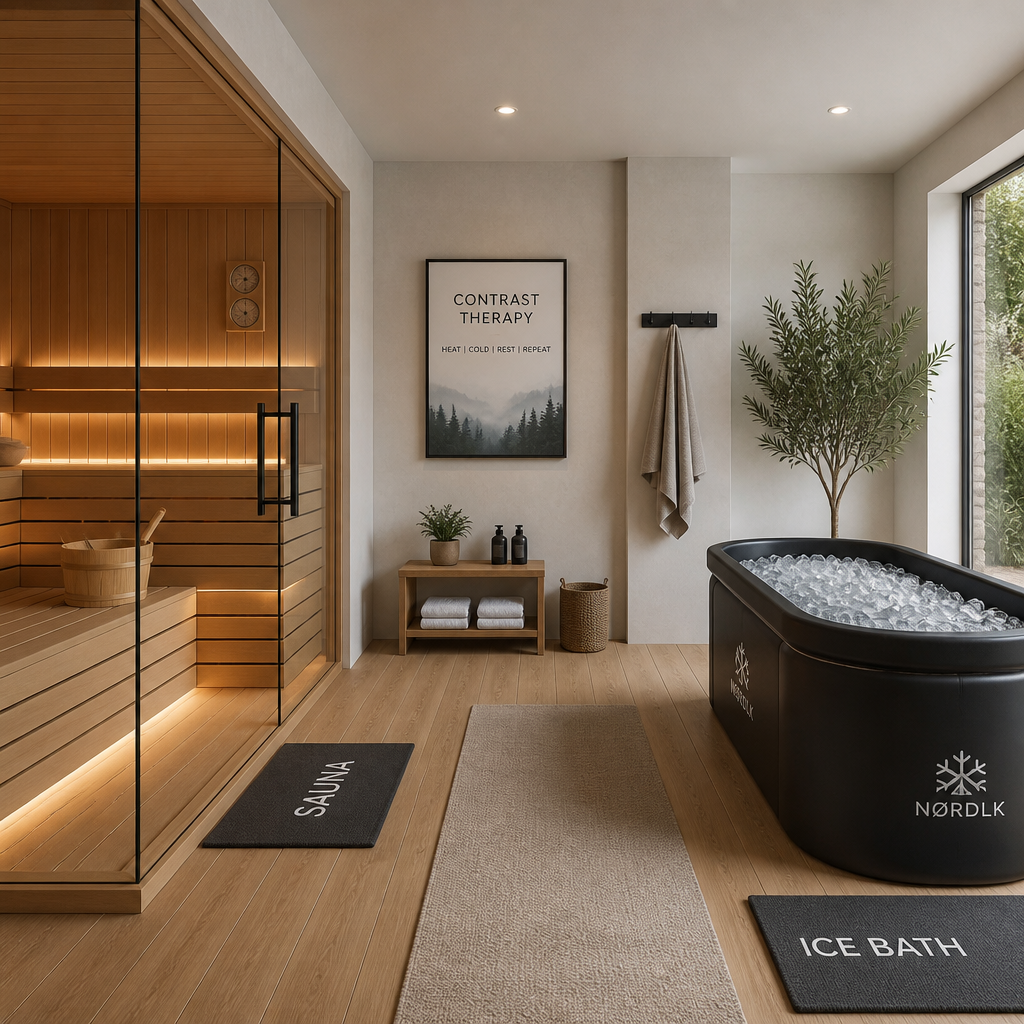
Contrast therapy, alternating between intense heat and cold immersion, is one of the most complete practices you can integrate at home. Nordic cultures have used this protocol, frequently referred to as the Nordic cycle, for centuries for recovery and well-being.
The principle is straightforward: heat raises body temperature and increases heart rate; cold drops them abruptly. Alternating between the two extremes stimulates circulation, supports post-exercise recovery, and has a profound effect on the nervous system.
Basic contrast therapy protocol
An effective protocol for home consists of 15 to 20 minutes of sauna, followed by 1 to 3 minutes of cold water immersion. Repeat the cycle two to three times and always finish in the cold. Finishing in the cold is not mandatory in absolute terms, but it is the approach that maximizes recovery and alertness effects.
The Alaska Recover range of saunas was developed precisely to be integrated with cold immersion tanks, creating a complete contrast therapy system at home or in professional spaces like gyms, clinics, and hotels.
Safety and contraindications you can't ignore
The ice bath is safe for the vast majority of healthy people. But there are situations where the practice requires prior medical consultation or should be avoided.
When to consult a doctor first
People with high blood pressure, heart disease, respiratory issues, or chronic pain should consult a doctor before starting any type of cold water immersion. Pregnant women, children, and elderly people with associated health conditions should also do so.
Basic safety rules
Never take an ice bath alone during your first sessions, especially if you have an unknown health condition. Enter the water gradually but without hesitating too much, as entering slowly is psychologically harder and not safer. Perform controlled breathing exercises before and during immersion to manage the cold shock response.
Do not exceed 15 minutes under any circumstances without professional supervision. The practical safety limit for regular home use is 10 minutes, even for experienced practitioners. And respect your body's signals: intense shivering, mental confusion, or loss of coordination are signs to leave the water immediately and warm up.
Tip: Having a large towel and warm clothes prepared before entering the water is a simple detail that makes a real difference in the post-immersion experience and how quickly your body temperature recovers.
Frequently Asked Questions
Can I take an ice bath at home without specific equipment?
Yes, you can use a regular bathtub with supermarket ice to experiment. The temperature will be inconsistent and the logistics inconvenient, but it is a valid way to see if the practice benefits you before investing in dedicated equipment. For regular use, an immersion tank with a chiller is much more practical and effective.
What is the right temperature to start?
Between 12°C and 15°C is the recommended range for beginners. It is cold enough to trigger physiological benefits, but tolerable enough for you to sustain the session. Gradually lower the temperature over weeks as your cold tolerance increases.
How long should I stay in the ice bath?
To start, 1 to 2 minutes is enough. Even 60 to 90 seconds activates the neurological response and the muscle recovery process. Build up to 3 to 5 minutes over weeks and never exceed 15 minutes per session in a home context.
Is an at-home ice bath safe?
For healthy people, yes. It should not be practiced by people with heart disease, uncontrolled high blood pressure, or respiratory diseases without medical clearance. In your first sessions, always have someone nearby and don't enter the water if you are exhausted or dehydrated.
Is it better to take an ice bath before or after training?
After training is the right choice for muscle recovery. Ideally, wait 30 to 60 minutes after exertion before entering cold water, so as not to interrupt immediate anabolic processes. Before training, cold immersion can increase alertness, but it does not have the same impact on recovery.
What is an ice bath chiller and do I need one?
A chiller is a water cooling device that attaches to the immersion tank and maintains a constant temperature without the need to add ice. If you practice two to three times a week, a chiller eliminates the cost and logistics of ice, ensures controlled temperature in every session, and makes the practice much more convenient. For occasional use, conventional ice may be enough.
Does contrast therapy with sauna and ice bath provide additional benefits?
Yes. Alternating between heat and cold stimulates circulation more intensely than either therapy alone, supports muscle recovery, and has a marked effect on the nervous system. It is one of the most complete recovery practices you can implement at home with the right equipment.
Have you tried an ice bath at home yet? Tell us how your first session went or what questions you still have before starting.
References
- Practical guide on ice baths for recovery and how to start
- Scientific facts about ice baths, temperature, and recommended duration
- How and when to take an ice bath at home safely
- Scientific research on the neurological effects of cold water immersion
- Comparison between ice baths and cold water tubs: precautions and advantages