


If you've ever trained intensely and woken up the next day with your muscles screaming, you know exactly what DOMS is. Most people respond with passive rest, anti-inflammatories, or compresses. But there is an approach that elite athletes have been using for decades and is finally reaching the average user: contrast therapy, which combines heat and cold exposure in alternating cycles to accelerate muscle recovery, reduce inflammation, and train the nervous system to better respond to stress.
The principle is not new. Romans would plunge into hot baths before throwing themselves into cold pools. Scandinavians go from the sauna directly into the snow. What ancient practice discovered empirically, modern research is now confirming with more precision. This guide explains what it is, how it works, how to apply it, and what you can really expect.
Table of Contents
- Quick Summary
- What is contrast therapy
- How it works physiologically
- Proven benefits and what the evidence really says
- Practical protocol: how to do it at home or at the gym
- Sauna and ice bath: the most effective combination
- Comparison table: contrast recovery methods
- Who should be careful or avoid contrast therapy
- Frequently Asked Questions
- References
Quick Summary
| Key Point | Explanation |
|---|---|
| The main mechanism is the "vascular pump" | Heat dilates blood vessels (vasodilation) and cold constricts them (vasoconstriction), creating a pumping effect that improves circulation and drains metabolic waste from tissues. |
| The best evidence is for DOMS | Contrast therapy has the most consistent results in reducing delayed onset muscle soreness (DOMS) in the 24 to 48 hours after intense training, shortening the recovery period. |
| Always start in the heat, end in the cold | After intense physical effort, finishing the session in the cold phase helps control inflammation and reduce muscle edema more effectively. |
| The base protocol: 10-15 min heat, 1-5 min cold, 2-4 cycles | Sauna or hot immersion between 38°C and 60°C, followed by an ice bath between 5°C and 15°C. Repeat the cycle 2 to 4 times. Total duration: about 20 to 40 minutes. |
| For athletes: 3-4 times per week | Those who train regularly and intensely benefit more from frequent sessions. For general recovery and well-being, 2 times per week is enough. |
| It’s not just muscle: the nervous system also trains | The repeated alternation between states of activation (heat) and recovery (cold) improves the nervous system's ability to manage stress, with benefits that go beyond physical recovery. |
| The right equipment removes the barrier to execution | A chiller keeps the ice bath temperature constant without needing ice. A home sauna eliminates reliance on external facilities. Consistency is what determines long-term results. |
What is contrast therapy
Contrast therapy consists of exposing the body to alternating cycles of intense heat and extreme cold within the same session. It is also called contrast hydrotherapy or contrast bath therapy, and it exists in three main formats: partial immersion (e.g., only the lower limbs in hot and cold water containers), full-body immersion with ice bath and sauna, and contrast shower, the most accessible version for beginners.
The fundamental difference compared to using only cold or only heat is precisely in the transition between temperatures. The power is not in an isolated phase; it is in the alternation. The body responds to thermal stress in ways that neither temperature can produce alone, and it is this combined effect that distinguishes contrast therapy from simpler approaches.
Historically, this practice has existed for centuries. Greco-Roman civilizations used hot and cold baths to treat various conditions. Nordic cultures would run from the sauna to the snow as part of social and health rituals. What has changed is the ability to systematize and control the protocol, and to have equipment that allows it to be replicated precisely at home or in a gym.
Tip: If you are just starting out, the contrast shower is the easiest way to try the principle. Always finish with cold water and keep each phase for at least 30 seconds. This serves to acclimate the body before progressing to ice baths and saunas.
How it works physiologically
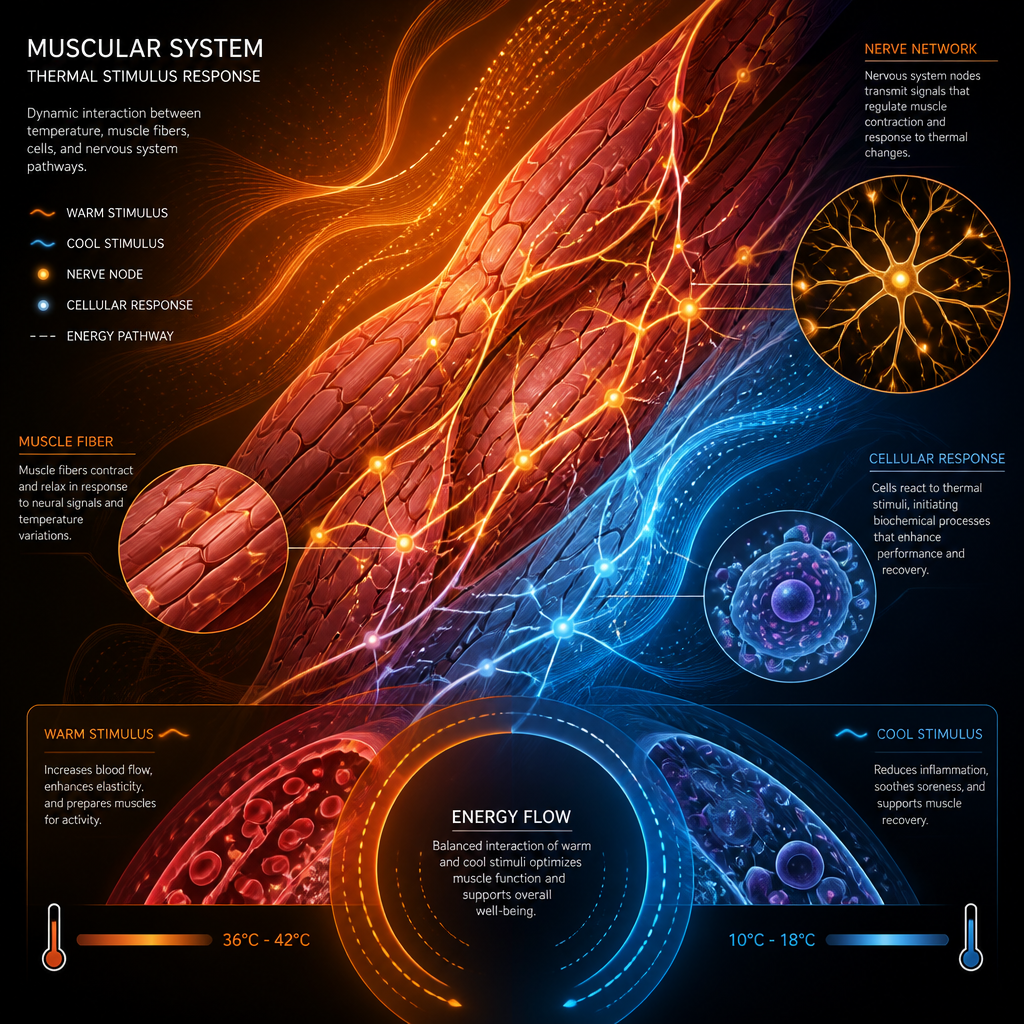
The central mechanism of contrast therapy is called the "vascular pump." When the body is exposed to heat, blood vessels dilate, blood flow increases to the skin's surface and active muscles, and heart rate rises. When exposed to cold, the vessels contract rapidly, blood is pushed back to the body's core, and local inflammation is reduced.
Repeating this cycle creates pressure variations in the tissues that mechanically stimulate lymphatic flow. The lymphatic system, responsible for removing metabolic waste, does not have its own central pump. It depends on muscle contraction and pressure variations to function. The rhythmic alternation between vasoconstriction and vasodilation accelerates this drainage process without requiring active movement. This is why many athletes describe the feeling of "lightness" in their limbs after a contrast session.
What happens in the heat
Heat exposure, whether in a dry sauna or steam room, causes vasodilation, muscle relaxation, and increased flexibility. The body starts to sweat to regulate internal temperature, and the heart rate rises similarly to moderate aerobic effort. The ideal temperature for the heat phase is between 38°C and 60°C, depending on the equipment used.
What happens in the cold
Immersion in cold water between 5°C and 15°C causes immediate vasoconstriction, which reduces inflammation and edema in muscle tissues. Nerve conduction slows down, which decreases the perception of pain and sensitivity to fatigue. Cold also reduces local metabolic activity, helping to prevent excessive muscle degradation after intense training.
The power of contrast therapy is not in the heat or the cold alone. It is in the transition between them. It is this alternation that produces physiological effects that neither temperature can generate by itself.
The effect on the nervous system
In addition to muscular and circulatory benefits, contrast therapy has a training effect on the autonomic nervous system. Repeated exposure to controlled thermal stress teaches the body to transition more efficiently between states of activation and recovery. This process, known as hormetic stress, is the same principle that makes progressive physical training effective: controlled doses of stress provoke adaptations that make the organism more resilient.
Proven benefits and what the evidence really says
Contrast therapy has its most solid results in reducing DOMS, the delayed onset muscle soreness that appears 24 to 48 hours after intense training. Available evidence suggests that alternating hot and cold baths helps team sport athletes recover from fatigue more quickly in that time window, without eliminating the pain completely, but shortening the period in which it limits performance in the next session.
Cardiovascular benefits are real, but most data comes from observational studies on regular sauna use, not from controlled trials with specific contrast protocols. Intellectual honesty requires acknowledging this distinction: there is strong evidence that regular sauna use is associated with improvements in vascular function, and that cold complements these effects through induced vasoconstriction. The logical combination of both is the basis of the contrast protocol, but science has not yet produced enough randomized clinical trials to make categorical claims about all the benefits.
What high-performance athletes consistently report includes: reduced feelings of fatigue after demanding workouts, faster recovery between sessions, better sleep on the nights after contrast sessions, and a higher state of mental alertness during the hours following the practice. These are the effects that justify the growing popularity of contrast therapy even outside elite sports contexts.
Tip: Don't expect to eliminate muscle pain completely with contrast therapy. The realistic goal is to shorten the duration of DOMS and reduce its intensity so that you can train again sooner and with better quality. Anyone expecting the discomfort to disappear entirely will be disappointed and abandon the practice before feeling the real benefits.
Practical protocol: how to do it at home or at the gym
The most common mistake beginners make is not having a clear protocol. Getting in and out of the cold randomly, without a defined duration or number of cycles, produces much fewer results than a structured session. The protocol below is based on the patterns most used in sports and wellness contexts.
Step-by-step for a complete session
Always start with the heat phase. Enter the sauna or hot tub for 10 to 15 minutes, with a temperature between 38°C and 60°C. After the heat phase, move immediately to the ice bath or cold immersion for 1 to 5 minutes, with the water between 5°C and 15°C. Repeat the cycle 2 to 4 times, according to tolerance and goals. Always finish in the cold phase to optimize post-effort inflammation reduction.
Recommended frequency
For athletes and intense sports practitioners, 3 to 4 sessions per week are the most effective standard. For those seeking general recovery and well-being, 2 times per week is enough to feel consistent benefits. It is not necessary to do a contrast session after every workout, especially on lighter training days.
The equipment question
The biggest barrier to consistency is practical: keeping ice bath water cold requires a lot of ice, which is inconvenient and expensive in the long run. A water chiller solves exactly this problem by keeping the temperature constant without ice, adapting to daily use without additional preparation. Similarly, having a home sauna eliminates reliance on external facilities and makes the contrast session part of the routine instead of a task to plan.
It is precisely for this reason that Alaska Recover has developed a set of recovery solutions that include ice tubs, chillers, and saunas designed for both domestic use and professional facilities. The logic is simple: the right equipment eliminates the friction that prevents consistency, and it is consistency that generates results.
Sauna and ice bath: the most effective combination
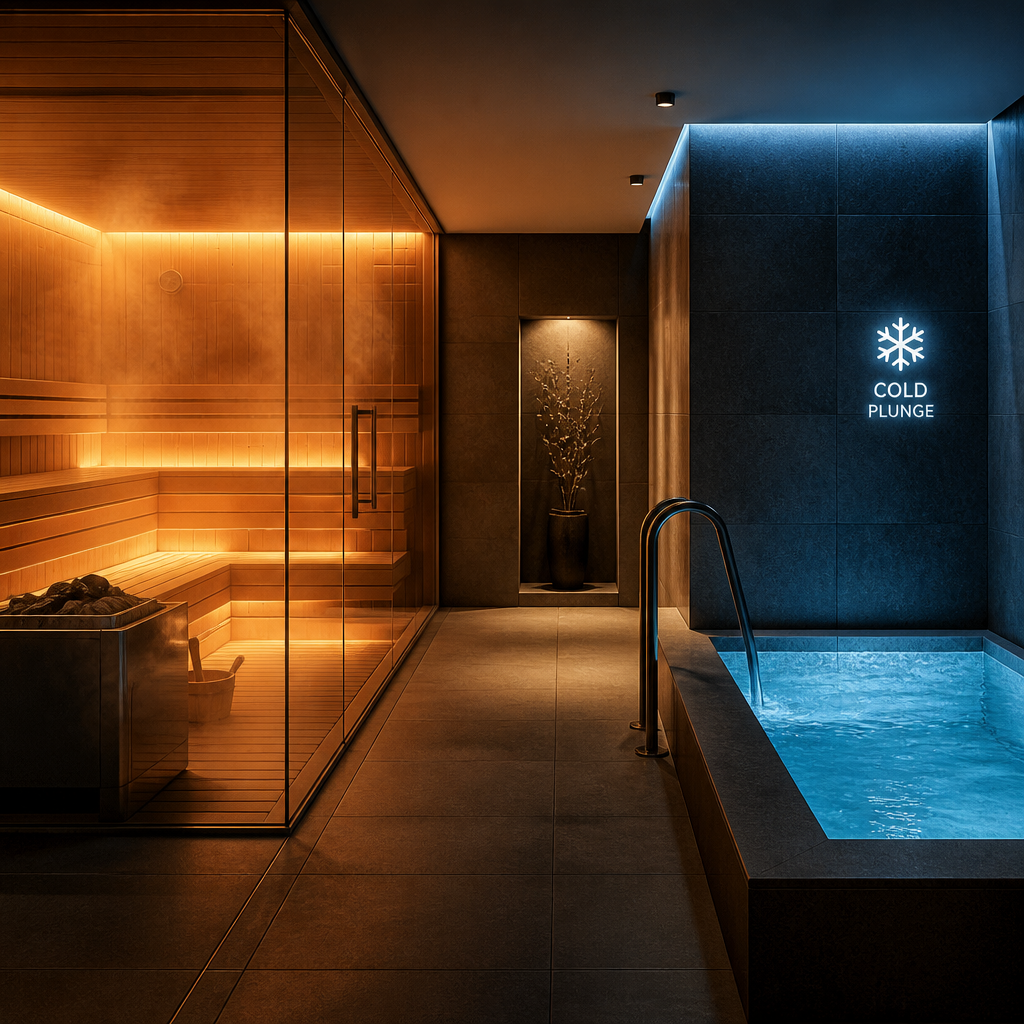
The combination of sauna and ice bath is the most complete version of contrast therapy in terms of thermal amplitude and physiological impact. While the contrast shower is an accessible entry point and the partial immersion protocol works for localized injuries, the sauna and ice bath combination works the whole body and produces the most significant changes in circulation, the nervous system, and muscle recovery.
The sauna heats the body uniformly and deeply, something a hot tub cannot replicate with the same effectiveness. Higher sauna temperatures, particularly dry ones, produce a more intense cardiovascular response and more effective sweating. Moving immediately to the ice bath after a sauna creates a thermal contrast much sharper than any alternative, amplifying the "vascular pump."
This is why the sauna and cold immersion combination has become the reference protocol in high-level sports recovery centers. It is not just a matter of aesthetic preference. It is the combination that produces the greatest physiological response with the least session time.
How to integrate the sauna into the recovery routine
Use the sauna as the starting point of the contrast session, never in the middle or at the end. After 10 to 15 minutes in the sauna, the transition to the ice bath is more effective because the body is genuinely warmed in depth. If you reverse the order and try to warm up after the cold, the cold-induced vasoconstriction limits the effectiveness of the subsequent heat phase.
Comparison table: contrast recovery methods
| Method | Thermal Amplitude and Effectiveness | Accessibility and Practicality |
|---|---|---|
| Sauna + Ice Bath | Maximum. Heat at 60°C and cold between 5°C and 15°C. Greatest impact on circulation, muscle recovery, and the nervous system. The protocol of choice for athletes and advanced users. | Requires dedicated equipment (sauna and ice tub or chiller). Ideal for domestic or commercial use with the right solutions. Higher initial investment, but no reliance on external infrastructure. |
| Partial Immersion (hot/cold tubs) | Moderate to good. Effective for localized limb injuries and recovery of specific areas. Less systemic impact than full immersion. | More accessible to start. Can be done with simple containers at home. Suitable for localized post-injury recovery or for those who don't yet have full immersion equipment. |
| Contrast Shower | Lower thermal amplitude. Hot tap water temperature is generally lower than a sauna. The physiological impact is real but significantly lower than full immersion. | Maximum. Requires no additional equipment. A good entry option to accustom the nervous system to thermal contrast before progressing to more demanding protocols. |
Who should be careful or avoid contrast therapy
Contrast therapy is not suitable for everyone without exception. There are specific conditions where sudden temperature alternation poses a real risk and not just temporary discomfort.
Those suffering from Raynaud's disease, where extremities turn white or purple in response to cold, should avoid contrast protocols with intense cold immersion, as sudden vasoconstriction can trigger more severe episodes. Similarly, those with uncontrolled hypertension should be cautious, because the cardiovascular response to sudden temperature changes can produce unwanted blood pressure spikes.
Pregnant women, people with active cardiovascular diseases, and those recovering from acute injuries with open inflammation should consult a healthcare professional before starting any thermal contrast protocol. The same applies to those with dermatological conditions sensitive to cold or heat.
For most healthy people, the risks are minimal when the protocol is followed gradually. Starting with shorter durations in the cold phase, progressing over weeks, and never forcing beyond comfortable tolerance are the practical rules that reduce risk and make the practice sustainable.
Frequently Asked Questions
What is the difference between contrast therapy and an isolated ice bath?
An isolated ice bath uses only cold to reduce inflammation and relieve muscle pain after exertion. Contrast therapy combines cycles of heat and cold, creating a vascular pump effect that cold alone does not produce. Alternating actively stimulates circulation and lymphatic drainage more comprehensively, while an isolated ice bath has a more focused effect on reducing immediate inflammation. Both are valid and can be used in different contexts.
How long after training should I perform contrast therapy?
Ideally, you should start the session as close to the end of training as possible, ideally within the first hour after exertion. In this window, inflammation is still ongoing, and the anti-inflammatory effect of the cold is most relevant. However, if it is not possible immediately afterward, a contrast session performed 2 to 3 hours later still has significant benefits for muscle recovery in the following hours.
Can I do contrast therapy every day?
You can, but it is not necessary for most people. For athletes with high-intensity daily training, daily contrast sessions are a valid tool. For recreational users, 2 to 4 times per week is sufficient to obtain consistent benefits without unnecessarily overloading the body. What matters is long-term regularity, not maximum frequency each week.
Is it better to end the session in the cold or heat?
After intense training, always end in the cold. The final cold phase helps control residual inflammation, reduces muscle edema, and produces a mental state of alertness that many athletes value after training. If the goal is relaxation before sleep, some users prefer to end in a mild heat phase, but for sports recovery contexts, cold is the most effective choice.
What temperature should the ice bath be for contrast therapy?
The most commonly used range is between 5°C and 15°C. For beginners, starting between 12°C and 15°C is more sustainable and allows for gradual tolerance building. Advanced athlete protocols often use temperatures between 5°C and 10°C. Below 5°C, the risk of hypothermia increases without clear additional benefit. A chiller allows for maintaining the exact temperature consistently, which is impossible with conventional ice over multiple cycles.
Does contrast therapy interfere with muscle gains?
This is a pertinent question for those who train for strength. Cold water immersion immediately after hypertrophy training may, in theory, attenuate the inflammatory response that is part of the muscle adaptation process. The practical recommendation is to avoid the contrast protocol with intense cold in the first 2 to 3 hours after a workout aimed at muscle mass gain. For endurance training, intense cardio, or competition, this concern is much less relevant, and the benefits of recovery through contrast far outweigh any potential interference.
Have you tried contrast therapy in your recovery routine? Tell us what you felt and what protocol you use; we want to hear about your experience.
References
- Complete guide to contrast therapy for athletes and sports recovery on Training Peaks
- Analysis of the scientific benefits of contrast therapy: what the evidence really supports
- The science behind contrast therapy: meta-analyses, vasoconstriction, and use in elite sports
- Practical contrast therapy protocol: recommended temperatures, duration, and cycles
- Contrast therapy: how to alternate heat and cold for maximum physical benefits