


Most people who try an ice bath for the first time make the same mistake: they get in without knowing how long they should stay and either get out too soon, without reaping any real benefits, or too late, risking unnecessary stress to the body. Ice bath time is not a question of willpower. It is a physiological variable with a science-based response, and getting that number right makes all the difference between a productive session and a useless one. Whether you are an athlete, a fitness enthusiast, or simply someone who wants to recover better, this article gives you the direct answer.
Table of Contents
Table of Contents
- Quick Summary
- What Happens in the Body During Immersion
- Cryotherapy Duration by Goal
- Temperature and Time Work Together
- Cold Bath Protocol: Step-by-Step
- Comparison of Immersion Protocols
- Most Common Ice Bath Mistakes
- When Not to Take an Ice Bath
- Frequently Asked Questions
Quick Summary
| Key Idea | Explanation |
|---|---|
| General ideal time | 10 to 15 minutes is the scientifically validated range for most recovery goals. |
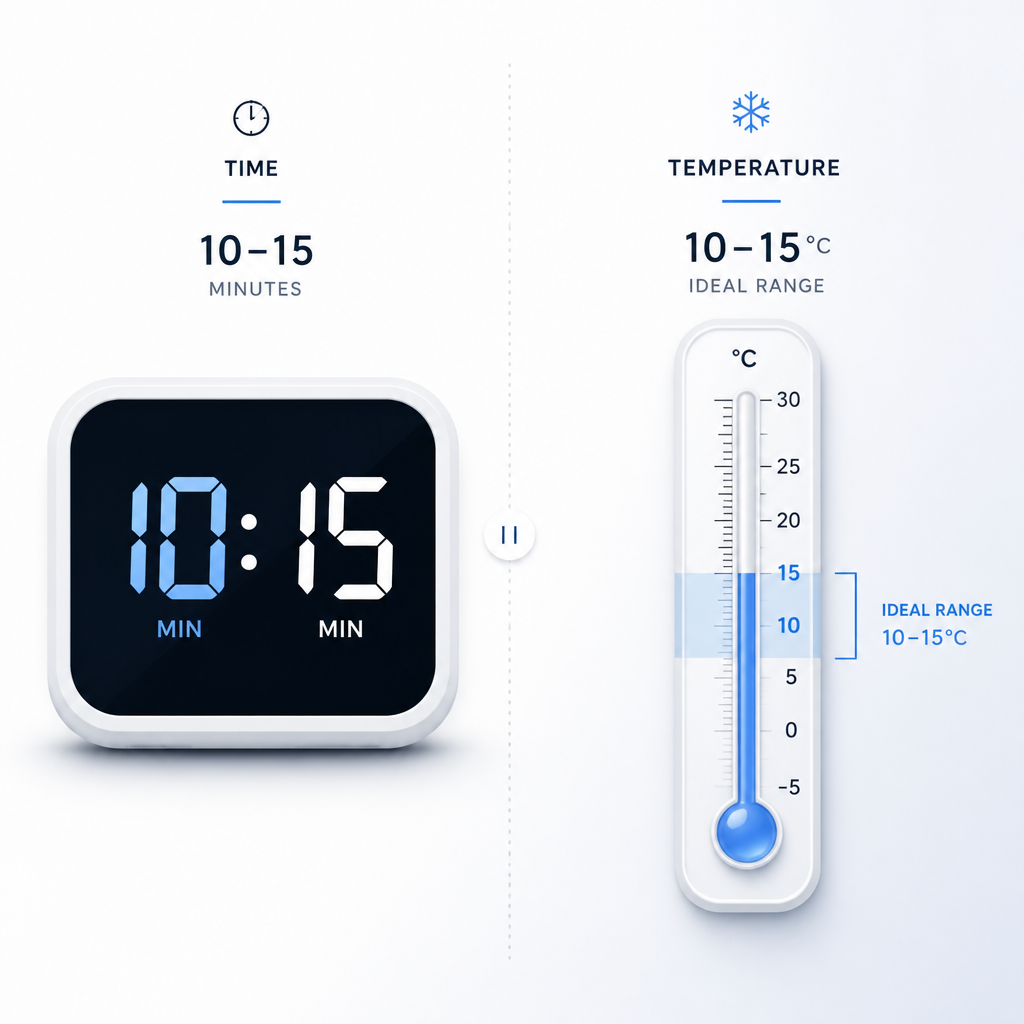
| Critical temperature | The water should be between 10°C and 15°C. Above 15°C the stimulus is insufficient; below 10°C the risk outweighs the benefit. |
| More time is not better | Exceeding 15 minutes brings no additional gains and unnecessarily increases physiological stress. |
| Beginners start shorter | In the first few sessions, 3 to 5 minutes at 15°C is enough to produce a real physiological response. Increase gradually. |
| Hypertrophy and ice baths do not mix well | Cold reduces the inflammation necessary for muscle growth. Avoid frequent immersions if your main goal is gaining mass. |
| Post-session dopamine and focus | Cold water immersion raises neurotransmitters for focus and well-being for 1 to 3 hours after getting out of the water. |
| Consistency beats intensity | Regular 10-minute sessions over weeks produce much more adaptation than occasional 20-minute sessions. |
What Happens in the Body During Immersion
When you get into a cold water bath, the body does not react linearly. There are two systems working simultaneously, and understanding this helps you see why time matters so much.
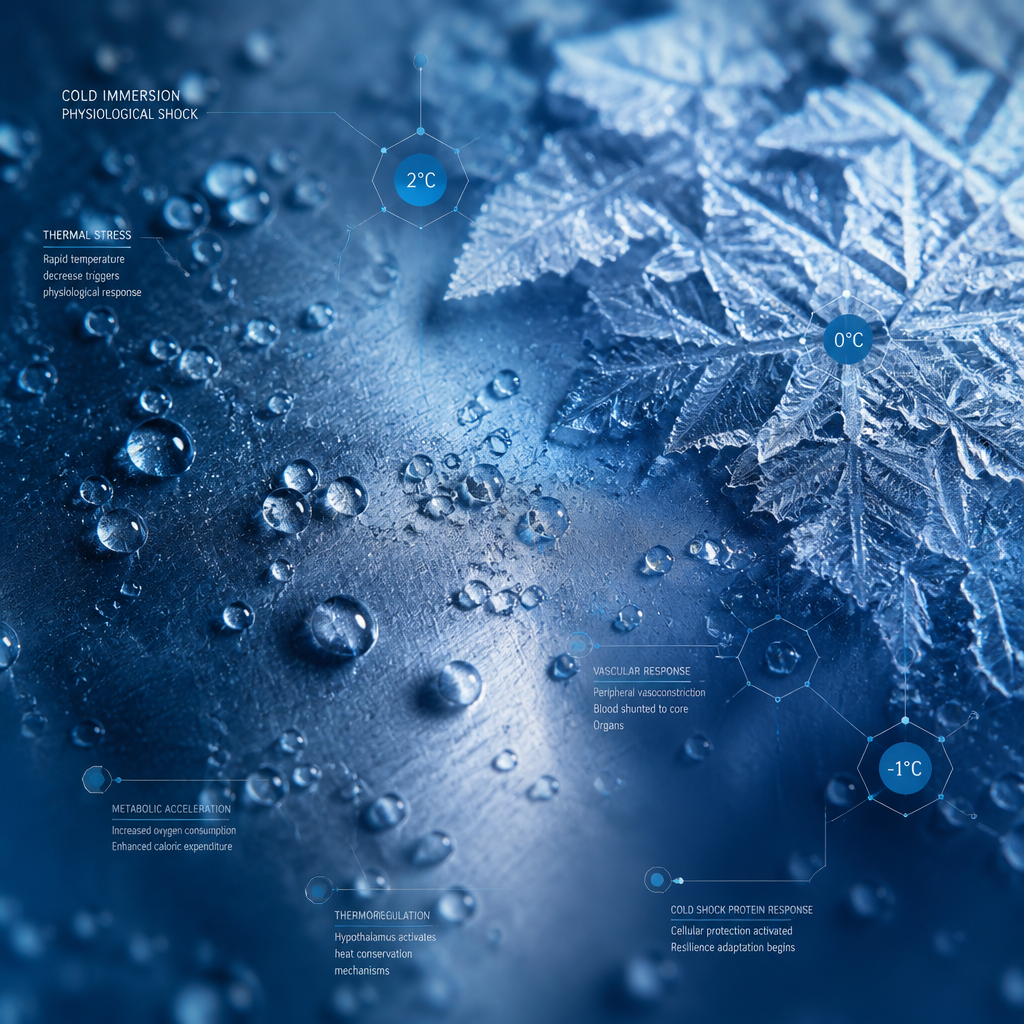
In the nervous system, cold receptors in the skin trigger a hormonal cascade that elevates dopamine and norepinephrine, the neurotransmitters associated with focus, motivation, and well-being. According to a study by Šrámek et al. published in the European Journal of Applied Physiology in 2000, this elevation can reach very significant levels and remains for 1 to 3 hours after you get out of the water. It is not a spike followed by a crash. It is a sustained elevation.
In the muscles, cold water causes peripheral vasoconstriction, reduces local inflammation, and activates hydrostatic pressure, which compresses tissues and accelerates the drainage of metabolic waste accumulated during training. A meta-analysis of 55 clinical trials published in Frontiers in Physiology in 2025 confirmed the reduction of muscle damage markers with protocols between 10°C and 15°C.
The difference between 18°C and 12°C is not just a matter of comfort. It completely changes the physiological result of the session.
The problem is that these two systems respond to sufficiently intense stimuli. Water at 18°C for 20 minutes is not worth the same as water at 12°C for 10 minutes. Temperature and time are inseparable.
Cryotherapy Duration by Goal
Cryotherapy duration is not the same for every context. There are important differences depending on your goal for that specific day.
Post-intense training or competition recovery
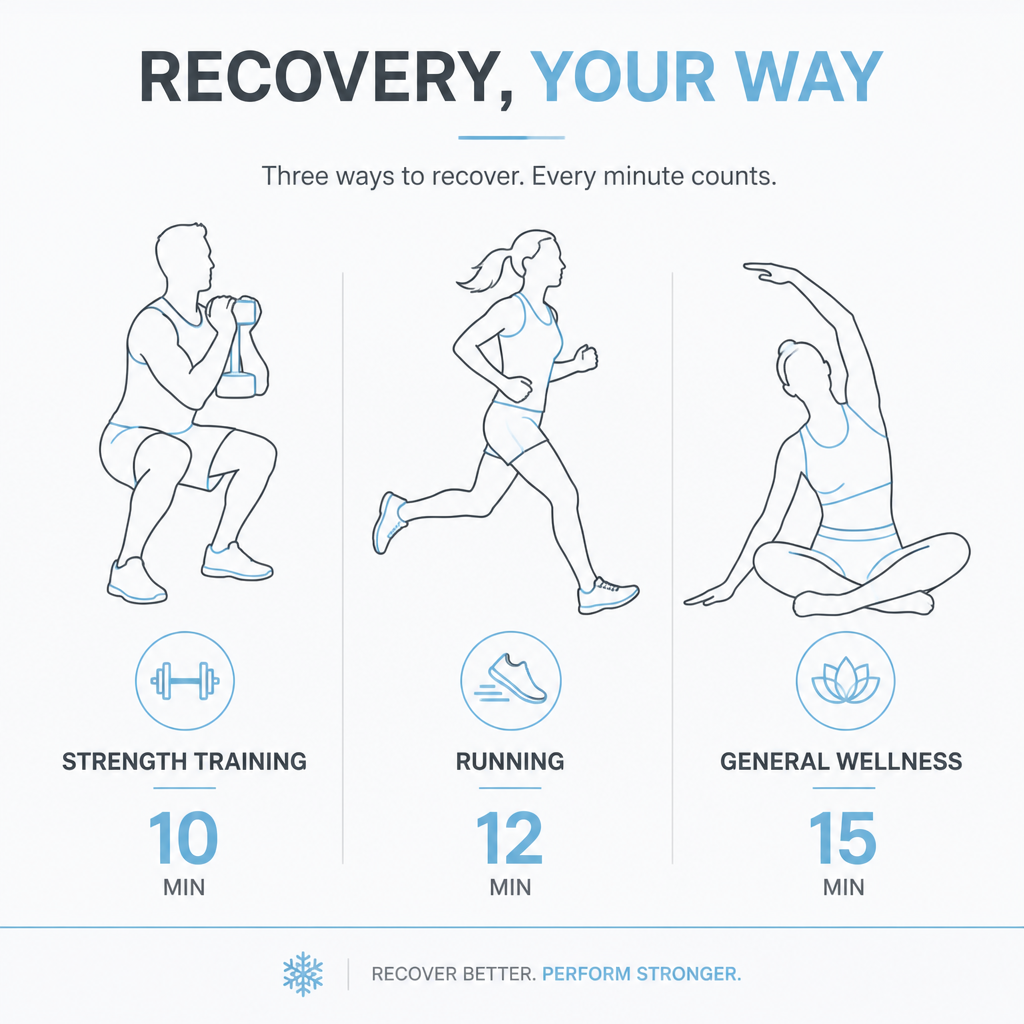
This is the context where the ice bath is most justified. After high-impact training, a long run, or a competition, the goal is to reduce inflammation, control edema, and accelerate the recovery of affected muscle fibers. The 10 to 15-minute range at a temperature between 10°C and 15°C is the protocol with the most scientific support for this purpose. You don't need to stay longer. The marginal benefit above 15 minutes is zero, and discomfort increases disproportionately.
General well-being, focus, and mental health
For those who use ice baths primarily for the effect on the nervous system, whether for morning focus, stress management, or mood improvement, the time can be shorter. 3 to 5-minute sessions at temperatures between 12°C and 15°C are already enough to trigger the hormonal response. The key is regularity, not the maximum duration per session.
Beginners in the first few weeks
Starting with 2 to 3 minutes at 15°C is the right approach. It is not shyness. It is a matter of progressive adaptation of the nervous system. Increase by 1 to 2 minutes per week until you reach 10 comfortable minutes. Trying to reach 15 minutes immediately without prior adaptation causes unnecessary acute stress and often leads people to give up before developing the habit.
Tip: Always use a visible thermometer inside the bath. The subjective feeling of cold is not a reliable indicator of the actual water temperature. Water at 16°C may feel very cold to a beginner but is above the effective range for muscle recovery.
Temperature and Time Work Together
One of the most common mistakes in amateur cryotherapy is controlling the time but ignoring the temperature. The science-validated parameters are specific: temperature between 10°C and 15°C, with immersion time between 10 and 15 minutes. Changing one of the variables without adjusting the other compromises the result.
In practice, this means that if your water is 17°C or 18°C, staying in for 20 or 25 minutes will not compensate for the insufficient temperature. The physiological stimulus is simply not the same. Inaccuracy in temperature is, by far, the biggest mistake made in amateur settings.
On hot days, tap water can easily reach 22°C to 25°C. To reach 12°C to 15°C in a standard portable bath, you typically need 20 to 40 kg of ice. This is why solutions with an integrated chiller, such as those available at Alaska Recover, completely eliminate this variable. The temperature is controlled, constant, and precise, session after session, without relying on ice.
Tip: Always wait 2 minutes after adding ice to the bath before getting in. The temperature needs to stabilize. Entering immediately after adding ice exposes you to zones of water much colder than the average value of the bath.
Cold Bath Protocol: Step-by-Step
The correct cold bath protocol doesn't start when you get into the water. It starts before and ends a few minutes after you get out.
Before the session
Drink about 500 ml of water before getting in. Cold water immersion has a slight diuretic effect, and you should start the session already properly hydrated. You don't need a pre-warm-up. Contrary to what many think, getting into cold water without a warm-up does not increase the risk of injury, provided you are in good health.
During the session
Get in slowly. Sit or lie down so that the water covers at least your abdomen, ideally up to your chest. Breathe in a controlled manner, with slow exhalations. The initial shock triggers an involuntary respiratory reflex; the first 30 to 60 seconds are the hardest. After that, the body starts to adapt, and the sensation becomes more manageable. Use a visible timer. Do not rely on subjective perception of time inside cold water.
After the session
Get out of the water, dry yourself off, and warm up naturally. Avoid a hot shower immediately after an ice bath if your goal is muscle recovery. Passive rewarming (moving the body, warm clothing, heated environment) maintains some of the physiological effects longer than active rewarming via immediate external heat.
Comparison of Immersion Protocols
There are different approaches to ice baths according to the context and goal. The table below compares the three most common protocols so you can choose the one that applies to your situation.
| Protocol | Temperature and Duration | Ideal For |
|---|---|---|
| Sports Recovery Protocol | 10°C to 15°C for 10 to 15 minutes, after training or competition | Athletes, runners, cyclists, and triathletes with the goal of reducing DOMS and accelerating muscle recovery |
| Well-being and Focus Protocol | 12°C to 15°C for 3 to 6 minutes, preferably in the morning | Wellness users looking for an effect on mood, focus, and energy for the day |
| Contrast Therapy Protocol | Alternating between cold water (10°C to 15°C) and heat (sauna or hot shower), 3 to 5-minute cycles per phase | Complete recovery, circulatory improvement, and deep relaxation, widely used in spas, clinics, and recovery hotels |
Most Common Ice Bath Mistakes
In practice, there are error patterns that repeat constantly among those who start cold water immersions. Identifying them is more useful than any list of generic advice.
Not measuring the water temperature
Getting into the bath without knowing the actual temperature is the most frequent and harmful mistake. Water that feels cold can be at 18°C or 20°C, completely outside the effective range. Invest in an immersion thermometer. It is the cheapest and most important equipment you can have in a cryotherapy routine.
Trying to stay in as long as possible
More time does not equate to more benefit above 15 minutes. This "toughing it out" mentality is counterproductive and has no scientific support. Go past that limit, and you are just stressing your body without any additional return.
Doing an ice bath after every workout with a hypertrophy goal
Cold reduces the inflammatory response that is necessary for the muscle repair and growth process. If your primary goal is gaining mass, reserve the ice bath only for competitions or very high-impact workouts, not for regular strength sessions during the week.
Lacking consistency
A 20-minute session once a month does not produce any adaptation. 10-minute sessions three times a week produce measurable results in a few weeks. Frequency is the most underestimated variable in this practice.
When Not to Take an Ice Bath
Ice baths are not suitable for all situations. There are contexts where cold water immersion should be avoided, regardless of experience level or motivation.
People with known cardiovascular problems, uncontrolled hypertension, or extreme cold sensitivity such as Raynaud's syndrome should consult a doctor before starting any cryotherapy immersion protocol. The initial thermal shock momentarily raises blood pressure and heart rate, and in cases of prior pathology, this effect can be problematic.
Also, avoid taking an ice bath immediately before a strength workout where the goal is peak performance. Cold temporarily reduces neuromuscular activation and contraction power. Use it after training, never before.
Finally, avoid immersion sessions when you have a fever or are in a state of acute illness. The immune system is already under stress, and the additional cold does not help in the recovery from that specific condition.
Frequently Asked Questions
How long should I stay in an ice bath for the first time?
In your first session, 2 to 3 minutes at a temperature of about 15°C is enough. The initial goal is not to complete the full protocol, but to adapt the nervous system to the cold stimulus. Increase gradually over the following weeks.
What is the right temperature for an ice bath to be effective?
The range validated by scientific research is between 10°C and 15°C. Below 10°C, the risk of tissue damage increases without proportional additional benefit. Above 15°C, the physiological stimulus is insufficient for most sports recovery goals.
Can I take an ice bath every day?
It depends on your goal. For general well-being and focus, short-duration daily sessions are well-tolerated by most people. For muscle recovery after hypertrophy training, avoid doing it daily as it may interfere with muscle adaptations. Three to four times a week is a balanced frequency for most practitioners.
Does an ice bath hurt muscle mass gain?
Yes, if done very frequently after strength training. Controlled post-workout inflammation is part of the muscle adaptation and growth process. Cold, by suppressing this inflammation, may attenuate the growth signal. Reserve the ice bath for competitions, very high-impact training, or maintenance phases, not for strength training days focused on hypertrophy.
Should I endure the discomfort or get out if I feel really bad?
There is a clear difference between the normal discomfort of cold, which is expected and manageable, and warning signs such as dizziness, chest pain, extreme numbness of the extremities, or loss of muscle control. If you feel any of these signs, get out immediately. The discomfort of the first 60 seconds is normal. Physical symptoms beyond that are not.
Is contrast therapy, alternating heat and cold, more effective than an isolated ice bath?
For certain goals, especially circulatory recovery and deep relaxation, cold water immersion alternated with sauna heat can be more effective than cold alone. The alternation stimulates cycles of vasoconstriction and vasodilation that promote more active tissue drainage. For reducing DOMS after intense exercise, cold alone remains the protocol with the most direct evidence.
Do I need a professional tub or is a home bathtub with ice enough?
A common home bathtub with enough ice works to get started. The practical problem is keeping the temperature stable throughout the session, which melts with ice progressively. Solutions with an integrated chiller like those in the Alaska Recover line solve this problem permanently, ensuring constant and precise temperature without the need to manage amounts of ice in each session.
Have you tried an ice bath? Tell us how long you stayed in your first session and how you felt immediately afterward.