


Most amateur athletes train with the same dedication as professionals. What sets them apart is not just talent or training volume. It is what happens afterwards. Professional athlete recovery in European clubs and high-performance centers follows structured, tested, and non-negotiable protocols. While the amateur athlete takes a shower and goes to sleep, the professional spends the next 60 to 90 minutes recovering actively. This article details what this routine entails in practice and how you can incorporate the same principles into your life, with or without a team of physiologists by your side.
Table of Contents
- What Separates Elite Recovery from Common Recovery
- The Central Role of the Professional Ice Bath
- Contrast Therapy: Cycling Sauna and Cold
- Sleep, HRV, and Recovery Monitoring
- Nutrition and the Post-Workout Window
- Comparison of Recovery Approaches
- How to Build Your Home Recovery Routine
- Frequently Asked Questions
- References
What Separates Elite Recovery from Common Recovery
The fundamental difference is not in the tools. It is in the consistency and the sequence. A high-performance European athlete does not use an ice bath when they feel like it. They use it as part of a protocol that has defined timing, temperature, and duration. Muscle recovery is no longer optional; it is treated as a training session in itself.
Sports recovery is a set of strategies used to accelerate muscle recovery and minimize the effects of physical wear caused by training or competition. It includes both passive and active components, and both have their place in a well-constructed program. The most common mistake amateur athletes make is using only one of them.
In practice, the three biggest recovery mistakes are: doing nothing after intense workouts, doing the same thing regardless of the type of effort, and neglecting sleep in favor of more training volume. Professionals do not systematically commit any of these errors.
Recovery is not the interval between workouts. It is part of the workout. Those who do not treat it as such are building on sand.
The Central Role of the Professional Ice Bath
The professional ice bath is probably the most visible and misunderstood recovery technique. When you see a footballer get into an ice tub after a game, it is not for show. It is science applied with controlled temperature and timing.
Cold water immersion (CWI), the technical name for this practice, involves controlled exposure of the body to temperatures between 8°C and 12°C, for periods ranging from 5 to 15 minutes. The thermal drop lowers the cellular metabolism of the muscles, reducing cell oxygen demand and slowing the excessive production of free radicals in the tissues. The shock caused by the cold triggers physiological vasoconstriction mechanisms that restrict peripheral fluid flow and combat edema immediately.
One of the most documented benefits is the reduction of delayed onset muscle soreness (DOMS). Cold exposure acts as a natural anesthetic that blocks pain signals, allowing for significant relief of muscle soreness after demanding workouts. For athletes with congested schedules, such as in football or road cycling, this benefit has a direct impact on the ability to perform well in the next session.
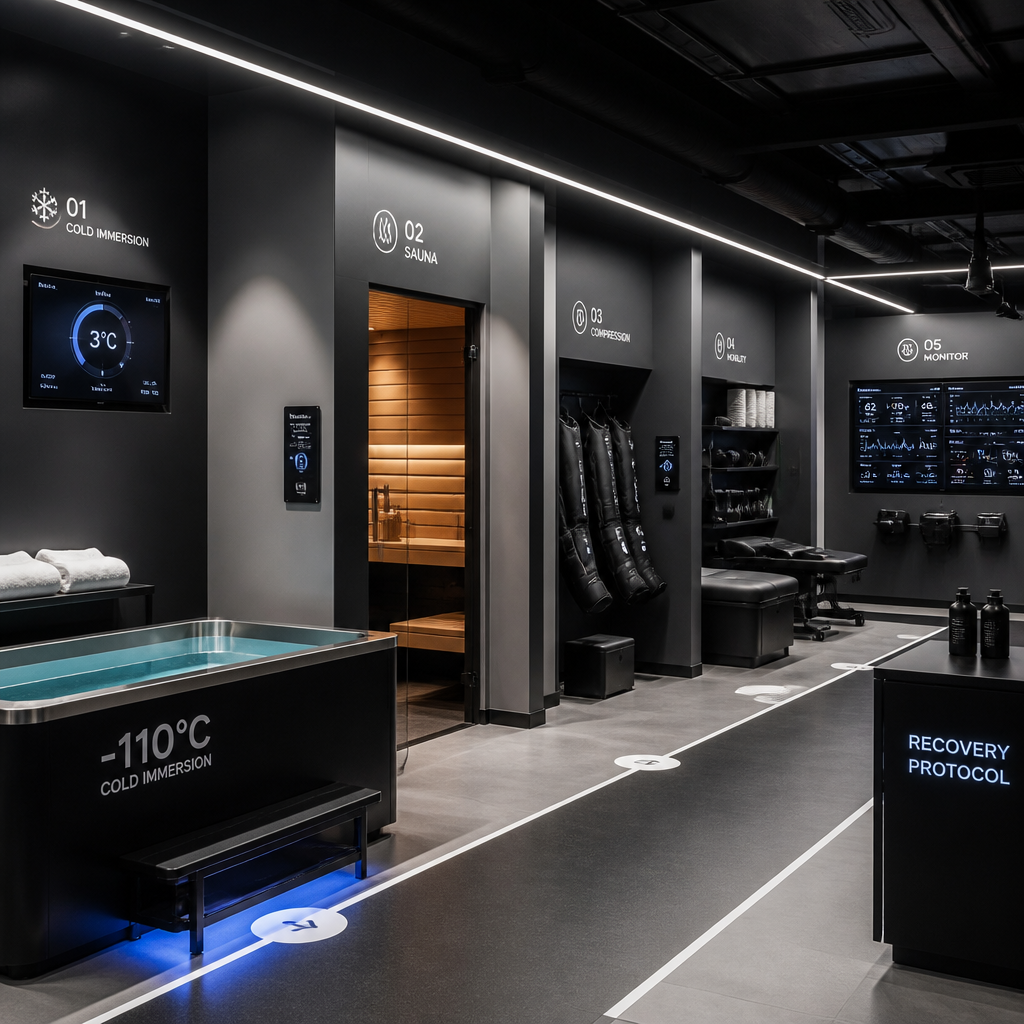
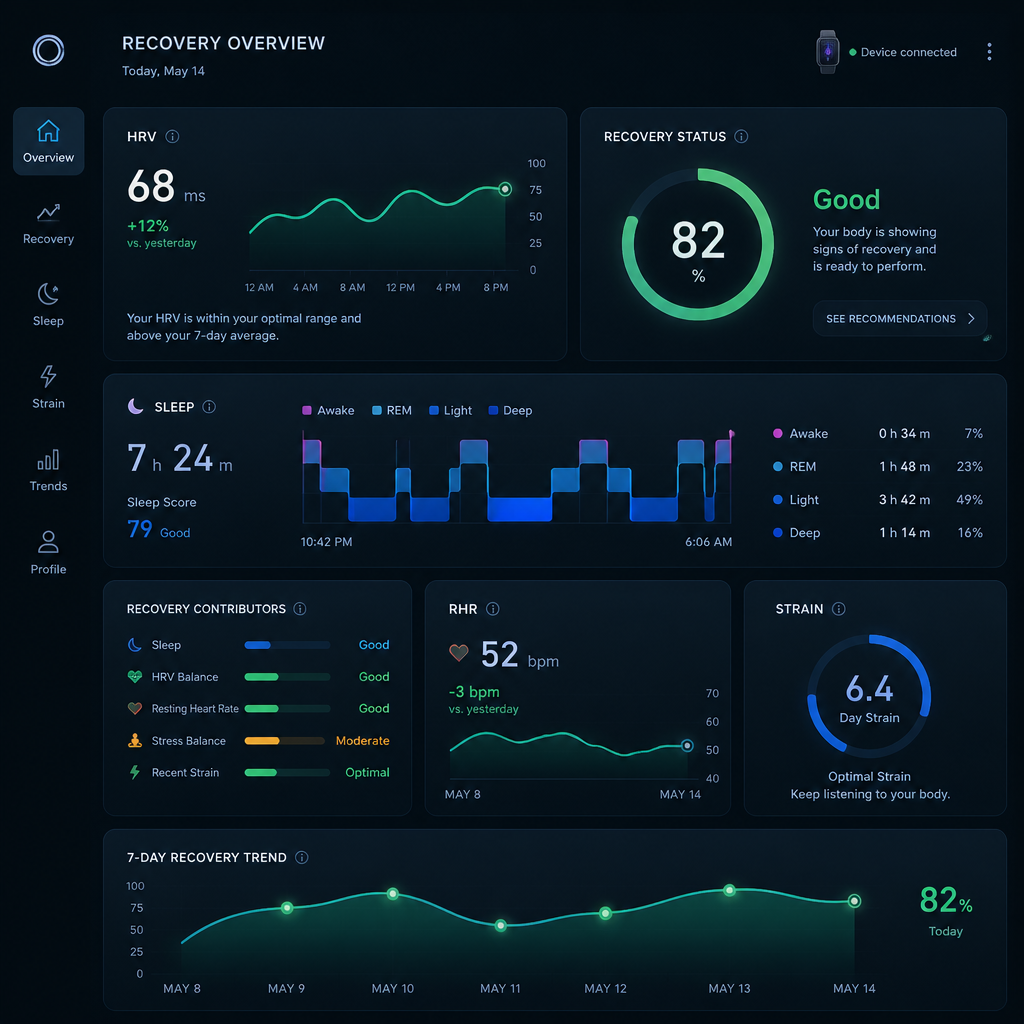
Scientific protocols classify immersions by temperature and duration. Cold immersions (5 to 8°C) are shorter and require gradual adaptation. Moderate immersions (9 to 12°C) are the most used in endurance and team sports contexts, with durations of 10 to 15 minutes. Current scientific research points to moderate temperature protocols as having the most consistent effect on endurance exercise.
Tip: If you are just starting with the ice bath, don't start at 5°C. Start between 12°C and 15°C for 5 to 8 minutes. Let your body adapt over the course of weeks before lowering the temperature or increasing the duration. Progression is what guarantees results.
What Happens After Immersion
Just as important as the time in the water is what you do when you get out. Gradual rewarming is essential. Wrapping yourself in a warm towel or doing light warm-up movements helps restore body temperature and normalize blood circulation. Going directly into a hot shower immediately after can negate some of the vascular benefits gained.
Post-immersion hydration is equally critical. Cold exposure can mask the sensation of thirst, but dehydration compromises all muscle recovery processes. Drinking water or an electrolyte drink in the next 30 minutes makes a difference.
Continuous vs. Intermittent Immersion
Research has compared continuous immersion and intermittent immersion with periods out of the water. Both approaches showed improvements in neuromuscular recovery compared to a control group without immersion. Continuous immersion tends to be more practical in a home setting. Intermittent might be useful for those still adapting to the cold or those with cardiovascular sensitivity.
For regular home use, an ice tub with an integrated chiller, which maintains a constant temperature without the need for hauling ice, is the solution that most closely replicates the professional protocol. Alaska Recover has developed exactly this type of equipment for home and commercial use, allowing for precise temperature control without the operational costs of block ice.
Contrast Therapy: Cycling Sauna and Cold
Contrast therapy, combining heat and cold in alternating cycles, is one of the most complete tools in the elite recovery routine. The concept has roots in Scandinavian culture, where the contrast between the sauna and the ice bath has been part of daily life for centuries. Today, European high-performance centers integrate it systematically into their post-training and post-competition protocols.
The mechanism is elegant. The heat from the sauna dilates blood vessels, improving flow and carrying nutrients and oxygen to fatigued muscles. The cold from the ice bath constricts the vessels, improving circulation and reducing muscle pain. This cycle of vasodilation and vasoconstriction stimulates cellular repair, facilitates the removal of metabolites like lactic acid, and improves overall recovery.
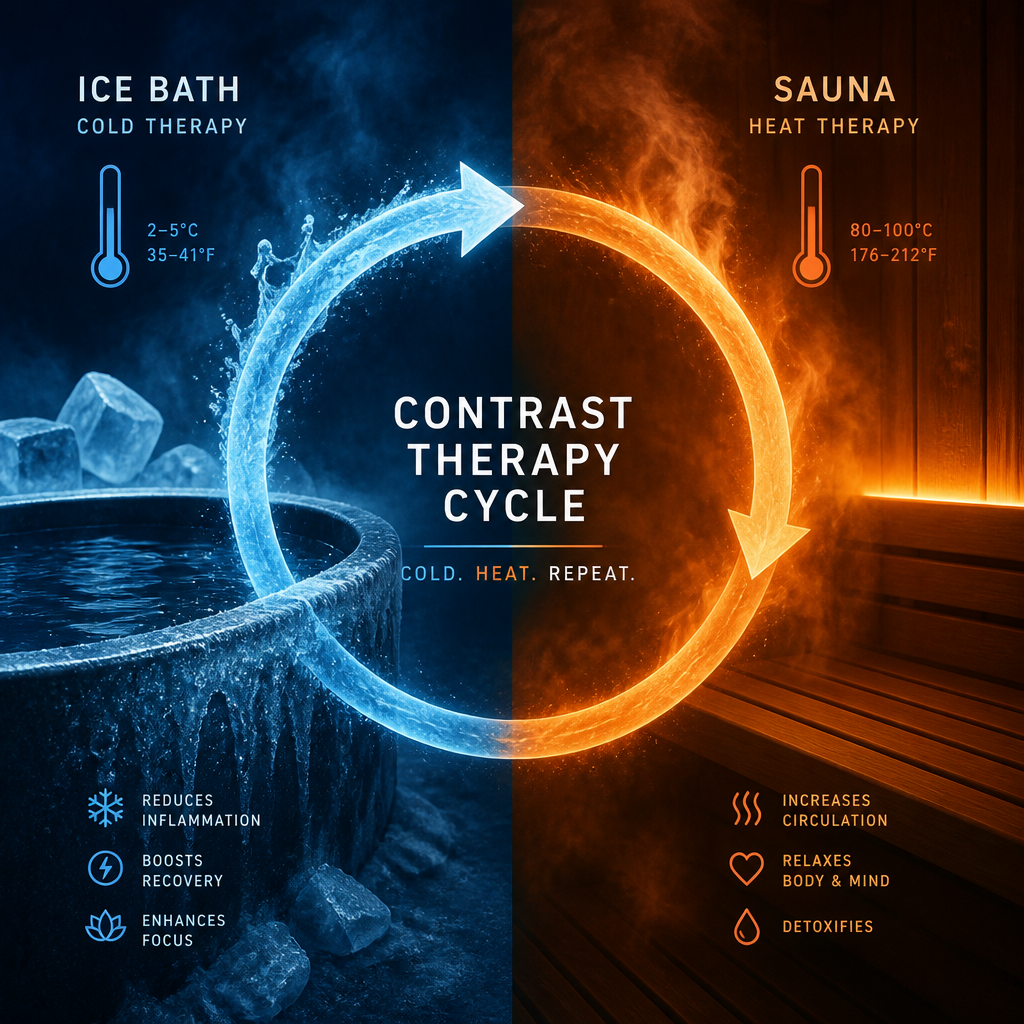
Professional athletes typically use 10 to 15-minute cycles in the sauna at temperatures between 80 and 90°C, followed by 1 to 2 minutes of immersion in cold water at 10 to 15°C. This protocol is repeated two to three times per session. For beginners, 3 to 5 minutes in each phase is safer and equally effective as a starting point.
Tip: You don't need to do sauna and ice baths on the same day you trained to benefit from contrast therapy. On active recovery days, a moderate contrast session can be more effective than a light, low-intensity workout, especially during high-load phases.
When to Use Isolated Heat and When to Use Contrast
Sauna used in isolation has documented cardiovascular benefits and can help with metabolite removal after strength or endurance training. Full contrast, with cold immersion following, adds the component of inflammation reduction and muscle analgesia. Athletes in the intensive competition phase tend to prefer contrast. In hypertrophy or strength-gain periods, some athletes avoid the ice bath immediately after resistance training, given that controlled inflammation is part of the muscle adaptation process in that specific context.
Sleep, HRV, and Recovery Monitoring
European professional athletes do not just monitor training; they monitor recovery with equal seriousness. Two indicators dominate this area in high-performance centers: sleep quality and heart rate variability (HRV).
Muscle fatigue and pain can disrupt sleep, with inflammatory cytokines linked to the interruption of normal rest. On the other hand, insufficient sleep increases muscle pain, creating a cycle that progressively degrades performance. The ideal for athletes in a loading phase is to sleep between 7 and 9 hours per night, with priority on quality and the regularity of bedtime.
HRV responds to changes in training load and is negatively affected by sleep deprivation. After adequate recovery, HRV values rise due to a slower heart rate and lower excitability of the autonomic nervous system. This is why elite athletes with structured recovery protocols consistently show higher HRV than athletes without such routines.
Studies with continuous monitoring data show that professional athletes have significantly higher HRV values than amateur athletes, even with higher training volumes. The practical conclusion is clear: structured recovery pays off biologically.
In practice, monitoring HRV in the morning, before getting out of bed, provides an honest reading of your recovery status. A low value for several consecutive days is a clear signal that training needs to be reduced or that recovery is being compromised by insufficient sleep or other stressors.
Nutrition and the Post-Workout Window
Post-workout nutrition is not a detail; it is a structural part of high-performance recovery. In the first 30 to 45 minutes after intense exertion, the capacity for protein and carbohydrate absorption is elevated. Professional athletes know this and feed strategically during that window, regardless of whether they have an appetite or not.
Protein synthesis, the mechanism that rebuilds damaged muscle tissue, is activated precisely by the micro-tears generated by training. Without adequate protein intake at that stage, the repair process is slower and less efficient. The quantity and type of protein vary depending on the type of effort, body weight, and goals, but the consistency of the intake is more important than the millimeter precision of the macros.
Hydration is equally non-negotiable. Dehydration compromises all muscle recovery processes, including the effectiveness of the ice bath. Replacing electrolytes lost through sweat, especially during long workouts or in hot weather, is part of the recovery protocol and not just performance during exertion.
Comparison of Recovery Approaches
There are several approaches to high-performance recovery, each with different levels of evidence, cost, and accessibility. The table below compares the three most used by elite European athletes.
| Approach | Main Benefits | Ideal For |
|---|---|---|
| Cold water immersion (Ice bath) | Reduction of DOMS, inflammation control, vasoconstriction, neuromuscular recovery | Post-endurance training, post-competition, congested training schedules |
| Contrast therapy (Sauna + Ice bath) | Circulation improvement, metabolite removal, cardiovascular benefits, muscle pain reduction | Active recovery days, team sports, athletes with high weekly training volume |
| Structured passive recovery (Sleep + Nutrition) | Protein synthesis, hormonal regulation, HRV improvement, deep cellular repair | The foundation of any recovery protocol, essential for all athletes |
Cold water immersion and contrast therapy are enhancers. They do not replace basic passive recovery. An athlete who uses an ice bath but sleeps 5 hours a night is wasting the investment. The tools work together, not in isolation.
How to Build Your Home Recovery Routine
You don't need a top-level sports facility to follow a solid recovery protocol. What you need is structure and consistency. The difference between an elite protocol and a home protocol is not that large when you have the right equipment.
The Base Structure of a Post-Workout Session
In the first 15 minutes after intense training, eat or drink something with protein and carbohydrates. Don't wait for your main meal. In the following 30 to 60 minutes, perform cold water immersion or a contrast session with a sauna. Finish with gradual rewarming, additional hydration, and a full meal.
For lower-intensity workouts or active recovery days, a moderate contrast session is more useful than forcing another light training session. The body recovers. Let it recover.
The Equipment That Makes the Difference
The biggest barrier to at-home ice baths is usually logistics: hauling ice, maintaining temperature, managing hygiene. Ice tubs with an integrated chiller eliminate these barriers. They keep the temperature stable, do not require ice replenishment, and have filtration systems that guarantee hygiene between sessions.
Alaska Recover offers solutions for both home use and commercial spaces, such as gyms, clinics, hotels, and wellness centers. Portable tubs are an accessible entry point for those wanting to start testing the protocol before investing in a fixed system. Professional tubs with chillers, meanwhile, replicate what you find in a high-performance center, with precise temperature control and construction for intensive use.
For those who want to incorporate full contrast therapy, combining a sauna with a chiller-equipped ice tub is the configuration closest to the professional European protocol. Alaska Recover's integrated systems allow for exactly this combination, both for private installations and commercial wellness spaces wanting to offer professional-level recovery experiences.
Tip: The ideal frequency for using the ice tub depends on your training volume. In high-load weeks, you can use it after every intense session. In low-volume or recovery weeks, two sessions per week are sufficient to maintain the benefits. It is not necessary to use it every day to see results.
Frequently Asked Questions
What is the ideal temperature for an ice bath in athlete recovery?
The temperature most used in athlete recovery protocols is between 9°C and 12°C, with sessions of 10 to 15 minutes. Immersions between 5°C and 8°C are more intense and require progressive adaptation. For beginners, starting between 12°C and 15°C for 5 to 8 minutes is safer and equally effective in an initial phase.
Does the ice bath interfere with muscle gain?
There is evidence that using an ice bath immediately after strength or hypertrophy training can reduce part of the inflammatory signal necessary for muscle adaptation. For athletes whose primary goal is muscle mass gain, it is advisable to avoid cold immersion in the two hours following strength training, or to reserve it for recovery days separate from strength training.
How often should I use contrast therapy?
Athletes with intensive training schedules can use contrast therapy after every demanding session. In a maintenance or moderate training context, two to three sessions per week are sufficient. The most important thing is to integrate the practice consistently and adjust it to your training schedule, rather than using it randomly.
What is HRV and why does it matter to athletes?
HRV, or heart rate variability, is the variation in time between consecutive heartbeats. It is an indicator of the state of the autonomic nervous system and reflects the body's recovery capacity. High HRV values indicate good recovery. Consecutive low values point to accumulated fatigue or excessive stress. Monitoring HRV daily allows you to adjust training intensity based on objective data, not subjective sensations.
Is it safe to take an ice bath every day?
For most healthy adults, daily use of an ice bath with moderate protocols is safe. However, individuals with uncontrolled hypertension, cardiovascular disease, a history of thrombosis, or severe varicose veins should consult a doctor before starting. Cold water immersion causes vasoconstriction and can temporarily increase blood pressure, which requires caution in specific populations.
What is the difference between a portable ice bath and one with an integrated chiller?
A portable bath is an entry-level solution that requires the manual addition of ice to reach and maintain the desired temperature. A bath with an integrated chiller automatically and constantly maintains the set temperature, includes a filtration system, and does not require ice replenishment. For frequent and regular use, the integrated chiller offers a more consistent, hygienic, and, in the long run, more economical experience than continuously buying ice.
Do you already have a recovery protocol in place in your routine? Tell us what works for you and what you still find difficult to maintain consistently.
References
- Benefits of ice baths for athletes and muscle recovery
- Scientific review on optimal post-exercise cold water immersion protocols
- Study on cold water immersion and neuromuscular recovery in athletes
- Contrast therapy: sauna and ice bath for muscle recovery
- Sleep, nutrition, and recovery in athletes: scientific evidence