


After a hard workout, the question is not whether you should recover, but how. Active recovery and the post-workout ice bath are the two most debated strategies among athletes, runners, and fitness enthusiasts, and the confusion between them has cost weeks of wasted progress. They are not direct competitors in all contexts: each serves a distinct physiological purpose, and using them at the wrong time can even hinder the muscle adaptation you worked so hard to achieve. This article aims to give you a clear answer on when to use each and how to combine them intelligently.
Table of Contents
- Key Takeaways
- What is Active Recovery and How Does It Work
- What is an Ice Bath and What Is Its Real Role
- Direct Comparison: Active Recovery vs. Ice Bath
- When to Choose Each Strategy
- Cryotherapy vs. Active Recovery: The Myths That Persist
- How to Effectively Combine Both Strategies
- Frequently Asked Questions
- References
Key Takeaways
| Key Idea | Explanation |
|---|---|
| The ice bath is not always superior | Cold reduces immediate pain but can interfere with muscle adaptation if used too frequently after strength training. |
| Active recovery accelerates metabolic clearance | Light post-workout exercise, such as walking or gentle cycling, increases circulation and removes accumulated lactate without damaging already fatigued fibers. |
| The ideal ice bath temperature is between 10 and 15 degrees Celsius | Below this range, discomfort increases without proven additional benefit. The goal is water temperature, not the amount of ice. |
| Passive rest is the most underrated method | Without adequate sleep and recovery days, no active or passive technique can compensate for a deficit in muscle regeneration. |
| Training context defines the choice | After competitions or extreme volume workouts, the ice bath is justified. On focused hypertrophy training days, active recovery is more appropriate. |
| Contrast therapy combines the best of both worlds | Alternating cold and heat stimulates the vascular system, improves circulation, and reduces inflammation more efficiently than any single method. |
| Consistency beats perfection of the method | A recovery strategy applied regularly and adapted to your training calendar produces more results than the "ideal" method applied irregularly. |
What is Active Recovery and How Does It Work
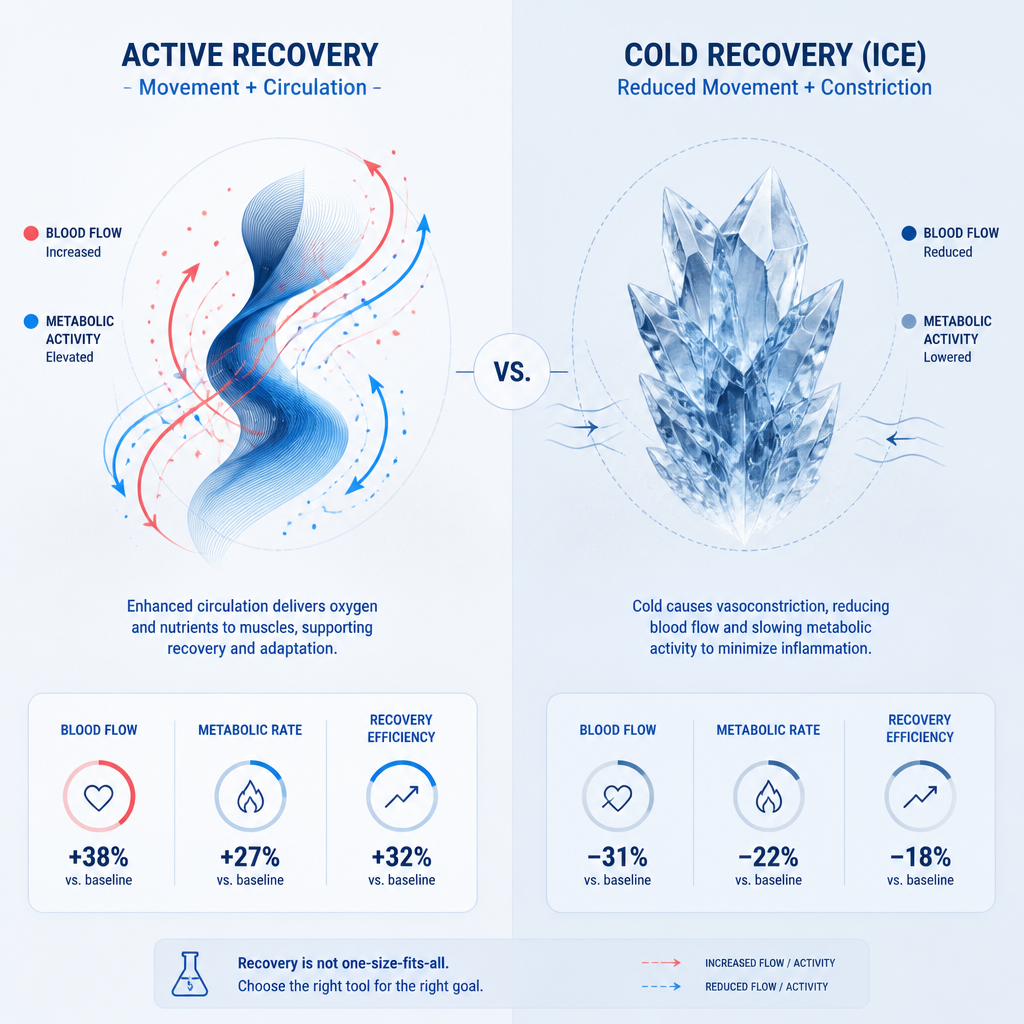
Active recovery is any form of low-intensity movement performed after a demanding workout or on a structured rest day. Walking, light cycling, leisurely swimming, or joint mobility work are classic examples. The goal is not to create more muscle stress, but to use movement to facilitate the body's recovery processes.
From a physiological standpoint, what happens is simple: light movement keeps blood flow high enough to transport nutrients to damaged muscle fibers and remove metabolic waste, including lactate accumulated during intense effort. You are not "burning" anything extra; you are creating conditions for the body to work more efficiently during recovery.
When Active Recovery Shines
Active recovery is especially effective in the days following endurance workouts, long runs, or high-volume sessions. A runner who completed a 25 km run on Sunday benefits much more from a 30-minute walk on Monday than from a completely static day on the couch.
For athletes with dense schedules, such as triathletes or cyclists in a training block, active recovery between sessions prevents the buildup of muscle stiffness that makes subsequent workouts harder and increases the risk of repetitive strain injuries. It is not a luxury; it is load management.
Tip: If you are unsure about the right intensity for active recovery, use a simple rule: you should be able to maintain a full conversation without stopping to catch your breath. If you can't, the intensity is too high.
What is an Ice Bath and What Is Its Real Role
The ice bath, also known as cold water immersion, involves submerging the body in cold water, usually between 10 and 15 degrees Celsius, for a controlled period. It is a practice used for decades by high-performance athletes that has also gained increasing visibility among home users looking to optimize post-workout recovery.
The main mechanism is vasoconstriction: the cold constricts blood vessels, which reduces blood flow to inflamed tissues and decreases muscle pain immediately. When the body warms up again after the session, the vessels dilate, creating a "pumping" effect that can help clear metabolic waste.
The Right Temperature Makes All the Difference
The 10 to 15 degrees Celsius range has the most support for the benefits of reducing inflammation and relieving muscle pain. Temperatures below this range increase discomfort disproportionately without evidence of additional benefit, and temperatures closer to 20 degrees lose much of the therapeutic effect.
An important distinction that many people overlook: the essential element is the water temperature, not the presence of ice cubes. Water naturally cooled to 12 degrees has the same physiological effect as ice water at the same temperature. Ice is just a means to reach the goal, not the goal itself.
The perception that "colder is better" is one of the most common errors in cryotherapy. The additional discomfort of 4-degree water does not translate into accelerated muscle recovery, and it can even make the practice unsustainable in the long term.
Tip: For home users who want consistency in results, a dedicated water chiller, such as those provided by Alaska Recover, eliminates the temperature variable and allows you to maintain the ideal range in any session, regardless of the time of year.
Direct Comparison: Active Recovery vs. Ice Bath
Comparing the two strategies directly helps to understand in which context each gains a clear advantage. The following table compares them with a third option that is often left out of the conversation but deserves attention: contrast therapy.
| Criterion | Active Recovery | Post-Workout Ice Bath | Contrast Therapy (Cold + Heat) |
|---|---|---|---|
| Main mechanism | Increased blood flow via light movement | Vasoconstriction and reduced local inflammation | Alternation between vasoconstriction and vasodilation |
| Best context for use | Days following volume or endurance training | Immediately after competitions or extreme workouts | Training block recovery or days of accumulated load |
| Impact on muscle adaptation | Neutral to positive, does not interfere with hypertrophy | May reduce hypertrophy adaptations if used too frequently after strength training | Less interference than cold alone if heat is applied afterwards |
| Implementation ease | High, only requires low-intensity movement | Moderate, requires equipment or proper preparation | Requires sauna or hot tub plus ice bath |
| Effect on immediate pain | Moderate | High, rapid reduction in pain perception | High, with added benefit of relaxation |
| Suitable for daily use | Yes | Not recommended daily after strength training | Yes, with good planning |
When to Choose Each Strategy
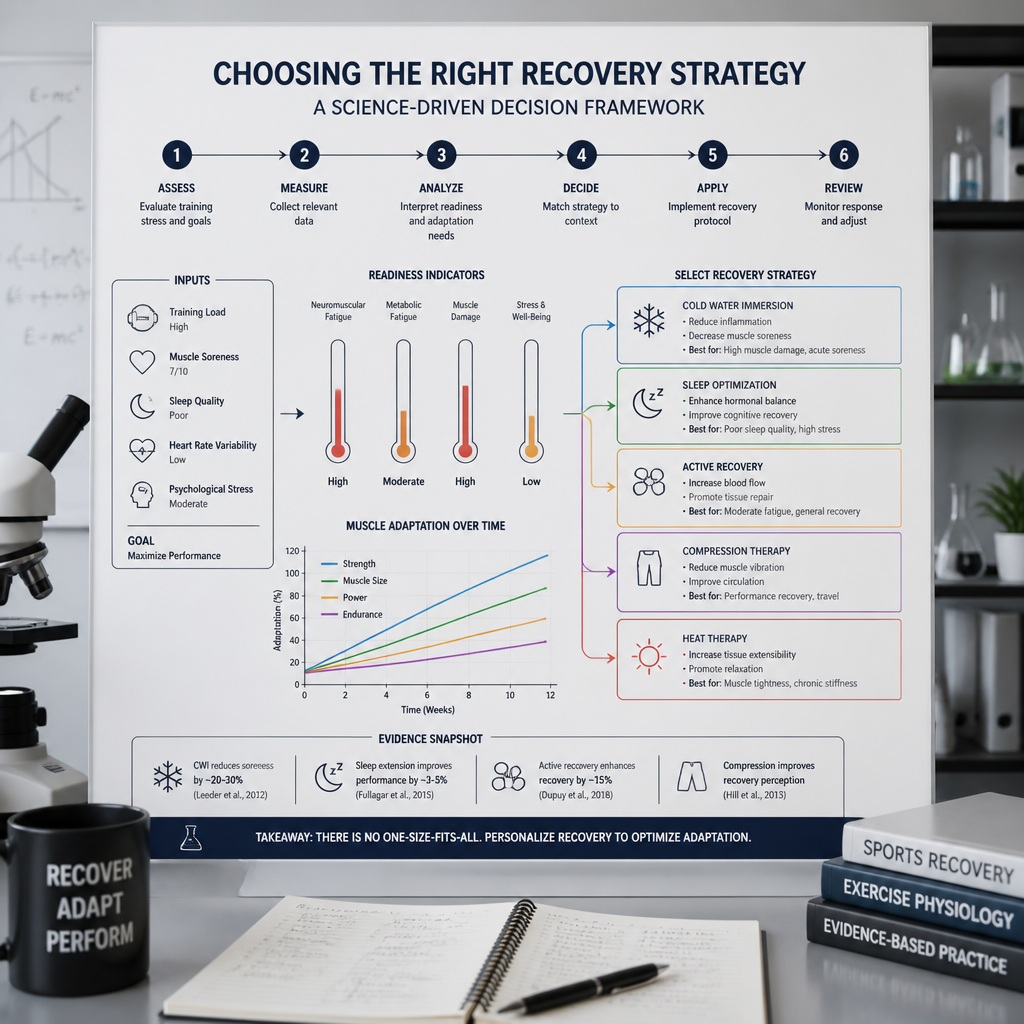
The choice between active recovery and ice bath is not philosophical; it is operational. It depends on three factors: the type of workout you just did, what you have planned for the next two days, and the goal you are pursuing in this phase of your training cycle.
Use Active Recovery When
Choose active recovery if your current focus is hypertrophy and you are in a muscle gain phase. Using ice baths too frequently after strength training has been linked to a reduction in inflammatory responses that are, paradoxically, necessary for muscle growth. Inflammation after strength training is not the enemy; it is part of the process.
It is also the right choice when you train again within 12 to 18 hours, for example in double training blocks. A mobility session or light cycling between sessions keeps muscles functional without overloading them.
Use an Ice Bath When
The post-workout ice bath is clearly justified after competitions, extreme volume workouts, long weekend runs, or any session where the priority is to reduce pain and get back to functioning as quickly as possible, even if it means some trade-off in long-term adaptation gains.
For athletes in weeks of consecutive competitions, or who need to perform on consecutive days, such as in stage races, the ice bath is a legitimate and well-justified tool. The cost-benefit clearly leans towards rapid recovery.

Cryotherapy vs. Active Recovery: The Myths That Persist
There are ideas entrenched in locker rooms and training groups that resist available evidence. It is worth dismantling them directly.
Myth: Ice baths eliminate delayed onset muscle soreness
An ice bath reduces the perception of delayed onset muscle soreness (DOMS), but it does not eliminate the underlying micro-injury. A Cochrane Library review published in 2015 concluded that ice can reduce the perception of pain but did not demonstrate a consistent effect in accelerating long-term muscle recovery. Feeling less pain does not mean your muscles have recovered faster.
Myth: Active recovery is only for those who don't train seriously
This is arguably the most harmful myth. Active recovery is used systematically in elite training programs precisely because high-performance athletes train with enough frequency and volume to make managing recovery between sessions a critical performance factor. It is not a concession to intensity; it is part of intensity.
Myth: The colder, the better
This has already been mentioned above, but it deserves space here: the effective temperature for cryotherapy is between 10 and 15 degrees Celsius. Going down to 4 or 5 degrees does not double the benefits; it increases the risk of excessive numbness and makes the practice difficult to maintain consistently. And consistency is what determines results.
How to Effectively Combine Both Strategies
The best approach for most recreational and performance athletes is not to choose between active recovery and an ice bath, but to know when to apply each within a structured training calendar.
A practical example for a runner who trains four times a week: after the long weekend run, a 12-degree ice bath for 10 to 15 minutes is justified to reduce acute inflammation. The next day, 30 minutes of walking or low-intensity mobility keeps blood flow active without adding stress. Combining both approaches in this context is more effective than either one alone.
Contrast Therapy as a Third Option to Consider
For those who want to go beyond the two basic strategies, contrast therapy, which alternates between cold and heat sessions, offers a more complete vascular stimulus. The alternation causes repeated vasoconstriction and vasodilation, which acts as a kind of passive circulatory pump that improves metabolic waste removal and nutrient delivery to recovering fibers.
A sauna following an ice bath is not a spa luxury. It is a sequence with clear physiological logic that is becoming an integral part of recovery protocols in professional sports facilities and premium home settings. Alaska Recover provides solutions to implement this combination both at home and in gyms and clinics, with equipment designed specifically for this purpose.
Tip: If you opt for contrast therapy, always start with cold and end with heat if the goal is relaxation, or end with cold if the goal is to reduce acute inflammation. The order matters and should be adapted to the training context.
Frequently Asked Questions
How long should a post-workout ice bath last?
The recommended duration is between 10 and 15 minutes for most users. Longer sessions do not show proven additional benefit and increase discomfort unnecessarily. Beginners should start with 5 to 7 minutes and increase gradually as cold tolerance develops.
Can I do active recovery and an ice bath on the same day?
Yes, and in many cases, it makes the most sense. An effective sequence is: finish the workout, do a 10 to 15-minute light walk as a transition, and then get into the ice bath. The walk gradually lowers the heart rate before immersion, which makes the experience more tolerable and physiologically more efficient.
Does an ice bath hinder muscle gain?
Used too frequently after strength training, it may interfere with inflammatory responses that contribute to muscle adaptation and growth. The practical recommendation is to avoid ice baths immediately after hypertrophy sessions in phases where muscle mass gain is the main goal, and reserve them for periods of high volume or competition.
What is the difference between active recovery and stretching?
Static stretching, where you hold a position for 20 to 30 seconds, plays a different role. It does not promote blood flow significantly like active recovery does, and its effectiveness in reducing DOMS is limited. Active recovery implies continuous low-intensity movement. The two can be complementary, but they are not synonyms, nor do they replace each other.
Does a cold shower at home have the same effect as a professional ice bath?
It depends on the temperature you are able to reach and maintain. If your home shower or bathtub can lower the water temperature to the 10 to 15 degrees Celsius range, the physiological effect is equivalent. The practical challenge is that in Portugal, especially in summer, tap water rarely reaches you cold enough. Equipment with a temperature-controlled chiller solves this limitation and ensures consistency from session to session.
Is active recovery suitable for any type of athlete?
Yes, with adjustments to the activity and intensity. A cyclist can pedal gently, a swimmer can swim a few laps of backstroke at a very slow pace, and someone who only runs can opt for a walk or a light yoga session. The principle is the same regardless of the sport: controlled movement that stimulates circulation without adding significant muscle stress.
What is your experience with these recovery strategies? Have you tried combining ice baths with active recovery, or do you have a different approach that works for your type of training? Share in the comments.