


Your ice bath water may look clean, but it could be silently accumulating biofilm, body oils, and bacteria. Ice bath maintenance is likely the most overlooked aspect for those starting with home cryotherapy, and it is also the one that most quickly compromises the safety and longevity of the equipment. Without a defined hygiene routine, what should be a recovery tool becomes a health risk. This guide is exactly about that: how to keep the water clean, the equipment functional, and the experience safe, whether for home use or a professional setting.
Table of Contents
- Quick Summary
- Why maintenance matters even at low temperatures
- Water chemistry: pH, alkalinity, and disinfection
- How often to change the water
- Interior cleaning: step-by-step
- Filtration, ozone, and UV: what really works
- Caring for the chiller and mechanical components
- Comparison of maintenance systems
- Personal hygiene before getting in the tub
- Common mistakes that damage equipment
- Frequently Asked Questions
- References
Quick Summary
| Key Point | Explanation |
|---|---|
| Ideal water pH | Keep between 7.2 and 7.8. Values outside this range irritate the skin and reduce the effectiveness of disinfectants. |
| Water change frequency | No filter: every 3 to 5 days. With basic filter: every 2 to 4 weeks. With filter plus ozone/UV: every 4 to 8 weeks. |
| Weekly surface cleaning | Cleaning the waterline and interior with a soft cloth prevents the buildup of biofilm and oils. |
| Chlorine-free disinfection is possible | Chlorine-free oxidizers, ozone, and UV are effective alternatives, especially for sensitive skin. |
| Biannual deep cleaning | Regardless of the filtration system, a deep cleaning every 6 months is essential. |
| Cover the tub when not in use | A thermal cover reduces external contamination, maintains temperature, and extends water life. |
| Chiller maintenance | Cleaning the condenser coils every 3 to 6 months prevents compressor overload and efficiency loss. |
Why maintenance matters even at low temperatures
There is a very common misconception: that cold water does not need maintenance because low temperatures kill bacteria. This is false. Cold temperature slows down microbial growth, but it does not eliminate it. Body oils, dead skin cells, cream residues, and even airborne dust accumulate quickly on the surface and internal walls of the tub, creating an ideal environment for biofilm.
Biofilm is particularly problematic because it adheres to surfaces and resists simple rinsing. Once established, it requires specific products and scrubbing to be removed. In commercial settings, such as gyms, recovery clinics, or spas, neglect of ice bath hygiene is not just a comfort issue. It is a public health issue.
For those using portable Alaska Recover tubs at home or in a wellness studio, the good news is that a simple and consistent routine avoids all these problems. The secret lies in frequency, not effort.
Water chemistry: pH, alkalinity, and disinfection
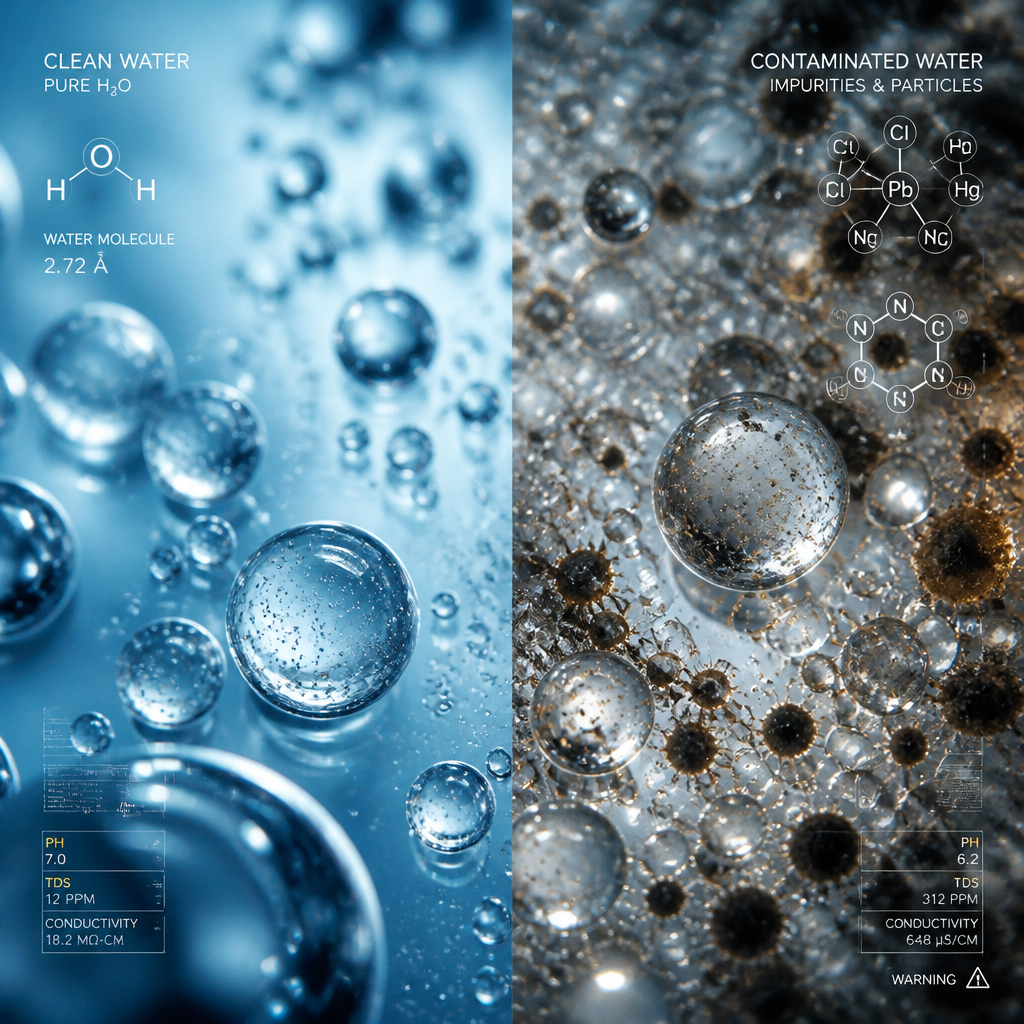
pH is the most important indicator of water quality in an ice bath. The human body's pH is between 7.34 and 7.45, meaning the tub water should be within the 7.2 to 7.8 range to avoid skin irritation. Outside this range, even if the water looks clean, it can irritate the eyes, skin, and mucous membranes.
How to test and correct pH
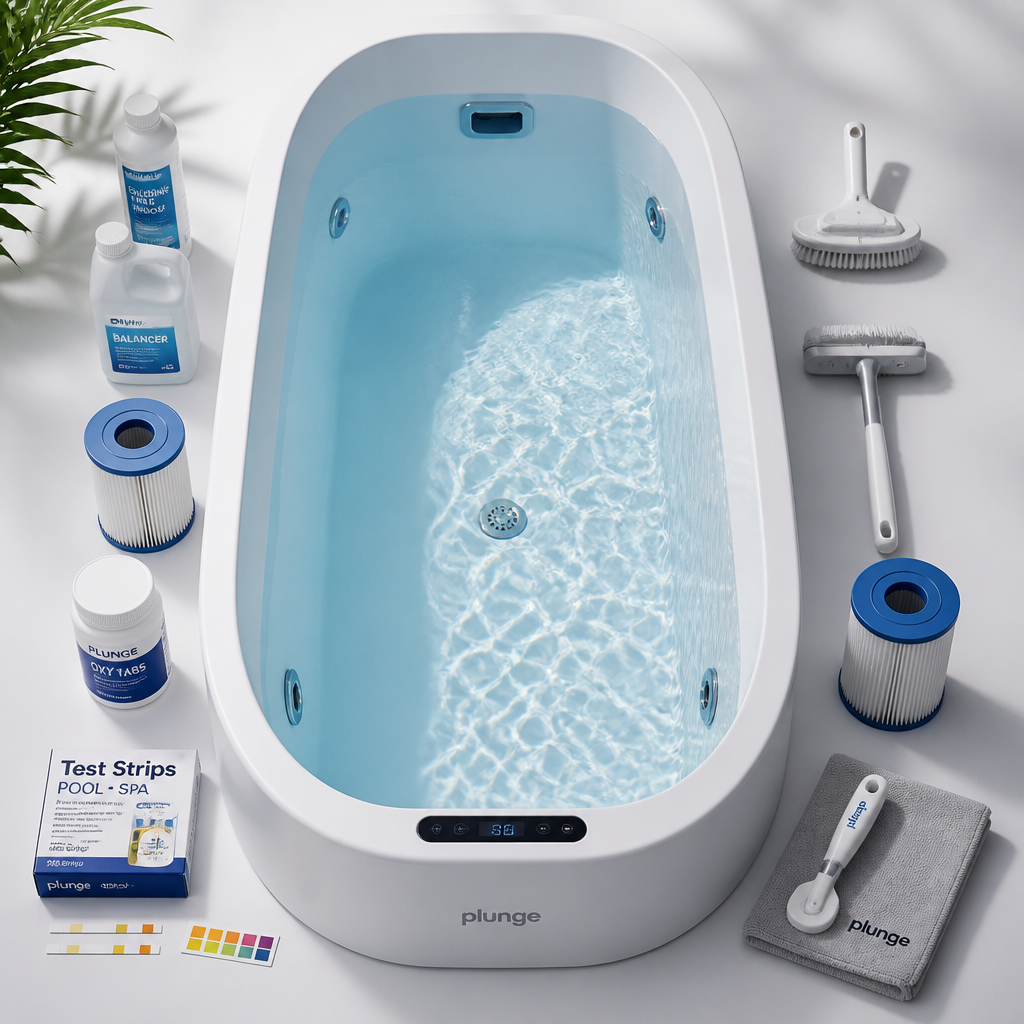
The most practical way to test pH is with reagent strips specifically for spas or pools. Quality strips measure pH, alkalinity, and free chlorine in a single test. You should test the water weekly, or more frequently if the tub is shared. If the pH is low, an alkalizer is added. If it is high, a pH reducer is used, always in small doses, waiting for the product to disperse before measuring again.
Disinfection: chlorine, oxidizers, and natural alternatives
Chlorine is the most common and effective disinfectant for controlling bacteria and algae, but it can be replaced by chlorine-free oxidizers, especially when there are users with sensitive skin. Hydrogen peroxide (spa-grade) is a viable alternative. In any case, the disinfectant should be added after adjusting the pH, because the efficacy of disinfectants is strongly affected by water pH.
Maintaining the correct water chemistry is not a technical detail. It is the difference between a recovery session and a source of contamination.
Tip: Never add chlorine or oxidizer directly onto the tub surface without prior dilution. Always dissolve in water before pouring into the tub to prevent staining and damage to the liner.
How often to change the water
The ideal frequency for changing the water depends directly on the treatment system available and the intensity of use. There is no single answer, but there are clear references based on the type of equipment.
For portable tubs without any filtration system, such as basic immersion tubs, the water should be changed every 3 to 5 days. With a basic cartridge filter, that interval extends to 2 to 4 weeks. When the system includes a filter plus ozone or UV, the water can last from 4 to 8 weeks with moderate individual use. In a commercial context, with multiple daily users, the change frequency should be weekly or follow applicable local health regulations.
A common mistake is to base the decision to change the water only on visual appearance. Water can look clear and still have a high level of microbiological contamination. Establish a fixed schedule and stick to it regardless of whether the water looks acceptable.
Tip: When emptying the tub to change the water, always take the opportunity to do a complete interior cleaning before refilling. Never waste a water change without cleaning the surfaces.
Interior cleaning: step-by-step
Cleaning the inside of the ice bath is divided into two categories: weekly maintenance cleaning and monthly or biannual deep cleaning.
Weekly maintenance cleaning
Once a week, while the tub is still full, use a soft cloth or non-abrasive sponge to wipe the waterline, which is where oil residues and impurities accumulate the most. It is not necessary to empty the tub for this operation. The goal is to remove the surface deposit before it adheres permanently to the walls.
Monthly deep cleaning
Empty the tub completely and rinse with clean water. Apply a neutral, non-abrasive cleaning product to the inner walls, floor, and all drain grates. Use a medium-texture sponge to scrub the surfaces, paying special attention to joints and seams where biofilm tends to settle. Rinse thoroughly to ensure no product residue remains before refilling.
Biannual deep cleaning
Every 6 months, cleaning should include disassembling removable components, checking drain valves, and disinfecting the water circulation system if applicable. Dry all parts well before reassembling them to prevent mold and persistent odors. This is also the right time to inspect the internal liner for cracks or wear.
Filtration, ozone, and UV: what really works
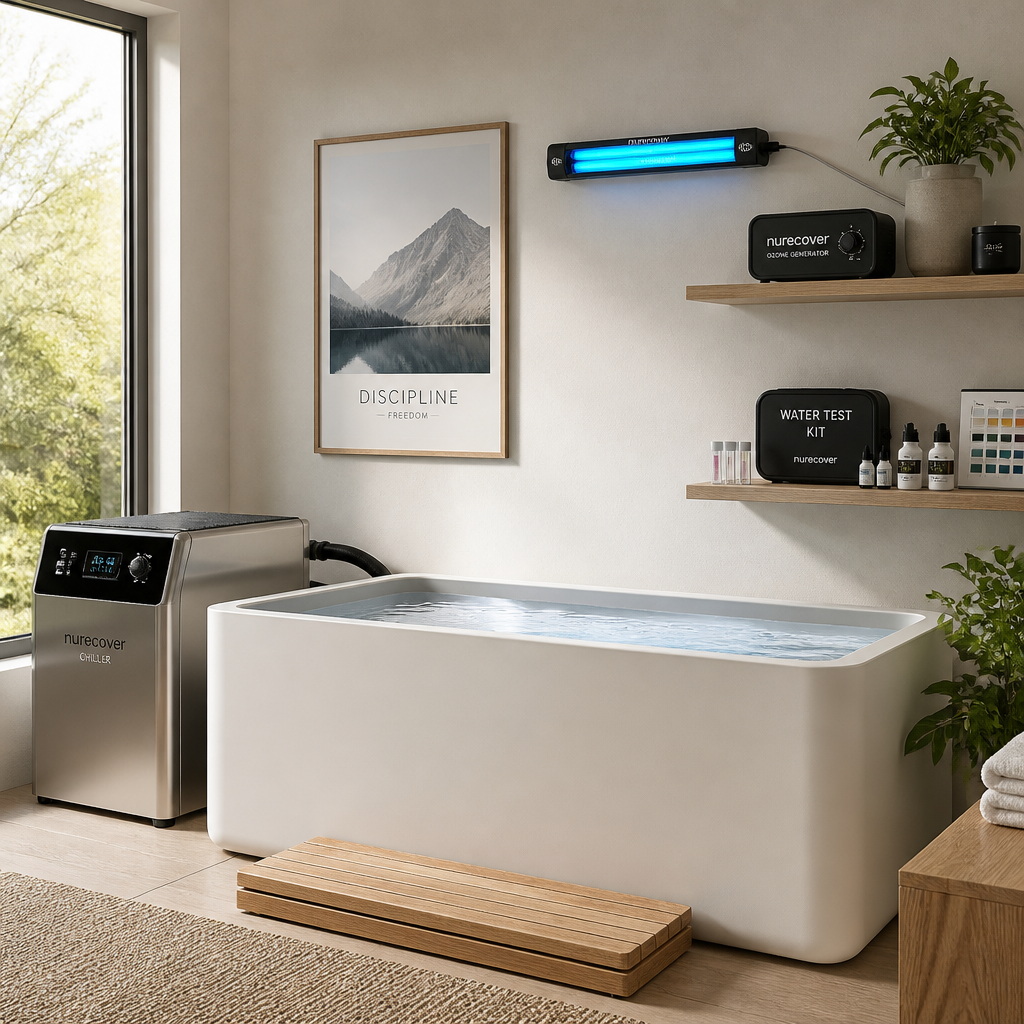
Those who invest in a chiller or an integrated ice bath system, such as those available in the Alaska Recover range, have access to water treatment options far more effective than manual solutions. But it is important to understand what each technology does, because none of them completely replaces the others.
The cartridge filter retains physical particles, oils, and suspended debris. It is the first level of cleaning and should be washed monthly with running water to remove buildup. A clogged filter reduces circulation flow and overworks the chiller.
Ozone destroys contaminants at a molecular level, being highly effective against bacteria, viruses, and fungi. Unlike chlorine, it leaves no chemical residues in the water. The UV system works by exposing the water to ultraviolet light, which damages the DNA of microorganisms and prevents their reproduction. Both technologies are complementary: ozone acts on the water in circulation, and UV treats the water as it passes through the system.
The combination of a filter plus ozone or UV is the recommended standard for intensive home use or for commercial spaces with fewer than 6 daily users. For gyms and sports facilities with a higher volume of users, the combination of all three technologies plus regular chemical monitoring is the minimum recommended standard.
Caring for the chiller and mechanical components
The chiller is the most valuable component of an integrated ice bath system. Proper maintenance determines the equipment's lifespan and long-term energy efficiency.
Cleaning the condenser coils
Condenser coils accumulate dust and debris over time, which reduces heat dissipation capacity and forces the compressor to work harder. This cleaning should be done every 3 to 6 months with compressed air or a soft brush. Never use water directly on electrical components.
Checking for leaks and connections
Regularly inspect all tubing connections for signs of moisture or limescale buildup. A small leak detected early is a simple repair. The same leak ignored for months can compromise the circulation system and the chiller itself.
Storage during periods of non-use
If you do not plan to use the equipment for more than 10 days, empty and clean the tub to prevent odors and biofilm formation during the downtime. For absences of less than 10 days with an integrated chiller system, you can slightly increase the temperature so that water circulation continues to act as protection against stagnation.
Comparison of maintenance systems
Choosing a maintenance system should correspond to the context of use. The table below summarizes the main practical differences between the three most common approaches.
| Criterion | Portable tub without filter | System with filter + chiller | Complete system (filter + ozone/UV + chiller) |
|---|---|---|---|
| Water change frequency | Every 3 to 5 days | Every 2 to 4 weeks | Every 4 to 8 weeks |
| Weekly maintenance effort | High (frequent changes, manual cleaning) | Medium (pH testing, waterline cleaning) | Low (pH testing, system check) |
| Operating cost | Low (no equipment) | Medium (filter + electricity) | Higher (equipment + consumables) |
| Suitable for commercial use | Not recommended | Light use (up to 3 daily users) | Yes, with daily chemical monitoring |
| Water quality | Variable, depends on change frequency | Good with consistent routine | Excellent, with high microbiological hygiene |
Personal hygiene before getting in the tub
This is the most effective maintenance point and costs zero euros: personal hygiene before entering the ice bath. Getting into the tub directly after an intense workout, with sweat, sunscreen, creams, or lotions, is one of the main causes of rapid degradation of water quality.
The correct protocol is to rinse the body with clean water before entering the tub. Using soap is not necessary, but rinsing removes most of the residues that would otherwise enter the water directly. In shared settings, such as gyms or recovery clinics, this step must be a non-negotiable rule for all users.
Also, avoid entering with shoes or socks in the tub, even if the session is quick. Fabrics and soles introduce dirt, fungi, and other impurities that a filter does not completely retain. The impact on water quality is disproportionately large for such a simple habit to avoid.
Common mistakes that damage equipment
Over time, certain error patterns appear repeatedly among ice bath users, regardless of experience level. Knowing them in advance saves money and prevents frustration.
The first is the excess of chemical products. More disinfectant does not mean more cleaning. Excessive concentrations of chlorine or oxidizer damage the inner linings of the tub, degrade seals, and can cause severe skin irritation. Always follow the dosages indicated on the product labels.
The second mistake is using abrasive cleaning products or metal sponges inside the tub. Any aggressive cleaning product, including sandpaper, steel wool, or acetone-based products, scratches and deteriorates the coating, creating micro-fissures where biofilm settles more easily.
The third is leaving the tub empty and exposed to the sun for long periods. UV rays damage plastic materials and vinyl linings. When not in use, keep the tub covered or stored away from direct sunlight.
Frequently Asked Questions
How often should I change the ice bath water?
It depends on the system you have. A portable tub without a filter needs a change every 3 to 5 days. With a basic cartridge filter, the interval extends to 2 to 4 weeks. Systems with a filter plus ozone or UV allow for intervals of 4 to 8 weeks with individual use. In commercial or shared use, the change should be more frequent, ideally weekly.
Can I use chlorine to disinfect the ice bath?
Yes, chlorine is effective in controlling bacteria and algae. It should be used in concentrations suitable for spas or pools and always after adjusting the water pH. For sensitive skin, chlorine-free oxidizers or the ozone system are equally effective and less aggressive alternatives.
What should the ice bath water pH be?
The ideal pH is between 7.2 and 7.8. This range is compatible with the human body's natural pH and ensures that disinfectants act with maximum effectiveness. Values below 7.2 make the water too acidic and can irritate the skin. Values above 7.8 reduce the effectiveness of chlorine and promote bacteria growth.
What is the difference between a UV system and an ozone system?
UV systems expose water to ultraviolet light as it circulates through the equipment, damaging the DNA of microorganisms and preventing them from reproducing. Ozone destroys contaminants at a molecular level through oxidation. Both are effective, but ozone offers broader protection against a greater number of pathogens. The combination of both, along with a physical filter, is the most robust standard available for intensive use.
How often should I clean the chiller filter?
The cartridge filter should be rinsed monthly with running water to remove build-ups of debris and oils. A clogged filter reduces circulation flow and overloads the chiller compressor, shortening its lifespan. If you notice that cooling efficiency has decreased, check the filter before any other technical assessment.
Does the ice bath need maintenance even in winter?
Yes. Low temperatures slow down microbial growth, but they do not eliminate the build-up of body oils, organic residues, and biofilm. Regular cleaning of the interior surface should be maintained regardless of the season. In colder months, pay extra attention to the risk of water freezing in outdoor spaces and the insulation of the structure.
What should I do if the water starts to smell bad?
A persistent odor is a sign of established biofilm or a significant chemical imbalance. Drain the tub immediately, perform a deep cleaning of all surfaces with a neutral product, and scrub the inner walls well. Before refilling, check and replace the filter if necessary and restart the water treatment cycle with properly adjusted pH.
Do you have an ice bath maintenance routine that has worked especially well for you? Share your experience in the comments; your perspective can help other recovery enthusiasts find the right balance.