


Waking up with a foggy brain, unable to focus, accumulating stress from week to week: this is the reality for many athletes, professionals, and wellness enthusiasts who train their bodies but neglect mental recovery. The mental benefits of ice baths go far beyond muscle recovery, and the science is now robust enough to prove it. Cold water immersion alters brain chemistry in measurable ways, and ignoring this fact is leaving a powerful tool unexplored.
Table of Contents
- Quick Summary
- What happens in the brain during an ice bath
- Mental focus and cognitive clarity: the role of norepinephrine
- Stress and cortisol reduction: how cold regulates the hormonal response
- Mental resilience for athletes: adapting the nervous system to discomfort
- Comparison of approaches: ice baths, cold showers, and cryotherapy
- Practical protocol: how to start and progress safely
- Frequently Asked Questions
- References
Quick Summary
| Key Benefit | Explanation |
|---|---|
| Increased dopamine and norepinephrine | Cold water immersion triggers significant spikes in these neurotransmitters linked to mood, focus, and motivation, with effects that persist for hours. |
| Reduction of chronic cortisol | Repeated exposure to cold trains the body to produce less cortisol, the stress hormone, improving the response to stress in daily life. |
| Immediate mood improvement | Various studies document mood improvements immediately after immersion, with participants feeling more alert, motivated, and less anxious. |
| Building mental resilience | Repeatedly choosing controlled discomfort trains the nervous system to tolerate physical and emotional stress outside the water. |
| Improved brain connectivity | Neuroimaging studies show greater connectivity between brain regions linked to emotional regulation after a cold water immersion session. |
| Anxiety reduction | Cold therapy is recognized as an effective complement for managing anxiety symptoms, acting on the same neural circuits as conventional treatments. |
| Lasting, not just immediate, effect | Regular practitioners report cumulative benefits over weeks, including lower emotional reactivity and greater mental clarity in high-pressure contexts. |
What happens in the brain during an ice bath
When the body enters cold water, the sympathetic nervous system is activated immediately. It is not a subtle reaction: it is a large-scale response that mobilizes neurological resources in seconds. The brain does not distinguish "controlled discomfort" from "real threat" in the first fraction of a second, and it is precisely this ambiguity that triggers the chemical response we are interested in.
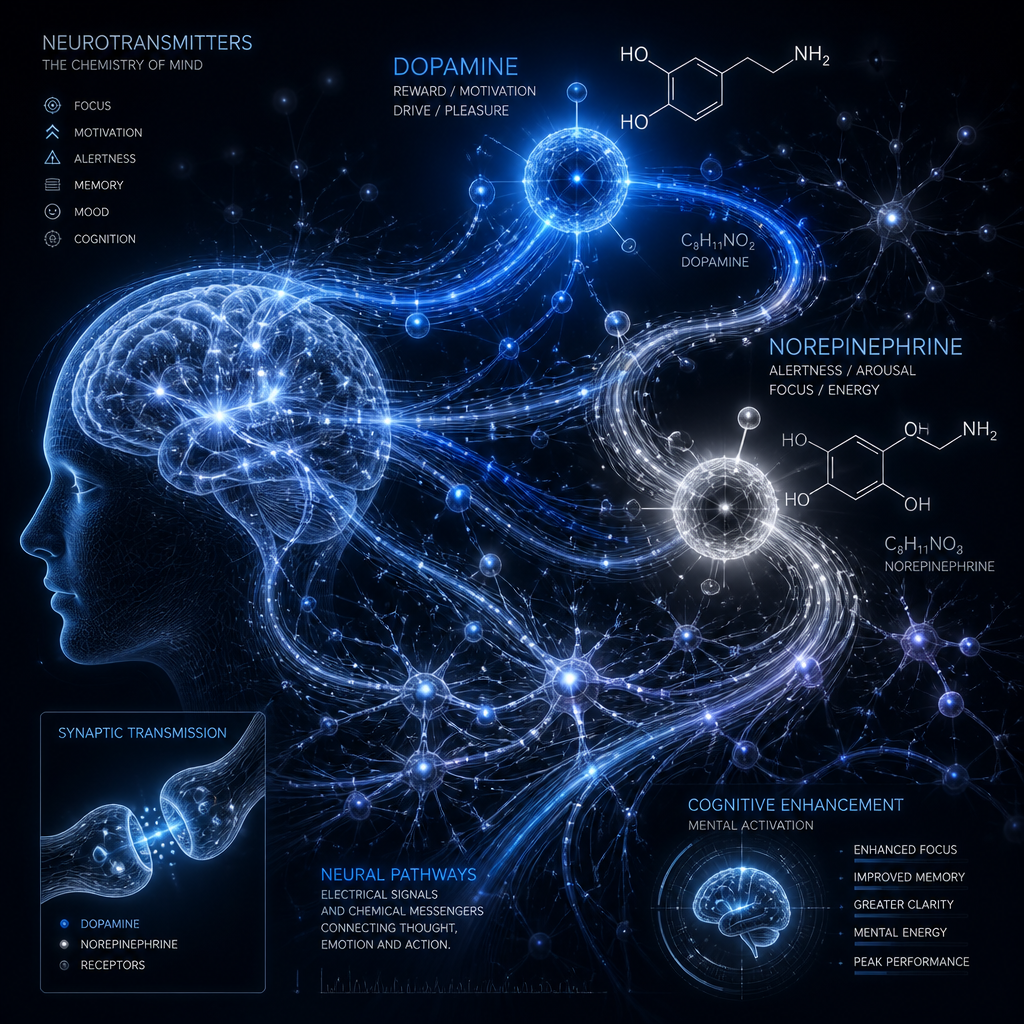
Research documents that immersion in water at approximately 14°C causes an increase of approximately 250% in dopamine levels and about 530% in norepinephrine levels. These are not marginal values: this is one of the largest acute norepinephrine responses ever recorded via a non-pharmacological intervention. What makes this data even more relevant is the duration of the effect, which persists for hours after the session ends.
A 2023 neuroimaging study demonstrated that a single session of cold water immersion increased connectivity between large-scale brain networks involved in emotional regulation, including the prefrontal cortex, the anterior insula, and the anterior cingulate cortex. These are precisely the circuits that are compromised in states of chronic anxiety and depression.
Cold water immersion triggers the release of dopamine, serotonin, norepinephrine, and beta-endorphins, all linked to the modulation of neural responses to stress and to emotional circuits affected in depression, anxiety, and post-traumatic stress disorder.
In practice, this means that an ice bath session is not just a physical recovery ritual. It is a measurable neurological intervention that alters the functional state of the brain for hours. For those who exercise regularly, or for those who operate under constant pressure, this effect has direct implications for cognitive performance and emotional stability.

Mental focus and cognitive clarity: the role of norepinephrine
Norepinephrine is the neurotransmitter most directly linked to focus, attention, and mental clarity. When its levels are low, the result is lack of energy, difficulty concentrating, and, in more severe cases, depressive states. The ice bath is one of the most effective ways known to raise these levels quickly and without the use of substances.
The mechanism is direct: cold activates the sympathetic nervous system, which signals the adrenal glands and the brain itself to release norepinephrine. The practical result, which any regular practitioner confirms, is a feeling of sharpened alertness and clearer thinking in the 30 to 60 minutes following the session. It is not placebo: it is neurobiology.
Immediate focus versus accumulated cognitive benefit
There is an important distinction between the immediate effect and the long-term benefit. The immediate effect—that state of clarity that arises right after leaving the water—is real and predictable. But with regular practice, practitioners also develop a greater capacity for sustained attention and focus management in high-pressure situations, even outside the context of the bath.
This happens because the nervous system learns to regulate the stress response more efficiently. A triathlete or a runner who trains with cold water immersion is not just recovering faster: they are calibrating their nervous system to operate with greater precision under cognitive and emotional load.
Tip: To maximize the focus effect, finish the session without warming up immediately. Allow the body to return to room temperature naturally for 5 to 10 minutes. It is during this recovery period that norepinephrine levels reach their highest peak.
The ice baths from Alaska Recover were designed to allow for controlled total immersion sessions, both in domestic environments and professional spaces, with precise temperature systems that ensure the water stays in the ideal therapeutic range, between 8°C and 15°C.
Stress and cortisol reduction: how cold regulates the hormonal response
Cortisol is necessary: without it, there is no stress response, and without a stress response, we do not survive. The problem is chronic cortisol, that state of persistent activation that characterizes the lives of many high-performance athletes, professionals under pressure, and people with compromised sleep routines. This is the cortisol that erodes memory, degrades mood, and compromises recovery.
Repeated exposure to cold produces a counterintuitive but well-documented effect: although the first plunge raises cortisol (as would be expected in any acute stress response), regular practice leads to a reduction in the baseline levels of this hormone. A longitudinal study with cold-water swimmers documented a significant decrease in cortisol over time, with better adaptation patterns to the fight-or-flight response.
Cryotherapy for stress: the desensitization mechanism
The principle is the same as the gradual exposure used in cognitive-behavioral therapy: by exposing the nervous system to a controlled and repeated stressor, the brain is taught to react with less intensity. Each cold immersion session is, in neurological terms, a stress regulation workout. The body learns that it can enter a state of intense activation and return to calm. Over time, this pattern carries over to other stressful situations.
For those suffering from anxiety, this mechanism has clinical relevance. Cryotherapy for stress does not replace medical treatment, but research is clear in showing that it reduces anxiety symptoms through cortisol regulation and the stimulation of the same neural circuits that conventional treatments modulate.
Tip: If the primary goal is the reduction of chronic stress, consistency matters more than intensity. Three to four weekly sessions of 3 to 5 minutes at a temperature between 10°C and 14°C produce more stable results than occasional long-duration sessions.

Mental resilience for athletes: adapting the nervous system to discomfort
An athlete's mental resilience is not built just in training. It is also built in the way the nervous system learns to deal with discomfort, uncertainty, and prolonged effort. The ice bath is one of the few training instruments that acts directly on this component, in a measurable and reproducible way.
The act of entering cold water and staying in it for several minutes is an exercise in real-time emotional regulation. The body wants to get out. The mind must decide to stay. This tension, managed with controlled breathing and intentional focus, is exactly the type of controlled adversity that strengthens the ability to tolerate discomfort in other contexts. Runners, cyclists, and triathletes who incorporate regular immersion into their routine report greater emotional stability in moments of competition, higher pain tolerance, and better management of high-pressure states.
The role of breathing during immersion
Breathing is the only autonomous system that we can consciously control, and that is exactly why it is the key to taking mental advantage of the ice bath. When entering the water, the natural tendency is hyperventilation. Resisting this urge and maintaining slow, deep nasal breathing is the central mechanism by which the nervous system is trained not to panic in the face of intense stimuli.
A clinical trial demonstrated that combining cold exposure with structured breathing techniques produced moderate to strong reductions in perceived stress in healthy adults, with results superior to those of the control group. This combination—breathing protocol plus cold water immersion—is also the basis of contrast therapy, which combines sauna and ice bath, a practice with increasing adoption in high-performance gyms, clinics, and premium wellness spaces across Europe.
Resilience that transfers outside the water
A common mistake is thinking that the benefits of the ice bath are limited to the period immediately after the session. In practice, what is observed in regular practitioners is a gradual transfer of the ability to regulate to everyday life: greater tolerance for frustration, less emotional reactivity, and a growing sense of control over one's own mental states. These are the concrete markers of mental resilience—not motivational vagueness, but observable changes in behavior under pressure.
Comparison of approaches: ice baths, cold showers, and cryotherapy
Not all forms of cold exposure produce the same mental results. For those who are evaluating which approach is most appropriate, it is useful to compare the three main options available, based on current scientific evidence and the practical experience of those who use them regularly.
| Approach | Documented Mental Effect | Practical Suitability |
|---|---|---|
| Ice bath (total immersion) | Greatest documented increase in dopamine and norepinephrine. Significant improvement in mood, focus, and emotional regulation. Reduction of chronic cortisol with regular practice. Measurable neuroimaging effects after a single session. | Best option for those who want concrete mental results and are willing to invest in a structured routine. Equipment like Alaska Recover ice baths allows for precise temperature control and domestic or professional use. |
| Cold shower | Documented benefits, but of lesser magnitude. Suitable for beginners and for days when full immersion is not possible. No temperature control, making methodical progression difficult. | Good entry point for those without access to immersion equipment. Does not replace full immersion in the medium term in terms of neurological impact. |
| Whole-body cryotherapy (cold chamber) | Similar acute effects on mood and alertness. Very short sessions (2-3 minutes) with extremely low temperatures. Less data on long-term effects on mental resilience compared to water immersion. | Requires access to specialized facilities and has a high cost per session. Less practical for incorporation into a daily routine. Best used as an occasional supplement. |
The practical conclusion is clear: for those aiming for the mental benefits of ice baths consistently and progressively, controlled cold water immersion is the approach with the most evidence and greatest long-term viability. A cold shower is a starting point, not a destination.
Practical protocol: how to start and progress safely
The biggest mistake beginners make is overdoing it in the first session: water that is too cold, for too long, without any preparation. The result is a traumatic experience that associates the ice bath with unnecessary suffering, rather than the state of clarity and well-being that regular practice provides.
Initiation phase (first 2 to 3 weeks)
Start with 2-minute sessions in water at about 18°C to 20°C. The goal at this stage is not to endure maximum cold: it is to learn to control breathing and the mind under the stimulus of discomfort. Temperature is secondary. Breathing is the variable that matters most to control first. Maintain nasal, slow, and deliberate breathing from the first moment you enter the water.
Progression phase (4 to 8 weeks)
Gradually reduce the temperature to the 12°C to 15°C range and increase the duration to 3 to 5 minutes. At this stage, the mental effects begin to be clearly perceptible: improved focus in the hours following the session, reduced anticipatory anxiety, and a greater sense of control. It is also at this stage that the nervous system begins to adapt, and sessions that once seemed unbearable become manageable.
Maintenance and optimization phase
Experienced practitioners usually work between 8°C and 14°C, for 4 to 8 minutes per session, with a frequency of 3 to 5 times per week. For those who incorporate sauna into their routine, contrast therapy, which alternates sauna with ice baths, amplifies the effects of mental well-being and also provides deep relaxation that improves sleep quality.
Alaska Recover chiller systems allow the water temperature to be kept stable from session to session, which is fundamental for methodical progression. Uncontrolled temperature variability is one of the main obstacles to consistent results, especially in domestic use.
Frequently Asked Questions
How many sessions per week are necessary to feel mental benefits?
Available evidence suggests that three to four sessions per week are sufficient to produce cumulative benefits in mood regulation, focus, and stress resilience. Daily sessions are well tolerated by most people, but consistency over weeks matters more than frequency in any individual week.
What is the ideal temperature for the mental benefits of an ice bath?
Most studies documenting relevant neurochemical effects use water between 10°C and 15°C. Below 8°C, the risk of hypothermia increases and sessions become too short to produce sustained benefits. For beginners, working between 14°C and 18°C is enough to trigger the desired neurological response.
Can ice baths help with anxiety and depression?
Scientific research is encouraging. Cold water immersion acts on the same neural circuits and neurotransmitters involved in anxiety and depression, including dopamine, serotonin, and norepinephrine. It should always be viewed as a complement to medical treatment, not a substitute. Anyone with a diagnosed mental health condition should consult their doctor before starting this practice.
What is the difference between an ice bath and a cold shower in terms of mental benefits?
Total immersion in cold water produces a significantly greater neurological response than a cold shower, due to hydrostatic pressure, the exposed body surface area, and the controlled duration of exposure. A cold shower is a valid starting point, but the studies documenting the most expressive increases in dopamine and norepinephrine were conducted with total immersion, not showers.
How long does it take to feel improvements in focus and mental clarity?
The immediate effect of mental clarity can be felt in the very first session, within 30 to 60 minutes after immersion. More stable improvements in focus, stress management, and emotional resilience typically develop over 3 to 6 weeks of regular practice. Most practitioners report noticeable changes in their mental state after two weeks of consistent sessions.
Can I take an ice bath every day?
Yes, provided the protocol is appropriate. Daily 3 to 5-minute sessions at moderate temperatures (12°C to 15°C) are well tolerated by most healthy adults. Muscle recovery benefits from sessions closer to workouts, while mental benefits are accumulated most effectively with regular exposure, regardless of the training schedule.
Does contrast therapy between sauna and ice bath increase mental benefits?
Practical evidence and reports from regular practitioners suggest so. Alternating between heat and cold produces a sharp oscillation in the autonomic nervous system that amplifies the sense of well-being, reduces muscle tension, and improves sleep quality, a factor directly linked to cognitive performance and emotional stability. For those with access to a sauna and ice bath, contrast therapy is the protocol with the greatest overall impact.
Do you already use ice baths in your recovery routine? Share your experience or questions in the comments: we love to see how this practice is being integrated by athletes and wellness enthusiasts in Portugal and the rest of Europe.
References
- Psychology Today: Ice baths for mental health show promise
- Coldture: Cold water immersion, dopamine, and brain chemistry
- Journal of Neuropsychiatry: Cryotherapy and implications for clinical neuroscience
- Stanford Lifestyle Medicine: Mental health benefits of cold water immersion
- Plunge: How ice baths can improve your mental health