


You train hard, sleep poorly, and wake up with your muscles still feeling heavy. The problem might not be the workout itself, but rather what happens in the hours that follow. The ice bath sleep combination is something that an increasing number of athletes and fitness enthusiasts are exploring, and with good reason. Cold water immersion has measurable physiological effects on core body temperature, cortisol levels, and melatonin release, directly influencing the quality of your nightly rest. This article details what science says, what works in practice, and how to structure your routine to recover better while you sleep.
Table of Contents
- Quick Summary
- What Happens in the Body During an Ice Bath
- Cryotherapy and Sleep Quality: What Research Shows
- Ideal Timing: When to Take an Ice Bath to Improve Sleep
- Athlete Nighttime Recovery: The Role of Cold
- Comparison of Nighttime Recovery Methods
- Common Mistakes That Sabotage Sleep After an Ice Bath
- Frequently Asked Questions
- References
Quick Summary
| Key Point | Explanation |
|---|---|
| Cold reduces core body temperature | The thermal drop after immersion mimics the physiological signal that prepares the brain for sleep, making it easier to fall asleep. |
| Melatonin responds to temperature drops | Melatonin release is stimulated by sharp drops in body temperature, which an ice bath directly triggers. |
| Cortisol decreases with cold exposure | Cold water immersion helps reduce levels of cortisol, the main stress hormone, promoting a pre-sleep state of relaxation. |
| Timing is critical | An ice bath taken 1 to 2 hours before bed produces the best results for sleep. Doing it right before can have the opposite effect. |
| Duration doesn't need to be long | About 2 to 5 minutes at temperatures between 10°C and 15°C is sufficient to obtain significant benefits for sleep and recovery. |
| Cold does not replace sleep | Cryotherapy is a complementary tool. It does not replace the 7+ hours of sleep healthy adults need per night. |
| Morning also works, in a different way | A morning session anchors the circadian rhythm, creates an early spike in norepinephrine and dopamine, and prepares the body to fall asleep more easily at night. |
What Happens in the Body During an Ice Bath
When you submerge yourself in an ice bath, your body responds immediately and sequentially. The first effect is peripheral vasoconstriction: blood vessels constrict to protect vital organs. When you exit the water, reactive vasodilation occurs, with blood quickly returning to the muscles, accelerating the removal of inflammatory metabolites accumulated during exercise.
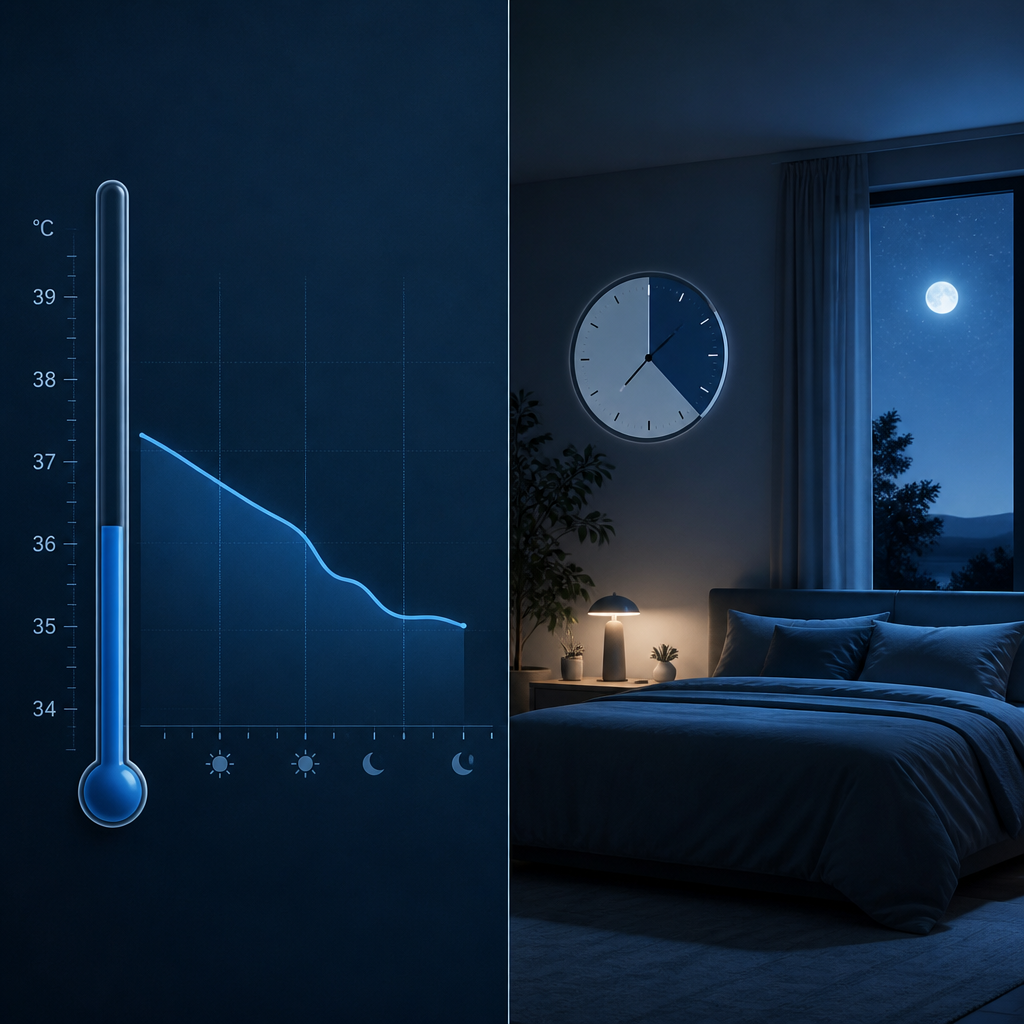
This thermal cycle has a direct impact on core body temperature. The internal temperature drops in a controlled and sustained manner, remaining below normal for a period that can last up to 90 minutes after the session. It is precisely this mechanism that makes cold relevant for sleep.
Cold exposure also triggers a significant neurological response. Norepinephrine and dopamine spike, creating a state of temporary alertness followed by a period of calm and well-being. This calming effect is what, when the timing is right, facilitates the transition to deeper, more restorative sleep.
Cryotherapy and Sleep Quality: What Research Shows
The relationship between cryotherapy and sleep quality is more solid than many expect, but also more nuanced than cold enthusiasts often admit. A systematic review published in 2025 analyzed the effects of cold water immersion in healthy adults and concluded that the practice has time-dependent effects on inflammation, stress, immunity, and sleep quality. The effect was especially evident in men.
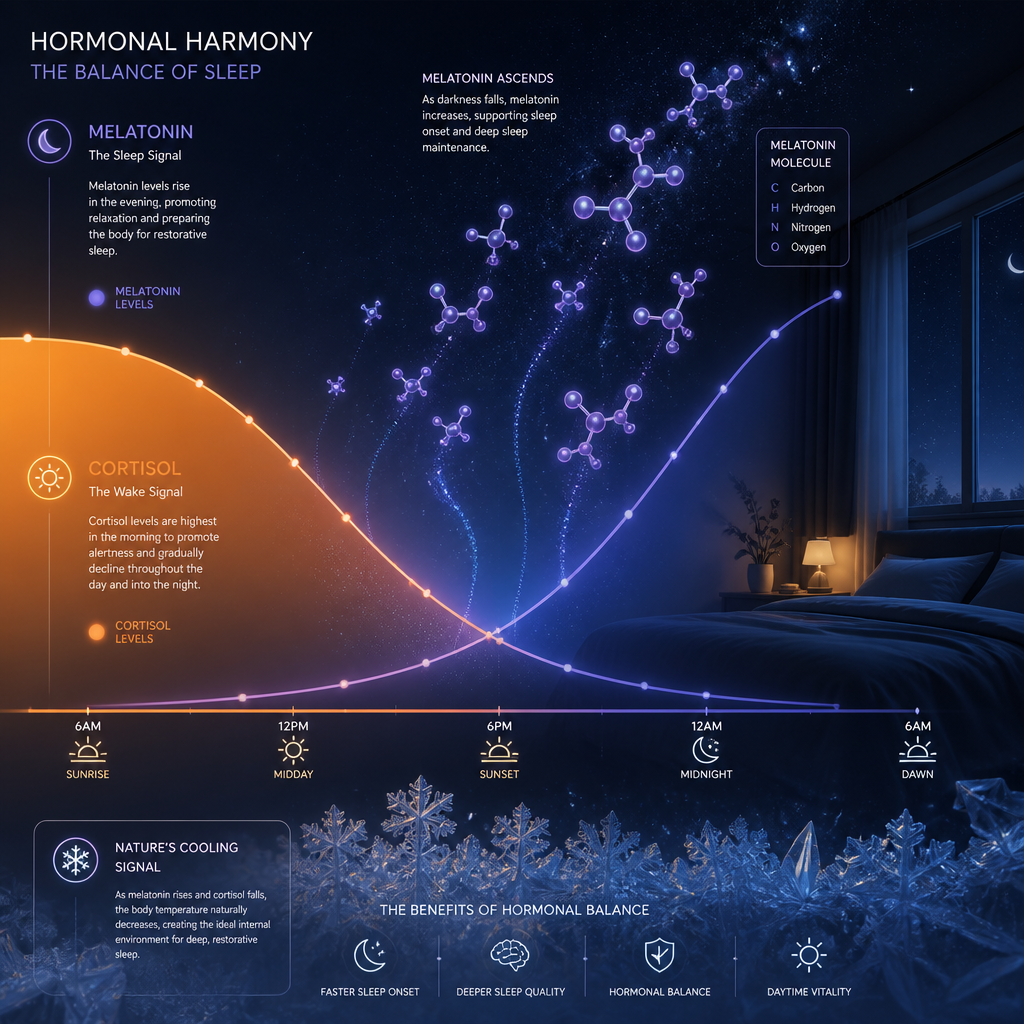
The central mechanism involves melatonin. This hormone, which regulates the sleep-wake cycle, is released in higher quantities when body temperature drops significantly. An ice bath causes exactly that: a sudden and controlled drop that stimulates its production. Complementarily, cold exposure helps reduce levels of cortisol, the main stress hormone, creating biochemical conditions more favorable to relaxation and falling asleep.
"Sleep is the most powerful recovery tool that exists, and it is free." Cryotherapy does not replace it, but it can be an effective accelerator when used intelligently.
It is important to be honest about the limits of the evidence. A clinical study that measured melatonin levels between a group that underwent cold water immersion and a control group did not find significant differences in global sleep parameters during the night. This suggests that the benefits are more subtle and contextual than absolute. What works is not just "taking an ice bath," but doing it at the right time, at the right temperature, integrated into a consistent sleep routine.
Ideal Temperature and Duration for Sleep
For goals related to sleep and nighttime recovery, sessions should be between 10°C and 15°C. Durations of 2 to 5 minutes are sufficient to trigger the relevant physiological mechanisms without overloading the nervous system.
Accumulating about 11 minutes per week, distributed across short sessions, appears to be an effective balance point for most people. Excessively long sessions or very low temperatures do not increase benefits for sleep and can create levels of sympathetic activation that make it difficult to fall asleep.
Tip: If you have access to a chiller with precise temperature control, such as Alaska Recover systems, set the temperature between 12°C and 14°C for evening sessions. This range is cold enough to induce the physiological response without creating an excessive thermal shock that delays falling asleep.
Ideal Timing: When to Take an Ice Bath to Improve Sleep
Timing is likely the most underestimated factor in this entire equation. Many users take an ice bath immediately after their evening workout, just minutes before bed, and then complain that they don't sleep well. The problem isn't the cold; it's the timing.
Cold water immersion causes a temporary spike in norepinephrine, a state of activation of the sympathetic nervous system. That state is excellent for focus and performance, but it is the opposite of what you need to fall asleep. If you take an ice bath and go straight to bed, you are competing against your own physiology.
The 1 to 2 Hour Window Before Bed
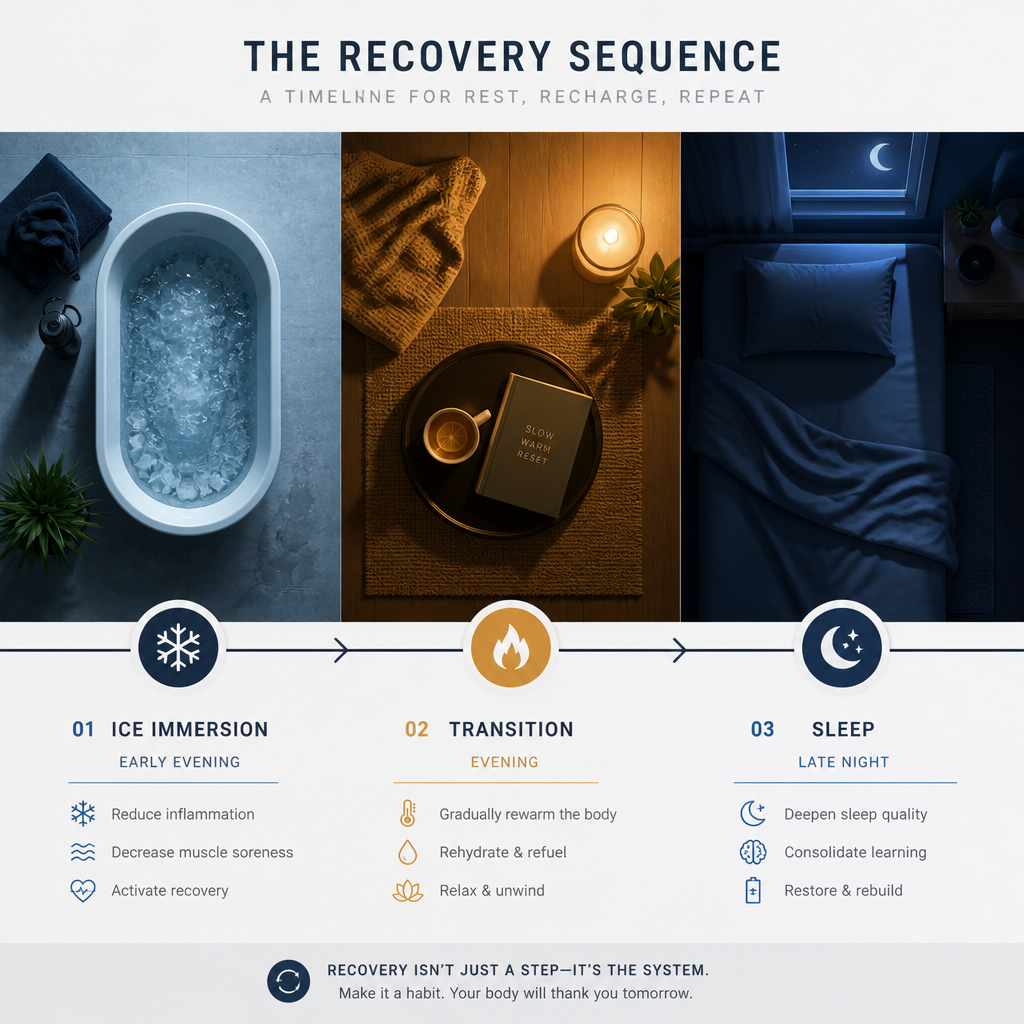
The ideal interval between an ice bath and bedtime is 1 to 2 hours. During this period, the initial activation state dissipates, body temperature continues to drop gradually, and the organism enters a physiological trajectory favorable to deep sleep. The sustained thermal drop mimics the natural pattern the brain uses as a signal to release melatonin and begin the process of falling asleep.
Done this way, an ice bath does not disturb sleep; it supports it.
The Morning Session as a Circadian Anchor
Morning is the other strategic window, with a different but equally effective mechanism. Immersion first thing in the morning creates an early spike of healthy cortisol and dopamine, establishing a more defined circadian rhythm. When the activation spike happens early, the body tends to "shut down" more easily at night, facilitating natural sleep onset.
For athletes who train in the evening due to scheduling, a morning session may be the more practical option: you gain the benefits of the cold without the risk of interfering with sleep.
Tip: If you train at night and finish your workout late, opt for an ice bath session 30 to 60 minutes after the effort, and ensure at least 90 minutes pass before you go to bed. Use that interval for a light, protein-rich meal and to lower your mental intensity.
Athlete Nighttime Recovery: The Role of Cold
For those who train regularly, athlete nighttime recovery is where a large part of training adaptations occurs. It is during deep sleep that the body releases growth hormone, repairs muscle tissue, and consolidates learned motor patterns. Compromising sleep means compromising progress.
An ice bath contributes to this process on two fronts. On one hand, it reduces acute post-workout inflammation, which diminishes physical discomfort that can disturb sleep. On the other, it facilitates access to deeper stages of sleep by creating the thermal and neurochemical conditions described in previous sections.
Cold and Sleep on Very Intense Training Days
On days with high-intensity training or competition, the body remains in a state of high activation for several hours after the effort. Core temperature stays above normal, cortisol is elevated, and the autonomic nervous system continues in sympathetic mode. In this context, a cold water immersion session performed at the correct time has an especially relevant impact.
By accelerating the return to thermal homeostasis and actively reducing physiological stress markers, an ice bath shortens the time the body needs to transition from a state of exertion to a state of recovery. The night becomes more efficient, not just longer.
Cold-Heat Contrast Therapy and Sleep
Some athletes combine sauna and ice baths in contrast sessions, alternating between intense heat and cold immersion. For sleep purposes, the rule of thumb is the same: the sequence must end with the cold, not the heat, and there must be an adequate interval before bed.
Ending with heat before sleep can be counterproductive, as it raises core body temperature again at a time when it should be dropping. If you use sauna and ice bath as a nightly routine, always do the ice bath last and wait at least 60 minutes before going to bed.
Comparison of Nighttime Recovery Methods
Several approaches are available to optimize nighttime recovery. The following table compares three of the most used in performance and wellness contexts, based on the mechanism of action, documented impact on sleep, and implementation practicality.
| Method | Main Mechanism for Sleep | Practicality and Control |
|---|---|---|
| Ice Bath / Cold Water Immersion | Reduction of core body temperature, reduction of cortisol, stimulation of melatonin production. More immediate and measurable effect when done 1-2 hours before bed. | High practicality with temperature-controlled chiller systems. Requires timing management. 2-5 minute sessions. Alaska Recover solution allows precise temperature control. |
| Finnish Sauna | Heat raises body temperature; the subsequent drop mimics the circadian pattern. Works well when used well in advance (2-3 hours before bed). | Requires more total session time. Effect depends on the interval between leaving and bedtime. Complements ice baths well in contrast therapy. |
| Stretching and Relaxation Routines (no thermal therapy) | Reduction of muscle tone and nervous system activation. Indirect impact on sleep quality via reduction of physical tension. | Accessible to anyone, no equipment. More limited effect in contexts of intense muscle fatigue after high-load training. |
Common Mistakes That Sabotage Sleep After an Ice Bath
Most people who try an ice bath before bed and report negative results make one of the following mistakes. It is not the practice itself that fails, but how it is implemented.
Going to Bed Immediately After the Session
This is the most frequent mistake. The immediate sympathetic activation caused by the cold, with the norepinephrine spike and increased state of alertness, is incompatible with falling asleep quickly. Those who take an ice bath and go straight to bed tend to lie there awake, agitated, and frustrated. The solution is simple: respect the 1 to 2 hour interval.
Using a Temperature That Is Too Low for Evening Sessions
Temperatures below 10°C create a more intense thermal shock, with a more pronounced and prolonged sympathetic nervous system response. For sleep-oriented sessions, it is not necessary to go below 12°C. The goal is not to maximize discomfort; it is to create the controlled thermal drop that signals sleep. Systems with precise temperature control, such as the integrated chillers from Alaska Recover, allow setting the exact range without relying on crushed ice or estimates.
Sessions That Are Too Long
More time in cold water does not mean more benefits for sleep. Sessions exceeding 10 minutes at night increase nervous system activation without producing additional improvements in rest quality. Two to five minutes is sufficient. Efficiency outweighs duration.
Ignoring Remaining Sleep Hygiene
An ice bath does not compensate for a chaotic sleep routine. If your exposure to blue-light emitting screens continues until bedtime, if your sleep schedule varies greatly between weekdays and weekends, or if your late-night eating is heavy, cold will not solve those problems. Cryotherapy amplifies a good foundation. It does not create it from scratch.
Frequently Asked Questions
Does an ice bath before sleep help or hinder sleep?
It depends on the timing. Done between 1 and 2 hours before bed, an ice bath promotes sleep by reducing core body temperature, lowering cortisol, and stimulating melatonin production. Done immediately before bed, the spike in nervous system activation may make it difficult to fall asleep. Timing is the deciding factor.
What is the ideal ice bath temperature to improve sleep?
For sleep-related goals, the ideal temperature is between 12°C and 15°C. Lower temperatures create a more intense sympathetic response that can delay sleep onset. This range is cold enough to trigger the relevant physiological mechanisms without over-activating the nervous system.
How long should an ice bath last to benefit sleep?
Sessions of 2 to 5 minutes are sufficient. There is no evidence that longer sessions produce additional benefits for sleep quality. In an evening context, brevity and control are more important than duration.
Can I combine sauna and ice baths to improve sleep?
Yes, provided the sequence always ends in cold rather than heat, and there is an interval of at least 60 to 90 minutes between the end of the session and bedtime. Contrast therapy can be effective for nocturnal recovery when structured correctly.
Has the ice bath replaced other nocturnal recovery strategies?
No. Cryotherapy is a complementary tool. It does not replace sleep itself, proper nutrition, or other pillars of recovery. The best results occur when the ice bath is integrated into a consistent sleep routine with regular schedules, good sleep hygiene, and a balanced diet.
What is the difference between taking an ice bath in the morning versus at night for sleep?
A morning session anchors the circadian rhythm by creating an early spike in cortisol and dopamine, which facilitates falling asleep naturally at night. A nighttime session, when timed correctly, accelerates the transition from a post-workout state of activation to a state of recovery. Both are valid, with distinct mechanisms. For athletes who train at night, the morning session may be the simpler option.
Does an ice bath with a chiller make a difference compared to conventional ice for sleep?
Yes, significantly. A chiller with precise temperature control allows the water to be maintained exactly between the 12°C and 15°C required for effective nighttime sessions, without fluctuations. Conventional ice does not allow for this control, making it difficult to reproduce the ideal temperature consistently. For those who use ice baths regularly as part of a recovery routine, temperature consistency is a determining factor in the results.
Do you have an ice bath routine before bed? Share your experience in the comments, what worked and what you would change.
References
- Systematic review and meta-analysis on the effects of cold water immersion on sleep quality, stress, and well-being
- Cryotherapy and ice baths: melatonin, cortisol, and sleep benefits
- Ice baths for insomnia: how cold water immersion can improve sleep
- Cryotherapy in sports recovery: what works and what doesn't
- Cold water immersion and sleep quality: evidence, timing, and mechanisms